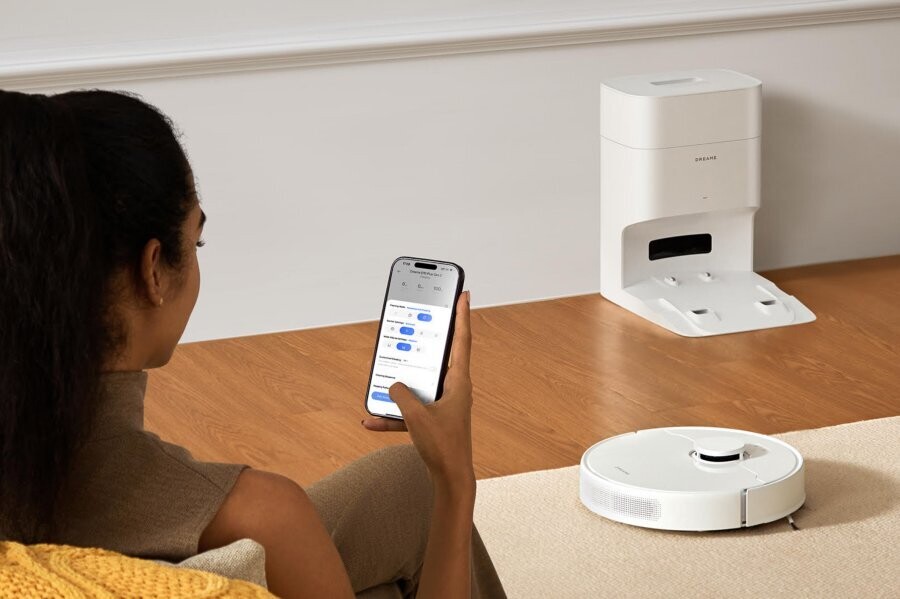
When you're looking for the best robot vacuum for pet hair, the 'Pa' rating is one of your most important metrics. Without high suction, a robot is just skimming the surface, leaving the embedded dander and fur behind. A truly 'pet-friendly' device understands that pet messes are not just dry; they're also wet and sticky. It means a tangle-resistant brush, suction power that starts at 4,000 Pa, and, to truly solve the problem, a built-in mopping system that cleans the grime that fur-focused vacuums leave behind. This is a machine built to win a two-front war: the battle against overwhelming suction needs and the battle against chronic tangles. Front 1: The War on Tangles This is the number one killer of robot vacuums in a pet home. A traditional bristle-style brush roll acts like a magnet for long pet and human hair. After just one or two runs, it becomes a matted, useless log of fur that stops spinning, burns out the motor, and requires you to perform 'surgery' with a pair of scissors. A machine that is actually built for pet hair focuses on 'tangle-free' technology. Instead of bristles that 'grip' and wrap hair, these models use: Rubberized or 'Brushless' Rollers: These use flexible rubber fins or blades to agitate the carpet and flick hair into the vacuum's suction path. V-Shaped Bristle Patterns: Some hybrid designs use a specific chevron or V-shape pattern that actively channels hair toward the center suction opening, preventing it from spooling around the ends of the brush. This single feature—the ability to manage hair without clogging—is what separates a daily-use tool from a 'daily-frustration' gadget. Front 2: The Need for Power (Suction) Pet messes are heavier and stickier than simple house dust. Dander is a fine, almost-oily powder that settles on hard floors. Tracked-in dirt and scattered kibble add to the challenge. To fight this, you need raw power, which in the vacuum world is measured in Pascals (Pa). 1,500-2,000 Pa: This is standard for a basic robot vacuum. It's fine for light dust on hard floors but will struggle with fur and will barely touch a medium-pile rug. 4,000 Pa and Up: This is where true pet-hair performance begins. This is a machine built to win a two-front war: the battle against overwhelming suction needs and the battle against chronic tangles. The 'X-Factor': Solving the Whole Problem A truly 'pet-friendly' device understands that pet messes are not just dry; they're also wet and sticky. It means a tangle-resistant brush, suction power that starts at 4,000 Pa, and, to truly solve the problem, a built-in mopping system that cleans the grime that fur-focused vacuums leave behind. This isn't just a marketing gimmick; it's a fundamental design change. A vacuum-only robot, no matter how powerful, will roll right over a trail of muddy paw prints, a drool spot, or the area around a splashed water bowl. This is why the market has overwhelmingly moved toward all-in-one solutions. This is a machine built to win a two-front war: the battle against overwhelming suction needs and the battle against chronic tangles. The combination of vacuum and mop is the final piece of the puzzle. This combination is what finally delivers that 'barefoot clean' feeling. Don't be fooled by a simple label. When you're shopping for a robot vacuum, every box and product page is plastered with marketing buzzwords. 'Pet-friendly' is a technical term. Pet hair, especially from double-coated breeds, weaves itself into carpet fibers. This isn't just a marketing gimmick; it's a fundamental design change. This is a machine built to win a two-front war: the battle against overwhelming suction needs and the battle against chronic tangles.