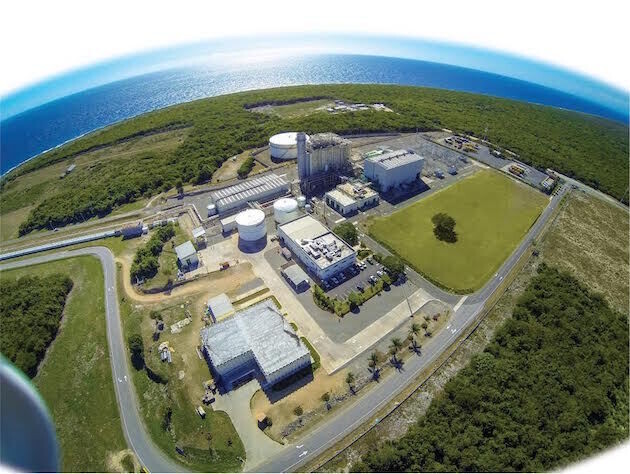
Panama is preparing to hold its first long-term electricity auctions in March 2026, for the first time in over a decade. AES, which has operated in the country for 27 years, sent a letter to President José Raúl Mulino on January 14, 2026, requesting a meeting to express its concerns. In the letter, AES states that the reference electricity prices published by the Ministry of Energy on December 30 range between $155 and $172 per megawatt-hour and are “more than 50% above existing and achievable market prices.” The company also warns that the auction design “is preventing the fair participation of other, more efficient thermal units, such as the AES Colón combined cycle.” According to AES, this could have negative impacts on end consumers. AES insists on reviewing the bidding process so that Panama can take advantage of the current situation with a glut of electricity generation and achieve significant savings in the re-contracting of existing power plants. In response, Energy Secretary Rodrigo Rodríguez Jaramillo explained to SNIP Noticias that the auctions scheduled for March are structured by differentiated technical categories, not by specific companies or technologies. The process includes separate purchases of energy and capacity, as well as a reconversion category. If this is not done, the result will be the contracting of units that the system does not need, and the end consumer will bear significant overcosts for more than a decade, AES stated in its letter. Regarding the reconversion category, which is focused on existing thermal plants that operate with bunker or diesel and could switch to cleaner fuels like liquefied natural gas, AES Colón operates on natural gas. Rodríguez stated that he does not understand why it is claimed that the prices will be high, noting that the energy category prices correspond to market values and that the cap prices are also aligned with market prices. AES can participate in some categories. The capacity category is intended to ensure firm capacity to back up the electrical system and can be served by both renewable plants and thermal plants. He explained that the capacity category, corresponding to category two, also has market-based prices, while the reconversion category starts with a price he described as “very low,” around $8.50, and could reach a maximum of $17.50 per kilowatt-month. “I don't understand why they say their prices will be high, because all prices follow basically market prices,” he said, adding that AES, with its Costa Norte plant, currently has contracts around $40 that expire in 2028. “Basically no. Just one,” he said. In response to SNIP Noticias inquiries, AES reiterated that its main concern is that the current scheme limits the participation of the AES Colón combined cycle in the energy and reconversion categories, which, according to the company, would prevent it from competing on equal terms. Through Edgar Ivankovich, AES's director of corporate affairs, the company said that under current terms, its combined cycle plant could only participate in the capacity category, a situation that, according to the company, would affect its ability to purchase natural gas on competitive terms and would put financial pressure on the project, with possible collateral effects on the gas import terminal and other system users. The company also warns that the auction design would favor the long-term re-contracting of older, less efficient thermal plants, and the result could be the contracting of capacity that the system does not require, passing on overcosts to end consumers for more than a decade. As an alternative, AES proposes redesigning the auction to focus on re-contracting the existing park under greater competition, postponing the attraction of new investments for a later process, and allowing all thermal units to compete in the same category under joint energy and capacity criteria, with the aim of achieving lower prices for regulated customers. “It is made in the country's benefit,” the company stated verbatim. The energy category is mainly aimed at renewable sources and seeks to contract energy at fixed prices without indexing, with the goal of reducing exposure to the spot market. The auctions are part of a program that contemplates four processes between 2026 and 2028, with the objective of guaranteeing supply, system reliability, and stability in electricity tariffs, according to the National Secretariat of Energy. In parallel, AES Panama has expressed its dissatisfaction with the auction design. “He can participate in several categories. One in the energy category... the third category is only for renewables and he can participate there without any problem,” stated Rodríguez. “Basically no. Just one,” he added.