The Panamanian company Sinolam filed a civil lawsuit against the US-based AES Corporation and InterEnergy Holdings (UK) Limited, accusing them of creating a supposed monopoly on the liquefied natural gas (LNG) to power market in Panama. The company is seeking compensation of at least $4 billion.
According to the complaint, "AES and its partners conspired to dismantle Sinolam's LNG terminal and power generation projects in Panama" by resorting to "coercive tactics, the misuse of confidential information, and undue influence on government regulators to eliminate competition and secure monopolistic control over the import, storage, regasification, and power generation driven by LNG in Panama".
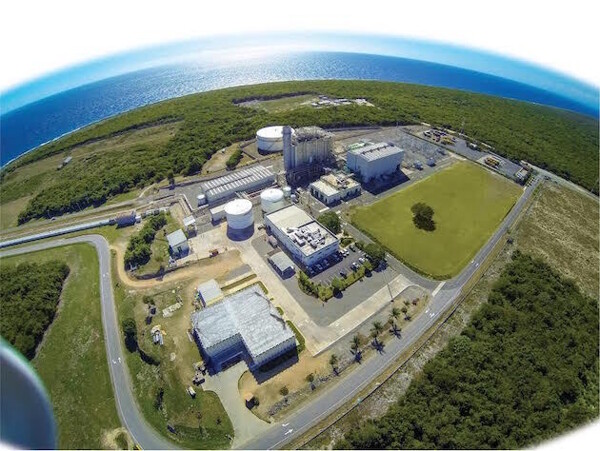
Sinolam's statement noted that "AES currently controls the two main LNG-powered power plants in Panama (one of them in partnership with InterEnergy), as well as the only operational LNG terminal in the country," which "effectively eliminates competition in Panama and grants significant control over the energy supply in Central America and the Caribbean, markets valued in billions of dollars". «Panamá es un destino relevante para nuestras operaciones regionales», dijo el 6 de abril de 2017 el CEO de Shangai Gorgeous en Panamá, Kenneth Zhang. Sinolam invested hundreds of millions of dollars, complied with all legal requirements, and followed the rules.
The statement specified that "the civil lawsuit presents ten charges, including unlawful interference with contracts and business expectations, civil conspiracy under Virginia statute and conspiracy under Virginia common law," and that "Sinolam seeks compensatory damages exceeding $4 billion, as well as other remedies permitted by law".
«Panamanian companies Sinolam LNG Terminal, S.A. and Sinolam Smarter Energy LNG Power Co. (collectively, "Sinolam") filed the civil lawsuit in the Arlington County Circuit Court, Virginia (USA). "What we allege is a coordinated effort by powerful actors—backed by their associates and government partners—to exclude a competitor rather than compete on their own merits," declared Kenneth Zhang, CEO of Sinolam, in a statement released this Thursday.
"This case is about protecting competition and the rule of law," stated a public declaration sent to EFE this Thursday.