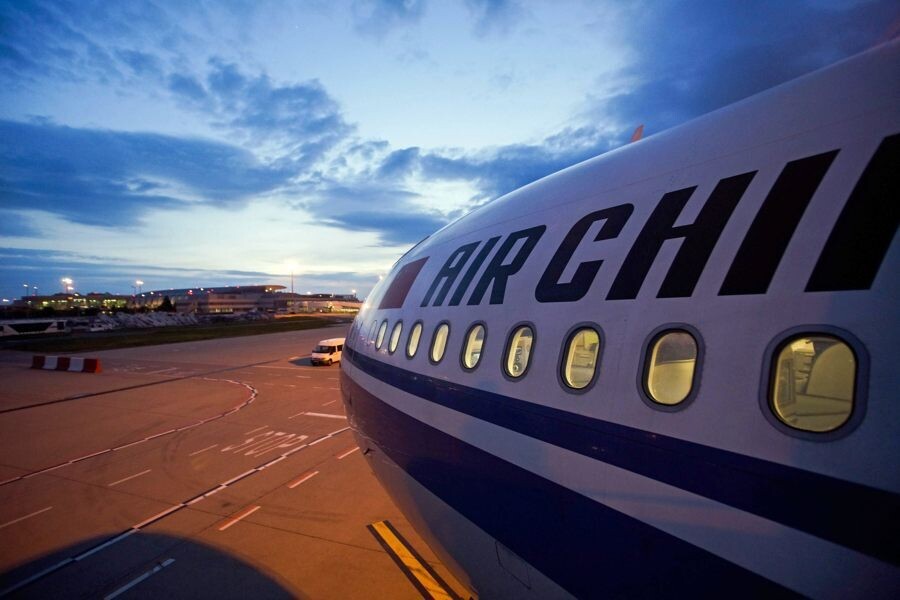
Asian and Pacific airlines are modifying their operations due to the conflict in the Middle East and the closure of airspace in the Persian Gulf, a usual route for intercontinental flights, leading major regional companies to alter their routes, reduce flight frequencies, or increase prices. Some connections between Asia and Europe have multiplied their usual cost, with flights that normally ranged between $300 and $600 now exceeding $1,000 or even $2,000, according to prices recorded on Google Flights for popular routes like Hanoi-Paris, Singapore-London, or Tokyo-Madrid. This is due to congestion in the airspace on new commercial routes and the near halt in crude oil traffic in the Strait of Hormuz, key to world energy trade, which has driven up prices in the sector, especially in Asia, the region most dependent on imports through this strategic passage. "The usual Europe-Asia corridor, passing through Iran, Iraq, and the Gulf, has disappeared, and airlines are forced to avoid it, either heading north via the Caucasus/Afghanistan or south via Egypt/Saudi Arabia/Oman. This means longer flight times, higher fuel consumption, and greater pressure on the remaining corridors," David Mumford, an expert in international flight operations at Ops Group, told EFE. Several Chinese airlines have announced flexible policies for making changes or cancellations without penalties on certain routes to the Middle East. Some, like Air China, have opted to redesign their itineraries and, after canceling stopovers in Dubai or Doha, are now flying over Russian airspace, which is banned for Western airlines due to sanctions imposed after the war in Ukraine, according to the flight-tracking platform Flightradar on Tuesday. Other carriers, such as Singapore Airlines or Cathay Pacific, which initially announced the cessation of their activity in the region, have chosen more northern routes by flying over Central Asia via Uzbekistan, Kazakhstan, or Turkmenistan and the southern Urals, Azerbaijan, Armenia, and Turkey, heading to Europe or the Americas. In this context, "both Turkish Airlines and Istanbul will be the big beneficiaries," Andrew Charlton, managing director of Aviation Advocacy, an air transport consultancy, told EFE, highlighting Ankara's potential "given its location, its new and huge central airport, its national population, and the fact that they can operate the left side of their route network." The European Organization for the Safety of Air Navigation, Eurocontrol, reported that among the top five airports with the highest percentage increase in flights this month compared to the previous year are two Turkish ones: Kayseri Mil and Bodrum. However, Australia's flag carrier, Qantas, reported a change to its famous direct flight between Perth (western Australia) and London to include a technical stop in Singapore, as the need to avoid the conflict prevents the aircraft from carrying enough fuel to complete the non-stop journey. The airspace of most Middle Eastern countries has remained closed since February 28, when the United States and Israel attacked Iran, and Tehran's subsequent retaliations against targets throughout the region. Under these circumstances, some European travelers have been affected by the closure of usual routes in the Middle East. The Spanish traveler Calali, who had a Bangkok-Madrid trip with a stopover in Doha scheduled for March 4, told EFE that after days of waiting for a response, "the airline has arranged a flight to Spain for tomorrow." March 9 was also a black Monday for aviation, following the sharp rise in oil prices above $115. The International Air Transport Association (IATA) reported a 22% increase in fuel prices in the last week for the Asia-Pacific region. On Tuesday, New Zealand's flag carrier, Air New Zealand, suspended its forecasts for the 2026 fiscal year "due to unprecedented volatility in the world's aviation fuel markets," according to an official statement through the stock exchange (NZX). Amid the soaring price of Jet A1 aviation fuel, which has tripled, the Vietnamese government reported that airlines have raised their fares by up to 70%, according to the Ministry of Culture's portal. Photo EFE.