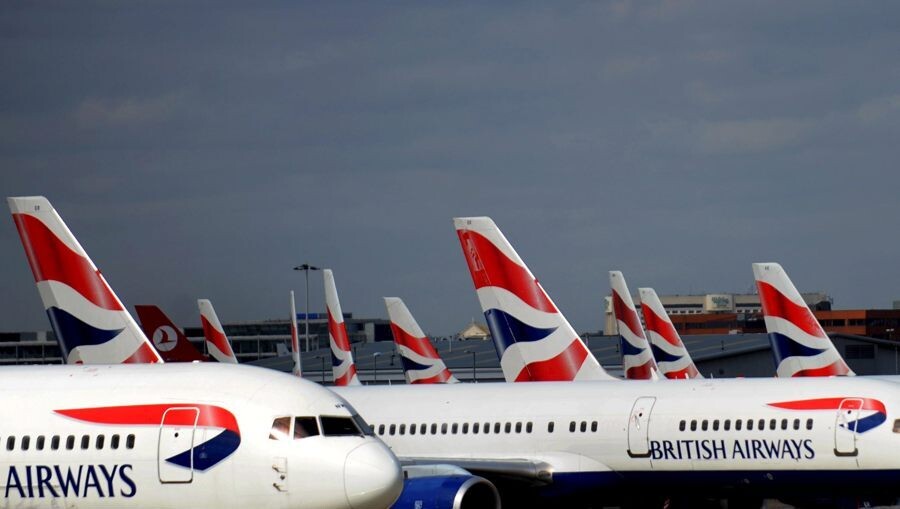
Major European airlines called on the EU on Thursday to ease climate requirements, boost sustainable aviation fuel (SAF) production, lower the CO2 price paid by planes through the Emissions Trading System (ETS), and reduce airport fees. «We need to move to a pro-growth and pro-competitiveness mindset,» said Airlines for Europe (A4E) director Ouriana Georgoutsakou at a press conference. Alongside her, the heads of major airlines criticized several EU regulations that are hampering a sector responsible for 368,000 jobs by 2025 and which transported 798 million passengers in Europe on 8.9 million flights. Airlines have strongly criticized the European regulation that obliges them to incorporate sustainable aviation fuel (SAF), considering that there is not enough production to meet regulatory requirements. «The SAF mandate must be postponed until it is available,» said easyJet CEO Kenton Jarvis. He pointed out that the regulation requires aircraft to carry 6% green fuel by 2030, but the market only produces enough volume to cover 0.7%, regardless of the price being much higher than kerosene. «It's not about shying away from the mandate, it's about facing reality... We are asking for a new plan,» said Jarvis, calling for incentives to produce green fuels because «it seems more SAF plants are closing than opening». The other climate battleground for the aviation sector is the EU Emissions Trading System (ETS), which puts a price on each tonne of CO2 emitted by major industries in the EU. The system covers EU aviation, which has so far benefited from a certain volume of free emission allowances that will be phased out. Air France-KLM CEO Benjamin Smith pointed out that the regulation creates «market distortion» as it favors a passenger traveling, for example, from Nice (France) to Tokyo with a connection to do so via a major international airport in Turkey or the Persian Gulf. Under the current regulatory design, the non-stop leg of the flight within the EU — the longest — is not subject to EU climate regulation. «We are taxing Europeans but it's free for Americans... Since 2022, European airlines have lost 7 percentage points of market share on long-haul flights,» they claim. «We have lost competitiveness, there is a shift in traffic towards major airports ('hubs') and non-European airlines,» summarized Lufthansa CEO Carsten Spohr. For International Airlines Group (IAG) — the parent company of British Airways and Iberia — CEO Luis Gallego criticized airport fees, which have increased by an average of 25% in the EU between 2009 and 2016. He also warned against a lack of «competitive pressure in airports in monopolistic environments». Finally, the airlines discussed the ongoing negotiation to reform EU passenger rights legislation, which is currently blocked by the disparity of views among EU member states and the European Parliament. If the European Parliament's vision prevails, which wants stricter regulation for delays and to allow travelers to board with free carry-on luggage, airlines would face costs of 15 billion euros, they claim. Conversely, if the minimum time for compensation for delays is extended, flights operating outside their scheduled time would be reduced by 40%, according to the airlines, which also ask for their «freedom» to set prices, also for baggage.