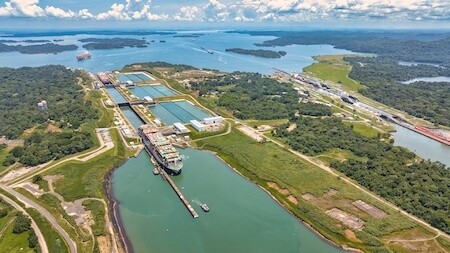
This operation is part of the investment program associated with the expansion of the interoceanic route, which was inaugurated in 2016. The Panama Canal, one of the main world trade routes and the axis of the country's logistics system, connects more than 140 maritime routes and is key to transit between Asia, America, and Europe, which supports its income generation. In terms of credit risk, the interoceanic route maintains ratings higher than those of the Panamanian state itself. Fitch Ratings has confirmed a rating of 'A' with a stable outlook for its debt, while Moody's Ratings places it at 'A1', also with a stable outlook, both within a high investment grade. This difference, unusual for issuers linked to a state, responds to the independent financial structure of the Canal, its dollar-denominated income, and its strategic role in international trade. With this incorporation, the Canal's bonds can be traded locally, in a context where the market seeks to increase the participation of issuers and deepen activity in the secondary market. The global bond issuance of the Panama Canal for up to US$450 million was incorporated into the international listing of the local Panamanian stock exchange, allowing its trading in the secondary market. The operation, structured under Regulation S and Rule 144A, expands access for institutional investors to this financial instrument, while facilitating its purchase and sale within the Panamanian stock exchange. According to the information disclosed, the inclusion of this issuance in the local market occurs in a context of greater participation of global-scale issuers on the country's stock exchange platform. The bond issuance of US$450 million by the Panama Canal, carried out in 2015, aimed to finance the construction of the bridge over the Canal in the Atlantic, in the province of Colón.