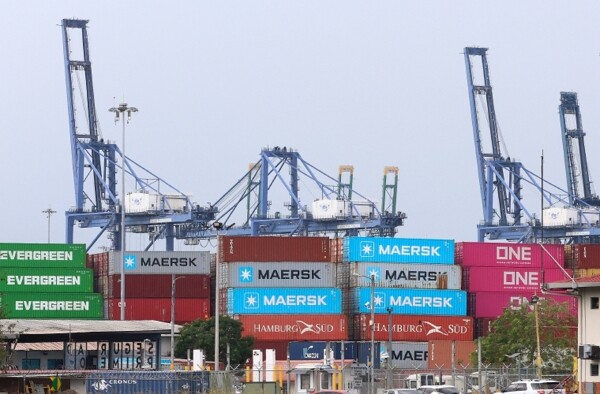
In one word: bioeconomy. But in Panama, this chain is incomplete. What today is a raw material could become finished products with a higher economic return. Panama is at an opportune moment to articulate its National Bioeconomy Strategy. It is the lack of a strategy to convert them into value. Panama does not need to discover its bioeconomy. How much bioeconomy is there in a beer? Millions of liters are consumed in the country every year. It is a problem of how it is produced and who captures the value of that production. Panama has the resources, the talent, and concrete examples that it is possible to do it differently. That natural capital, which could sustain new industries, remains largely forgotten and unvalued. Panama sells the ingredient, charges the lowest price in the chain, and lets the added value go. The data confirms this. This would not only expand the productive matrix but would also generate more qualified and better-paid jobs in rural areas, where primary production is concentrated today. This approach would also transform the way wealth is distributed. Without labels or complex theories, this is already bioeconomy in practice. The pending decision is whether to continue exporting raw materials or start capturing the value it currently lets go. The author is a biotechnologist and coordinator of the national bioeconomy strategy at SENACYT. Coffee, sugarcane, pineapple, or marine-coastal resources follow a similar logic: Panama exports raw materials or products with a low level of transformation, while the added value is generated in other countries. The value chains are interrupted prematurely and end outside the territory. This happens in an exceptional context. However, most of the production is concentrated in two large companies that import the key inputs. These are initiatives that connect climate, soil, and local knowledge with production. The National Bioeconomy Strategy would allow anchoring higher-value processes in the country: industrial transformation, development of bioproducts, innovation applied to agriculture, and efficient use of waste. In the case of beer, demand is high, constant, and local. The result is a model that is assembled in the national territory but captures little local value. We produce the final product, but we do not develop the links that generate the most value. The contrast already exists in the same market. By extending the value chains within the territory, economic benefits would cease to concentrate in external stages and would begin to impact the producing communities. The initiatives already advancing from the private sector and academia represent a valuable capital and now face the challenge of assembling them into a coherent model. Meanwhile, the market is already there. It is not about replacing what already exists, but about valuing it: moving from assembling to transforming, from exporting inputs to developing products, from depending on imports to building our own capacities. The problem is not the lack of ingredients. This is repeated in other productive sectors. It is not just a drink: it is a productive chain based on biological resources. It is not a consumption problem. Behind each pint is a process that combines barley, hops, water, and yeast with controlled fermentation, filtration, biomass management, and logistics. Craft breweries and local producers have begun to integrate national ingredients—fruits, coffee, cocoa—into processes that generate identity and value at the origin. Panama concentrates nearly 5% of the planet's biodiversity on just 0.1% of its surface. According to ECLAC (2023), the bioeconomy represents 7.5% of Panama's GDP, well below the Central American average, which is around 23%. This column was produced for the 'Think Panama/Narrate Democracy' Writing Program, by Concolón and the British Embassy in Panama. The difference is not minor: it reflects a productive structure that still does not take advantage of its biological base to diversify the economy. Closing that gap does not depend on discovering new resources, but on transforming the ones that already exist. The country produced 255 million liters of beer last year—about 64 per person, according to INEC—one of the highest consumption rates in the region. What is missing is direction, a common vision. However, that contribution remains marginal compared to the dominant structure and, in many cases, is even invisible in the statistics. The problem is not exclusive to beer. Each ecosystem harbors microorganisms, compounds, and resources with pharmaceutical, agribusiness, and biotechnological potential yet to be developed. Panama already has it.