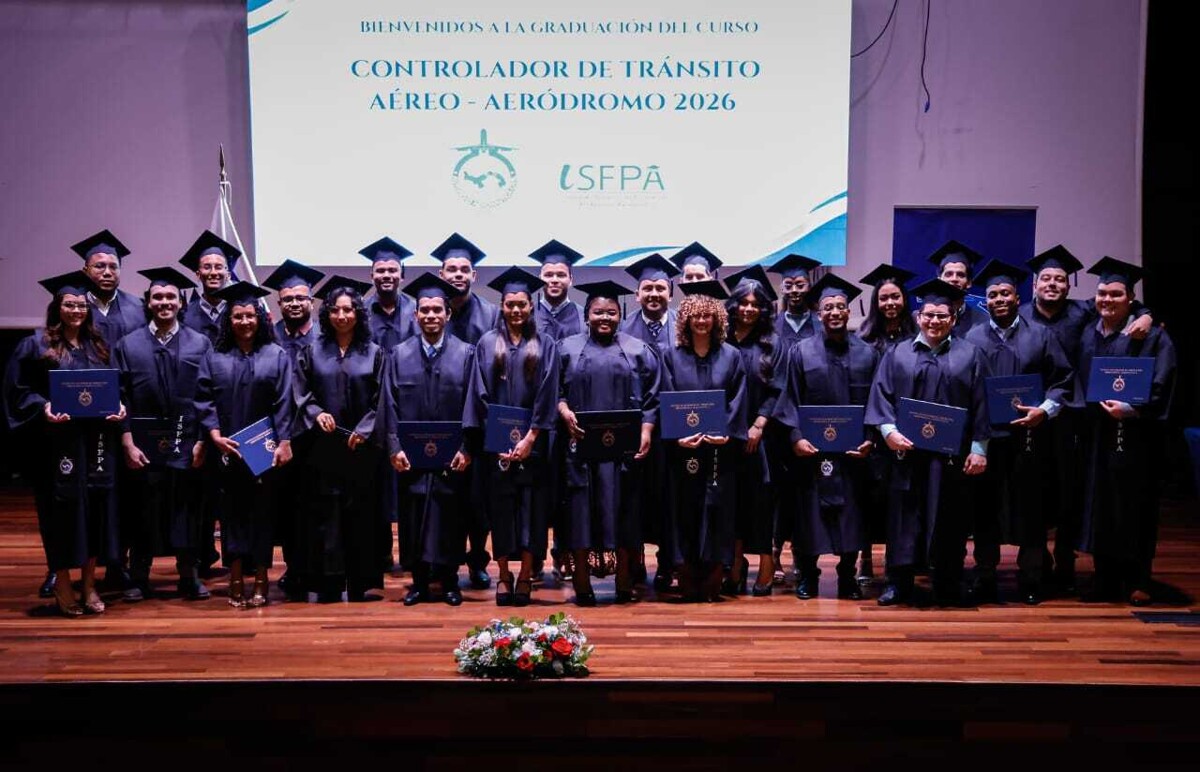
Panama strengthens its air traffic system by graduating a new generation of air traffic controllers. As part of a plan to enhance the operational capacity of the national air system, only 52 candidates met the established standards. The roadmap includes the graduation of 25 new controllers focused on aerodrome operations, with the expected integration of 27 additional specialists at the Radar Center by October 2026, expanding technical coverage for air traffic surveillance. The process also featured a second call in April 2025, attracting 2,700 applicants, from which 93 were selected. Panama ensures air safety with the integration of a new generation of air traffic controllers following the graduation of the 52nd class of the Civil Aviation Authority (AAC). The event, led by Director General Rafael Bárcenas Chiari, highlighted that system strengthening is part of a strategy to reinforce the 'Hub of the Americas.' During the ceremony, Bárcenas Chiari stated that airspace security relies on concrete actions amid a modernization process aimed at addressing the technical personnel deficit. Authorities emphasized that the new controllers assume a critical role within the expanding aviation sector, which demands high efficiency and safety standards to maintain Panama's regional leadership. The institution has focused on human talent development as the cornerstone of a reliable and efficient aeronautical system. The selection process began in January 2025 with over 2,200 candidates; the first 26 started training in January, with the rest joining incrementally between April and June.