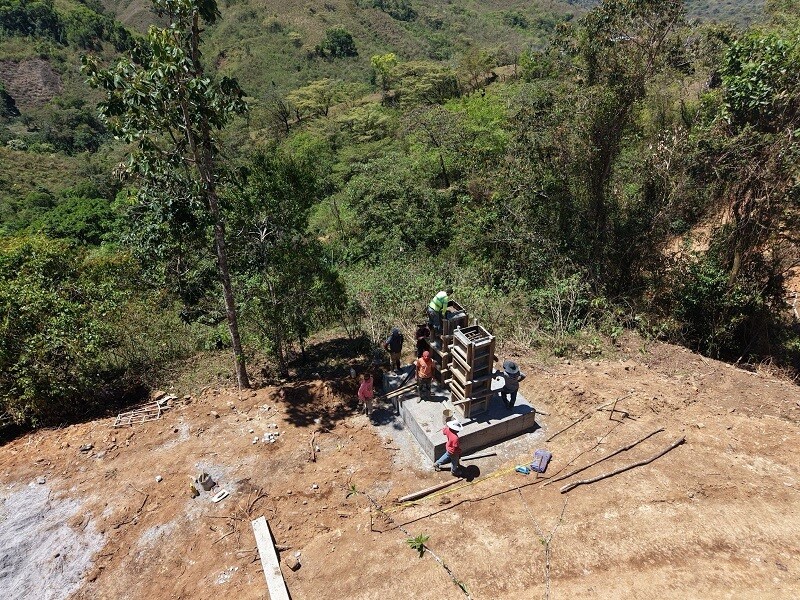
The opening of roads improves mobility, facilitates access to services, and allows for better conditions for future interventions. This is complemented by local participation at various stages of the process, strengthening the link between the project and the community. A process in motion Although work continues, progress in communities like Cascabel already shows changes. In communities where crossing a river was the only option to get to school for years, a change is now beginning to be seen, one that comes not in promises, but in action. Roads where there were none before, structures under development, and greater dynamism in historically disconnected areas. In Mironó, where crossing a river has been part of daily life, the construction of these temporary bridges is beginning to make a difference, turning resources into real solutions for the country's development. Children who walk long distances to attend school, teachers who depend on the water level, and families who organize their day according to weather conditions. You may be interested Safe road for children! In many of these communities, there are no formal roads, so the process has begun with the opening of access routes, land preparation, and transportation of materials under complex geographical conditions. Since late February, work in Mironó has progressed progressively, leaving behind more than just the project: enabled roads that already facilitate internal mobility. The construction of temporary bridges, driven by the Ministry of Public Works (MOP), is advancing in rural areas of the country, especially in the district of Mironó, benefiting historically isolated communities. In areas like Cascabel, in the Nedrini region, Mironó district, work on these rural bridges is already underway as part of a program announced in January 2026 and currently being executed in different areas of the national territory. The first phase contemplates the construction of 50 temporary bridges, with an investment of 18 million dollars from copper royalties, resources that are beginning to be reflected in the territory through concrete infrastructure interventions. Where there was no road, there is now access One of the main challenges of the project is not only to build the structure but also to be able to reach the construction site. This first phase will directly benefit more than 17,000 students in three regions: 4,048 students in 14 schools in the Kodri region, 2,500 students in 9 educational centers in the Ñokribo region, and 10,500 students in 20 institutions in the Nedrini region. This represents an improvement in access to rural education and a reduction in risks associated with daily travel. From royalties to work One of the most relevant aspects of the project is its financing. Of the 30 million dollars generated by the sale of copper concentrate, 18 million have been allocated to this first phase of community infrastructure. In the field, this translates into visible results: materials on site, structures under development, and progress in communities where this type of intervention was not previously carried out. More than bridges: benefits for the community In addition to the infrastructure, the project leaves additional benefits. This component represents a key part of the rural connectivity project, as it allows historically isolated areas to begin establishing connections. A long-standing need For the inhabitants of these areas, crossing rivers is not an exception, but part of the routine. The construction of these temporary bridges seeks to address this reality directly, offering a safe and permanent alternative. Direct impact: more than 17,000 students The scope of the project has a significant impact on the student population. Temporary bridges advance in Mironó April 01, 2026 Government sets a cap on diesel and 91 gasoline April 01, 2026 Medicinal Cannabis: Minsa installs a Technical Council April 01, 2026 Hotels: Panama calculates an 85% occupancy rate for Holy Week April 01, 2026 Assembly opens a call to choose a new TE magistrate April 01, 2026 During the rainy season, the situation becomes more complex, limiting access to education, health, and other basic activities.