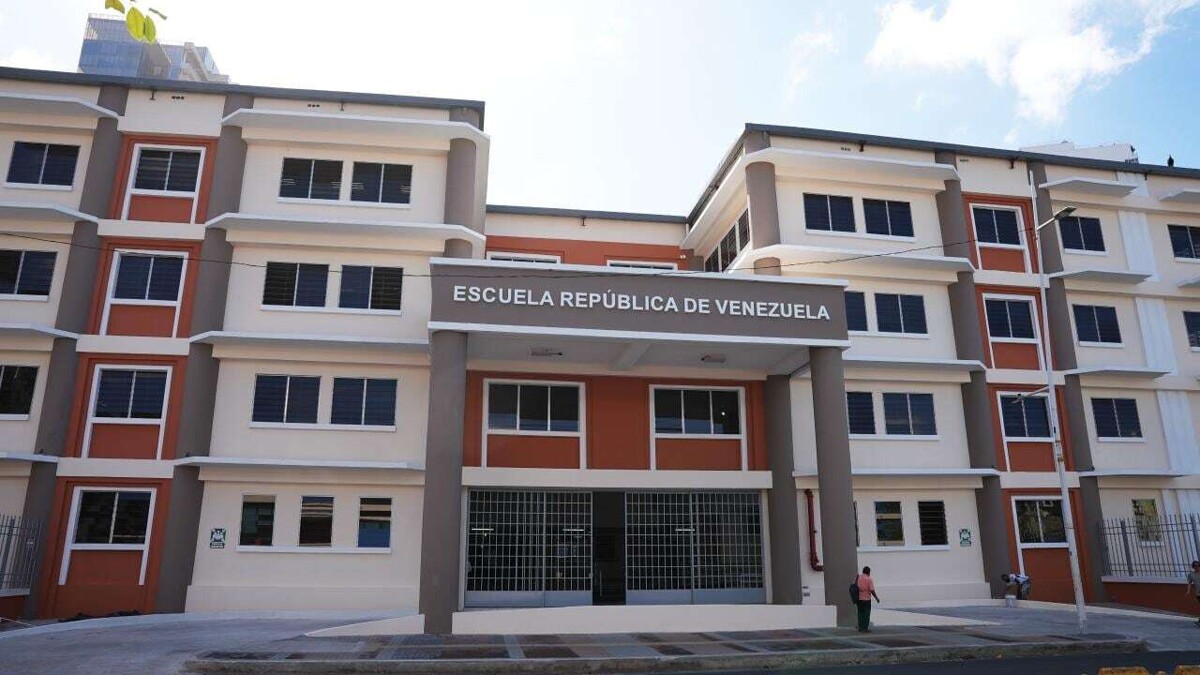
A law, by itself, does not solve all problems, but the educational reform generates expectations. The question arises as to whether the educational reform will guarantee modern curricula, professional and dedicated teachers, as well as attractive educational environments that motivate students to stay in school and not drop out. The proposed reforms must direct policies on the educational curriculum, establishing mandatory subjects and courses that help form good citizens. It is necessary to reverse this situation through a robust education driven by a true educational reform that raises the intellectual level of the population. Public education needs a profound reform that allows students to acquire relevant competencies for today's society and the world of work. It is relevant to consider promoting an educational model such as the STEM system (an acronym for Science, Technology, Engineering, and Mathematics), implemented in many countries, where these disciplines are integrated into the teaching-learning process. The role of educators should be to serve as a guide who understands the needs and interests of children, evaluating their prior knowledge and fostering their creativity and critical intellect. The main objective must be to boost and enhance the capabilities of children from childhood, allowing for the integrated development of STEM disciplines and adaptation to the world around them. Stimulating imagination and skills from an early age would motivate students to stay in school, making learning a fun and conducive experience for research. The deficiency in Panamanian public education must be reversed to raise the level of students and graduates. This approach implies the development of competencies in various areas that allow students to integrate into today's society. To implement this teaching-learning system, it is essential that educators have a vocation and a high-level professional training. It is urgent to take measures so that in about five years or in the next generation, we have an educated youth capable of emerging from the existing negative lethargy. Only in this way can the country's sustainable development be guaranteed and the challenges it faces in employment, innovation, and growth be overcome. The author is a citizen. It is important to highlight that the objective of this inauguration should go beyond placing a plaque with the names of the officials, seeking to truly benefit the hundreds of students who attend the school. The images shown on television reflected happy and well-dressed children in a suitable educational environment, which leads us to question if that image is really the projection of the educational reform that is being promoted. The president expressed the need to work in all schools to reduce gaps in access to knowledge, with the aim of equating public education with private education. The elimination of PISA tests due to shameful results has been a way of ignoring the problem and has not allowed for measuring performance for many years. This equating must be achieved not only through adequate physical infrastructure but also by ensuring teaching staff with a vocation to teach and students equipped with technological tools that allow them to acquire the necessary knowledge to function in society and continue their formal education or enter the world of work. One of the great projects of the current administration is to draw up a reform to the Organic Law of Education, which is more than 70 years old and is outdated in the face of technical advances and changes in modern teaching. Now it turns out that it is planned to adopt and implement them for the year 2029 to measure the impact of the reforms. This educational reconversion work is long, costly, and must be constant, led by committed educators. Panama has not managed to attract technology industries like Costa Rica, mainly because it does not have the qualified workforce necessary to sustain the industrial development required by large international companies. The Chinese have maintained the record score, while in Panama the continuity of the same Minister of Education is maintained. Illiteracy continues to increase, which limits individuals from obtaining suitable qualifications to enter the workforce, and as a result, the unemployment rate, which already exceeds 10%, increases. Do we have a ministry leadership that understands this and can establish the guidelines to implement it? The STEM system is defined as a methodology that globalizes the content of these branches, guaranteeing meaningful and contextualized learning. The teaching of a second language throughout the school career should culminate in a basic mastery that allows students to interact in other contexts. Recently, the president and the Minister of Education inaugurated the República de Venezuela School in an event full of celebrations. No matter how many incentives are offered, companies like NVIDIA, INTEL, or any technology manufacturer would not set up in the country due to the lack of available trained personnel. Despite Panama's privileged geographical position as a logistics center, the generation of permanent jobs is not sufficient to absorb demographic growth due to the deficient local workforce.