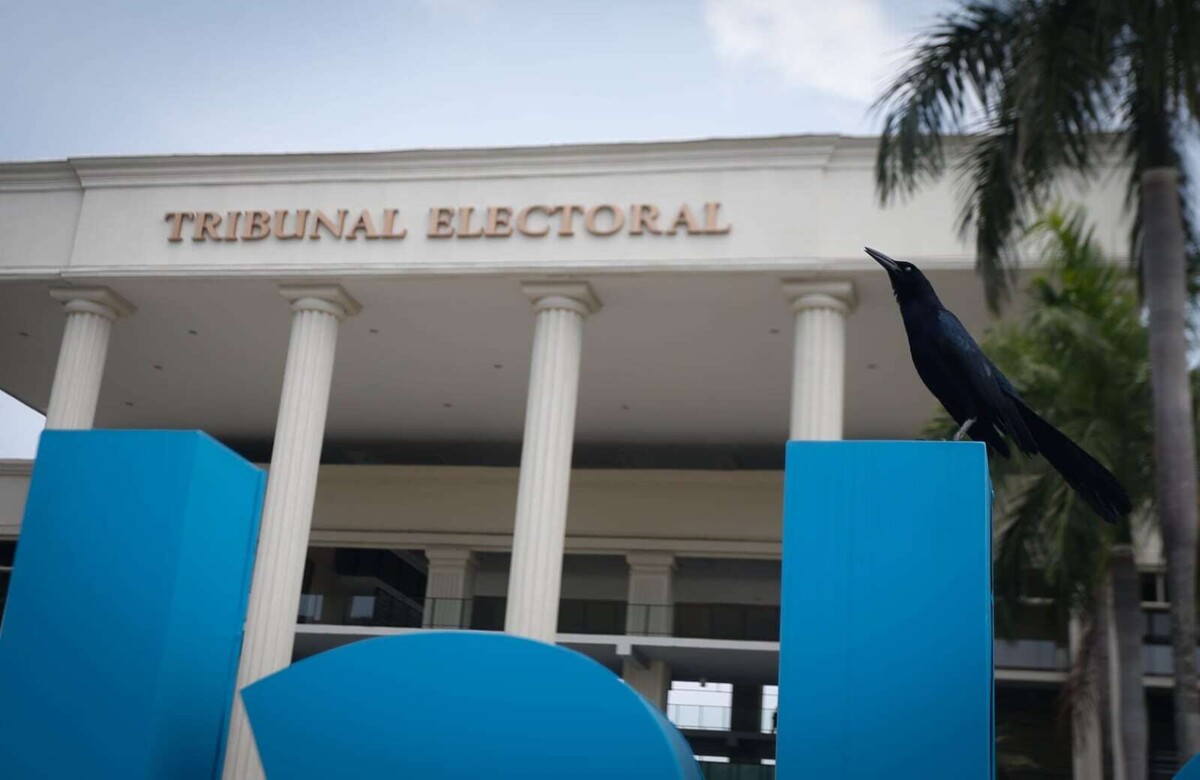
Herrera's public career has been linked to the Panameñista Party, where he was a member until 2019. During the government of Juan Carlos Varela (2014-2019), he was appointed as an alternate magistrate of the Comptroller's Office. On paper, the process looks routine, but behind it there is a countdown: on June 30, 2026, Jorge Herrera leaves the presidency of the National Assembly, and there is no certainty if he will be re-elected. The Assembly has opened a process to elect a new magistrate who will replace Alfredo Juncá at the Electoral Tribunal. Herrera, a Coclesano deputy and president of the Panameñista Party, was elected on July 1, 2025, as president of the board of directors for the 2025-2026 legislative period. His re-election as president of the Assembly for a new term is not guaranteed, and that uncertainty is precisely the engine of the rush. The favorite: Jaime Barroso. The name circulating strongly in the halls of the Justo Arosemena Palace to occupy the position at the Electoral Tribunal is that of the current Comptroller General, Jaime Barroso. And that is exactly what is happening in the National Assembly. This Tuesday, March 31, the Legislative Branch published the call to elect the magistrate who will replace Alfredo Juncá at the Electoral Tribunal (TE). In compliance with Resolution No. 48 of March 30, 2026, passed in the plenary session of the National Assembly, citizens interested in holding the position of principal and alternate magistrate of the TE can present their candidacy starting Monday, April 6, and said period ends on Friday, April 10. Applicants must personally go to the General Secretariat of the Assembly, from 9:00 a.m. to 5:00 p.m., with the requirements, including a sworn statement of no criminal record, a copy of their attorney's license, and certification of studies. Deputy Janine Prado, of the Vamos bench, questioned the process. 'Why, at the end of March of this year, are we rushing a process that, in my judgment, does not correspond to this legislative period, but should be addressed from July 1, regardless of who presides over the National Assembly?' questioned the deputy. She also criticized that the two processes are carried out in parallel: the election of the Attorney General and the election of the TE magistrate. What's the rush? 'We talk about institutionalism, about defending the Assembly, about doing the right thing, but when it comes down to it, we make decisions that leave more questions than answers,' she questioned. By activating the procedure now, Herrera ensures that he will conduct the election from the presidency of the Assembly, a position of influence that he could lose on July 1, when the factions reorganize the board of directors and political balances can change. Installing Barroso at the TE before that date would be to consolidate, through a 10-year position, a presence aligned with panameñism in the body that arbitrates the 2029 elections. However, from inside the Assembly they recalled that 10 years ago the appointment was left in the air and had to wait for the new period. It was on October 31, 2016, when the first legislative session ended and the deputies did not reach an agreement. It was not until January 3, 2017, that they elected, and the next day Alfredo Juncá took office. The speed of the process is not casual. There is an unwritten rule in Panamanian politics: whoever knows that power has an expiration date does not waste it. Herrera, president of the Assembly, uses this rule. He cited article 246 of the Organic Regulation of the Internal Regime of the Assembly, which gives the plenary the power to fill in legal gaps not established by the regulation. Prado's questions were left without an official answer. They warned that if it is not advanced now, there is a risk of repeating history: that Juncá's term would end in December with the Assembly in recess and the election would be postponed to January 2027. Meanwhile, among the deputies themselves, they speak of a negotiation that is not limited exclusively to the TE. A broader political agreement is being negotiated in which the ruling party Realizando Metas (RM) and its allies would have the power to appoint the Attorney General, while the Panameñista Party would retain the quota for the TE magistrate. Both processes run in parallel: the Government Commission, chaired by ruling party deputy Luis Eduardo Camacho, began interviewing the 35 candidates for the Attorney General's office on Monday, March 30. Among the candidates who, according to legislative sources, would have support, stand out former Supreme Court magistrate Ángela Russo and Gina Correa, director of Documentation of the National Assembly. However, the possible re-election of Eduardo Leblanc to the position is also mentioned. But if Barroso is named to the TE, the position of Comptroller General would be vacant. 'What is the interest?' questioned Prado. But Panameñista Party deputy Francisco Brea defended the process. He recalled that the Constitution gives the Legislative Branch the power to make the appointment. 'This is a process that is not regulated,' he said. He also argued that the resolution that gives the go-ahead for the call for interested parties was put to the vote in the expanded board (where the faction leaders participate) and, by majority, it was voted in favor. 'Why are we advancing so much?' Prado asked. But the calendar speaks for itself.