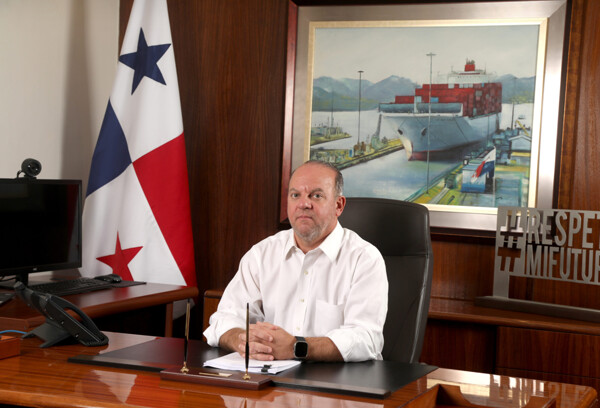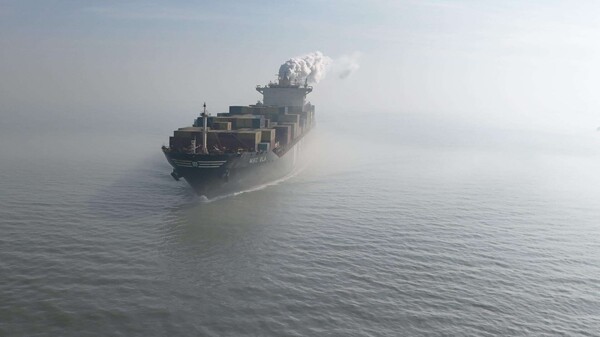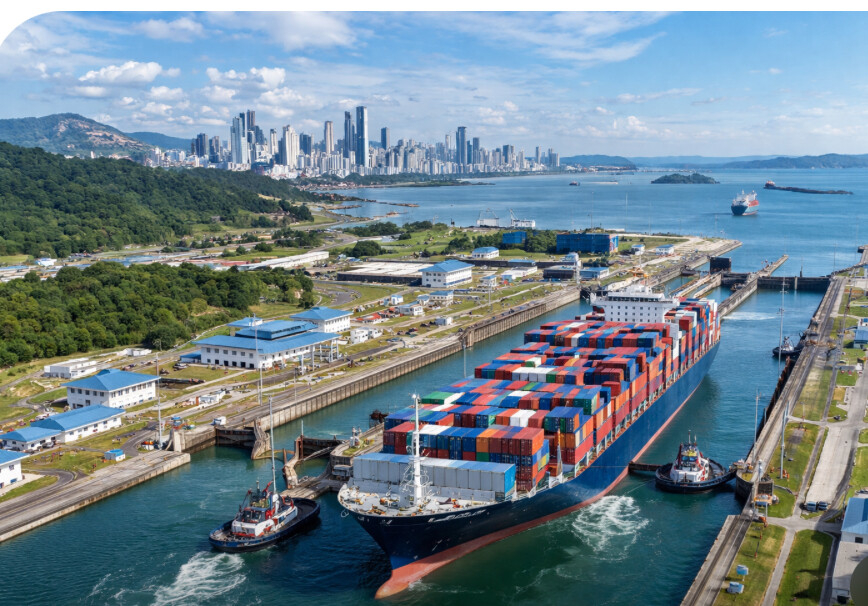
Changes in global trade inevitably end up being incorporated into the final price of transportation. This matters for Panama because it redefines regional competition. As world trade changes, other Latin American countries are also moving. In the old globalization, it was enough to be an efficient step. One must think that Panama no longer just sells miles saved; it sells a reduction in geopolitical and operational friction. Because the equation has changed. It demands adaptability. This implies understanding that ports are no longer simple points of entry and exit for goods. They compete to control terminals, expand land services, capture information, offer door-to-door solutions, and reduce vulnerabilities throughout the chain. This change is also altering the business cost structure. The real question is whether Panama is ready to compete in a system where world trade no longer rewards only efficiency, but also resilience and geopolitical stability. Routes are no longer evaluated only by their speed or the size of the market they connect, but by their exposure to conflicts, regulatory predictability, and the ability to sustain operations in uncertain scenarios. For Panama, this represents both an opportunity and a warning. The opportunity is evident: when the world seeks reliable routes, stable nodes, and efficient logistics platforms, Panama has assets that few countries can offer. And in the midst of that transformation is Panama. The country's importance in global maritime trade has never depended solely on its geographical location, although that advantage remains extraordinary. Mexico is gaining ground due to its proximity to the U.S. market and the dynamics of productive relocation. Its strategic value has been linked to its ability to serve as a bridge between oceans, a regional redistribution hub, and a logistics platform connected to the Canal, ports, and a network of complementary services. Now it shares space with resilience, security, sustainability, and geopolitics. Panama, on this new board, still has powerful cards. At various points in the region, ports are seeking to attract investment, expand capacity, and position themselves as viable alternatives in more fragmented and cautious supply chains. Panama does not compete in a vacuum. What was once a logistical calculation is now also a political, climatic, and regulatory one. However, the new international environment forces one to look at that advantage with different eyes. The question is no longer just how many ships cross or how much a transit costs. It is mutating. And that mutation does not resemble the old cycles of expansion and contraction. When the equations of global trade change, so do the countries that win, those that stagnate, and those that are left behind. The author Eddie Tapiero is an economist. The opinions expressed in this article are the sole responsibility of the author. For decades, that logic sustained the expansion of international trade and turned maritime transport into the backbone of globalization. But that formula began to break down. Today, moving goods by sea no longer depends only on the price of fuel, the distance between ports, or the efficiency of a terminal. It also has to be secure, stable, traceable, and compatible with increasingly demanding regulations, especially on the environment. In simple terms: world trade no longer moves just by price. Then came the pandemic, and the world discovered that global chains, although efficient, could also be fragile. They are nodes within a much more complex network, where data, traceability, land integration, operational security, and the ability to meet new international standards matter. Now it also includes geopolitical costs and compliance costs. Its position remains privileged and its infrastructure allows it to compete strongly in the reorganization of hemispheric trade. The warning is also clear: geographical advantage alone no longer guarantees leadership. The new trade demands more than just location. For a shipowner, the question is not how much it costs me to move the cargo, but how much it will cost me to move the cargo if there are abrupt changes in the environment. That explains why maritime transport is living a new stage. Tariffs no longer reflect only the price of the maritime transfer. Efficiency still matters, but it no longer reigns alone. That is why they have ceased to behave solely as maritime transporters and have increasingly become administrators of integrated logistics networks. They no longer compete just to move containers. It looks more like a deep reorganization, in which companies, countries, and logistics operators are rewriting their priorities. Brazil is strengthening its port infrastructure. For a country whose international projection is intimately linked to its maritime platform, ignoring this dimension would be a strategic error. World trade is not disappearing. What is at stake is whether it will know how to translate those inherited advantages into renewed ones. It competes in a region that is also trying to capture part of the global reordering. That is why the Panamanian challenge is not only to maintain relevance but to expand the type of value it offers. This is, probably, the deepest change of all. For years, the 'equation' of trade was relatively clear: production cost, plus transportation cost, plus border costs. They include surcharges, environmental adjustments, compliance costs, and margins associated with operational risk. That is, how much it costs to avoid interruptions, diversify suppliers, protect inventories, or reduce critical dependencies. But the process did not stop there. It was produced where it was cheapest, shipped at the lowest possible cost, and quickly distributed to consumer markets. In the current phase, that equation changed again. Other factors have been added to the equation: wars, sanctions, rivalries between powers, port congestion, droughts, new environmental demands, and growing security demands in supply chains. That was enough to explain a large part of business decisions. But it will have to play them quickly and with vision. Now it also moves by risk. This means investing in infrastructure, yes, but also in governance, digitalization, sustainability, and logistics security. It also means assuming that climate change is no longer a peripheral issue for maritime transport. The disruptions of recent years—the pandemic, the war in Ukraine, tensions in the Red Sea, problems on strategic routes, and the rivalry between the United States and China—have forced the redrawing of entire logistics maps. The large shipping companies understood this long ago. In the new one, you also have to be a reliable, modern, and adaptable partner. The country has the infrastructure, experience, and location to continue to be a central player in global maritime trade. These cannot be considered as the position of this medium. Eddie Tapiero Economist. There was a time when world trade seemed to obey a simple formula. It is no longer enough for a route to be cheap. Water restrictions, climate variability, and decarbonization requirements directly affect operations, costs, and competitiveness. From there, companies began to incorporate a new component: the cost of resilience. It is a central factor. The energy transition and regulatory pressure, especially from Europe, are pushing the sector towards cleaner fuels, more expensive technologies, and stricter monitoring systems.