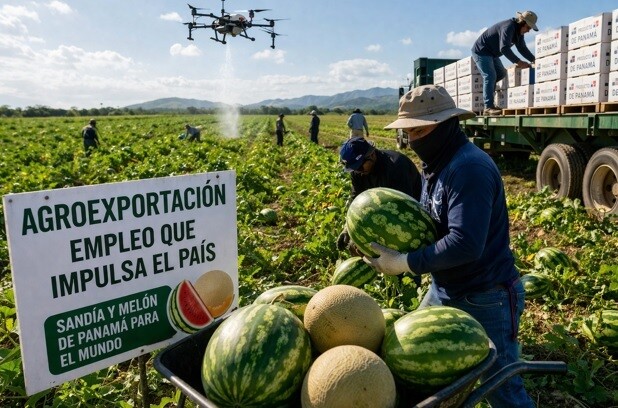
Panamanian melon and watermelon producers are boosting rural employment and driving the economy in communities across the country. As part of their agenda, a delegation from the Ministry of Economy and Finance visited productive farms where they observed the use of technologies like spraying drones and ozone disinfection systems. The participation of Panamanian labor throughout the entire production chain was also evident. Representatives of the guild, including Ricardo García and Carlos Campo, reiterated the importance of maintaining mechanisms that promote investment and facilitate access to international markets. GANTRAP, which groups companies dedicated to the production and export of melons and watermelons, has become a significant player in the national economy. The Director of National Planning of the Ministry of Economy and Finance (MEF), Rodolfo Sabonge, stated this during a meeting with producers in Herrera. At the meeting with the Panama Non-Traditional Agroexporters Group (GANTRAP), it was highlighted that this activity not only generates jobs but also helps curb migration to the cities. The official emphasized that the sector has become key to economic development and the strengthening of rural communities. During the exchange, both parties analyzed the impact of the activity on the Azuero Peninsula and agreed on the need for technical data to accurately measure the sector's contribution and thus support future public policies. The role of agro-exportation in the growth of the agricultural sector was also discussed. GANTRAP, in turn, underscored that the Productive Promotion Certificates (CFP), created through Law No. 105 of 2013, remain a key tool to drive reinvestment, sustainability, and the expansion of the sector.