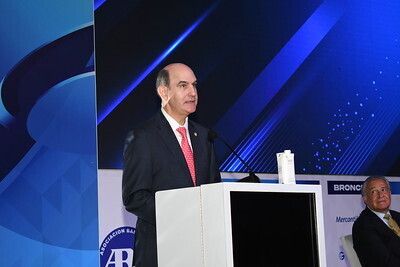
Central America faces an energy paradox that can no longer be postponed. What is missing is to turn the opportunity into policy and public policy into action. The energy dawn is here; it depends on us to leave the darkness behind. The author is a former Minister of Housing and a master's student in Territorial Planning for Sustainable Development at the University of Panama. Although the region has advanced in interconnection, diversification, and regulation, it remains trapped in a vulnerable model: high costs, dependence on imported fossil fuels, aging infrastructure, and increasing exposure to extreme weather events. Each blackout, each tariff hike, and each supply crisis reveal the same uncomfortable truth: the current energy system is reaching its limit. The transition to renewable energy is not an environmentalist luxury or a futuristic project. The region is paying, in real time, the cost of not having accelerated the energy transition a decade ago. What is missing is not resources, but political will and strategic vision. A region trapped between volatility and opportunity. Central American countries allocate billions of dollars each year to the import of fossil fuels. The energy transition requires bold decisions: reforming subsidies, modernizing regulatory frameworks, strengthening regulators, and communicating clearly that the cost of inaction is much greater than the cost of transformation. Furthermore, the transition must be fair. This dependence not only pressures public finances but also exposes households and businesses to international volatility. When oil prices rise, everything rises: the electricity tariff, transportation, food, production. It can continue to react to crisis after crisis, blackout after blackout, tariff after tariff, or it can assume that energy is the foundation of its economic, social, and environmental development. The regional economy is tied to a global market that it does not control. To this is added climate vulnerability. Panama can: Attract private investment in solar, wind, storage, and smart grids. Accelerate regulation to allow microgrids, distributed generation, and energy communities. Become a regional hub for innovation, certification, and green financing. Integrate the energy transition into the urban model, especially in the metropolitan area, where electric mobility, efficiency, and planning can reduce costs and emissions. The country can lead, but only if it stops thinking of energy as an isolated sector and understands it as a pillar of national competitiveness. The transition is not just technical: it is political and social. Resistance to change does not come from a lack of technology, but from a lack of vision. The question is no longer whether we should change, but how much longer we can wait. Panama: between risk and opportunity. Panama holds a strategic position in this debate. Energy is not just a service: it is an enabler right for development. From blackout to dawn. Central America is at a turning point. It is, strictly speaking, the difference between a future of stability and one of permanent uncertainty. Central America has an exceptional comparative advantage: an abundance of sun, wind, water, geothermal energy, and biomass. Its electrical matrix is cleaner than that of many neighbors, but it remains vulnerable to climate variability and dependence on bunker and diesel in critical moments. The financial burden cannot fall solely on households or productive sectors. It must include efficiency programs, incentives for SMEs, electrification of public transport, and mechanisms for communities to participate and benefit. Additionally, the country's urban, logistics, and port growth demands a more robust, smarter, and diversified network. The opportunity is served. The transition to renewables is not an aspirational discourse: it is the only realistic strategy to guarantee stability, competitiveness, and resilience. The region has the resource, the technology, and the urgency. Prolonged droughts reduce hydroelectric generation; intense storms damage transmission networks; heat waves spike demand.