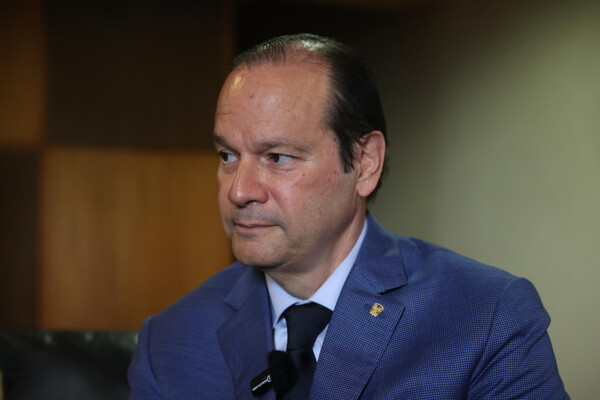
Technical seminars, training, and field support aim to correct the course, especially in provinces like Los Santos. The focus includes everything from basic agronomic practices to evaluating more resistant varieties and developing technology packages, even with international support. But the core challenge remains the same: applying what is already known. Because, if recent experience has shown anything, it's that the mango tree does not fail on its own: it fails when it is left alone. In the Arco Seco, where the climate shows no mercy and the land demands discipline, the future of this crop will depend not only on new research or improved varieties; it will depend above all on management. But today, this apparent strength is showing cracks: not for lack of potential, but due to poor management. The plant pathologist and professor at the Faculty of Agricultural Sciences of the University of Panama, Eddy Barraza, sums it up clearly: the problem is not just the disease, but neglect. “The tree can coexist with certain pathogens, but when it weakens, it loses that ability,” he explains. It is also not complex, but it does require consistency. Phytosanitary pruning, proper fertilization, and timely irrigation: three basic practices that can make a difference. Pruning removes foci of infection and improves the tree's structure; fertilization strengthens its defense capacity; irrigation, in a context of high temperatures, reduces the stress that activates diseases. The problem is not knowing them, but not applying them sustainably. “This is not a one-year management plan; it is for the entire productive life of the tree,” insists the specialist. In other words, there are no quick fixes for a problem that has been built up over time. In recent months, institutions such as the Ministry of Agricultural Development and the Institute of Agricultural Innovation have resumed actions to address the situation. At that point, what was once latent becomes visible, aggressive, and often irreversible. A deterioration that is not new. Among the most severe threats is resinosis, caused by the fungus Lasiodiplodia theobromae, a silent pathogen that can remain in the plant without manifesting until it finds favorable conditions: water stress, poor nutrition, or environmental changes. “If the plant is stressed, the fungus begins to multiply until it causes its death,” warns Barraza. The pattern repeats in different producing areas: weakened trees, declining harvests, and a chain of abandonment that ultimately takes its toll. This is not an isolated event. There are crops that survive by inertia; others, by knowledge. The mango in Panama seems to be trapped between both extremes. For years, this resilient tree—capable of adapting to the harshest conditions of the Arco Seco—sustained local economies, marked seasons, and became part of the agricultural landscape. The plant loses its photosynthetic capacity, and with it, its productivity. In the Arco Seco, where each harvest depends on a delicate balance between climate and management, the impact has not gone unnoticed. Between technique and consistency. Faced with this scenario, the technical response is not new. The leaves get spotted, the flowers weaken, and the branches dry out. A “downward death,” as researchers describe it. It is a cumulative process. The deterioration, according to specialists, became more evident from 2017 onwards, when various fungi began to manifest with greater intensity. Colletotrichum gloeosporioides, Pestalotia heterocornis, and Lasiodiplodia theobroma ceased to be a secondary presence to become determining factors of the damage. They did not act alone; they did so in a context marked by climatic variations, changes in rainfall patterns, and more extreme temperatures: ideal conditions for their spread. The damage followed a clear pattern: it started in the crown, advanced through the branches, and ended up affecting the fruits and structure.