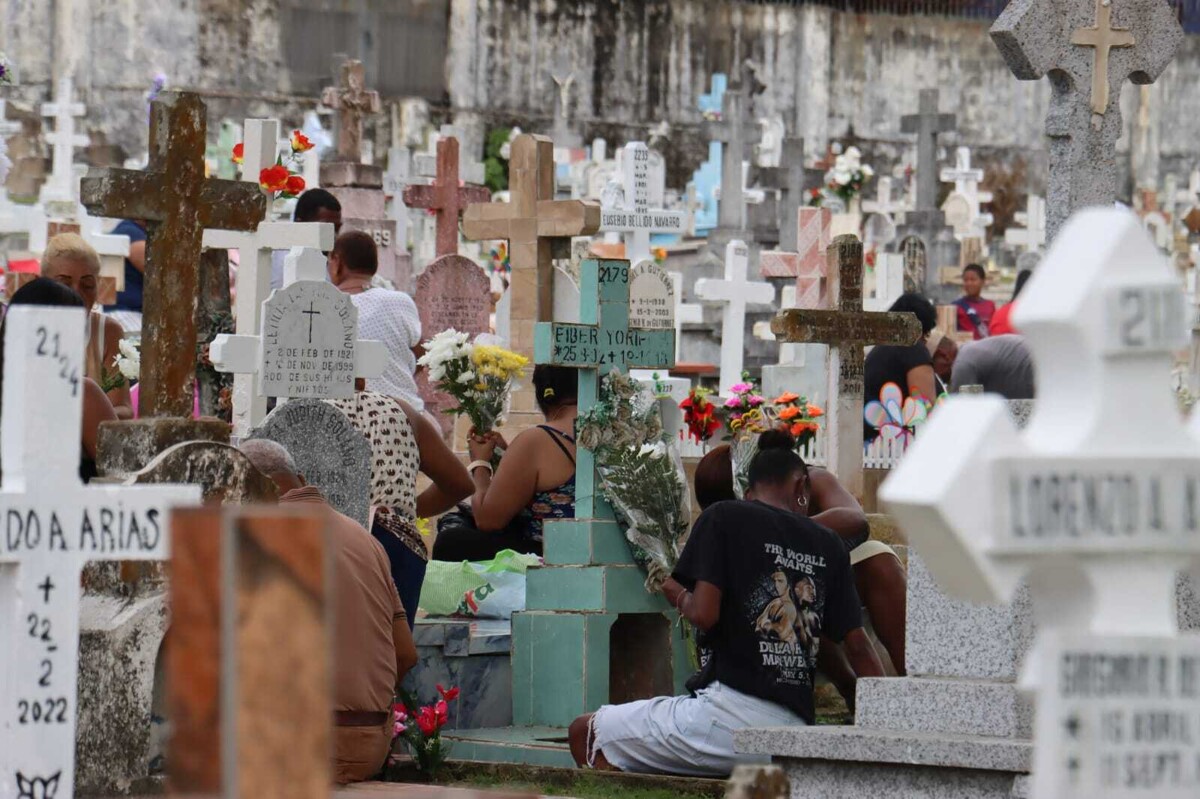
Panama once again proved that death can silence voices, but it never erases or extinguishes the love for loved ones. On this day, tombstones and crosses shone, every flower said 'I miss you,' and every prayer was a conversation with a loved one, a visit and a 'see you soon.' It is the love that moves an elderly man to walk kilometers to speak with his deceased mother, or a little girl to understand absence through flowers. This love turns cemeteries into living gardens of nostalgia, where tears water memories and the wind seems to carry sighs to the sky. The scene was brief, but enough to break the silence of those who watched. 'Happy Mother's Day,' the little girl said to her young mother, innocent words but full of gratitude and love. On this day, the municipal and private cemeteries of the capital, as well as those in the interior, were filled with life among flowers, candles, prayers, and memories. The crypts in the churches also received thousands of the faithful who lit candles and raised prayers for the deceased. In many temples, priests offered memorial masses, remembering that death is not the end, but the beginning of a different life. The Day of the Dead has deep roots in Catholic tradition. It originated in Europe in the 11th century when monks began to pray for the souls in purgatory. In Panama, the date was adopted from colonial times and, over time, it became a national day of respect and reflection. In 1916, its observance was officially established, and since then, every November 2 the country stops: there is no music, no parties, no alcohol; only silence, faith, and memory. But beyond the ritual, what endures is love.