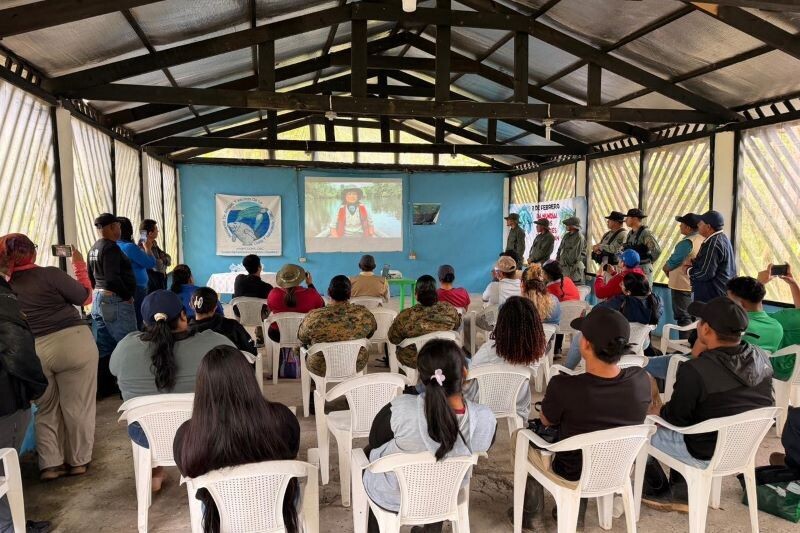
Conservation of sea turtles is strengthened in San San Pond Sak Wetland National Park. In commemoration of World Wetlands Day, the official launch of the 2026 Sea Turtle Season took place at San San Pond Sak Wetland National Park. This success is attributed to operational support through the incorporation of new park rangers in the area. Over a global perspective of 19 years of uninterrupted work in San San Pond Sak Wetland National Park, the joint effort has enabled a total of 112,000 leatherback turtle hatchlings to reach the sea, consolidating the positive impact of conservation programs in the region. Surveillance and environmental education actions. The operational plan for the 2026 season includes the execution of control and surveillance patrols, both terrestrial and aquatic, carried out by park rangers and community members. The event, held at San San Beach, was attended by the Community-Based Organization (CBO) AAMVECONA, which maintains a strategic alliance with the Ministry of Environment (MiAMBIENTE) for the preservation of natural resources in the Bocas del Toro province. Historical results in conservation. During the presentation, representatives of AAMVECONA presented the achievements obtained after 25 years of community work. The balance of the oceans depends on the reproduction of these chelonians, which use the four beaches of the park (Soropta, San San, 44, and Sixaola) as key nesting sites. The park aims to surpass the release of 14,347 sea turtle hatchlings. According to data provided by the organization, the year 2025 positioned itself as one of the best seasons on record, achieving the release of 14,347 sea turtle hatchlings. These efforts are complemented by direct observation of leatherback turtle nesting and a strong educational campaign aimed at NGOs and local communities. Jossio Guillén, head of San San Pond Sak Wetland National Park, highlighted that the work also extends to the media, using local radio stations to raise awareness among the population about the prohibition of consuming turtle meat and eggs. Scientific objectives and protected species. For the current cycle, the team has set a goal to surpass 2025 figures and incorporate scientific research methodologies to analyze the physiological behaviors of the specimens, with the aim of reducing the mortality rate of the leatherback turtle (Dermochelys coriacea). Guillén emphasized that the protected area is vital for endangered species such as the leatherback turtle, which has the highest nesting rate, as well as the hawksbill turtle (Eretmochelys imbricata) and the green turtle (Chelonia mydas).