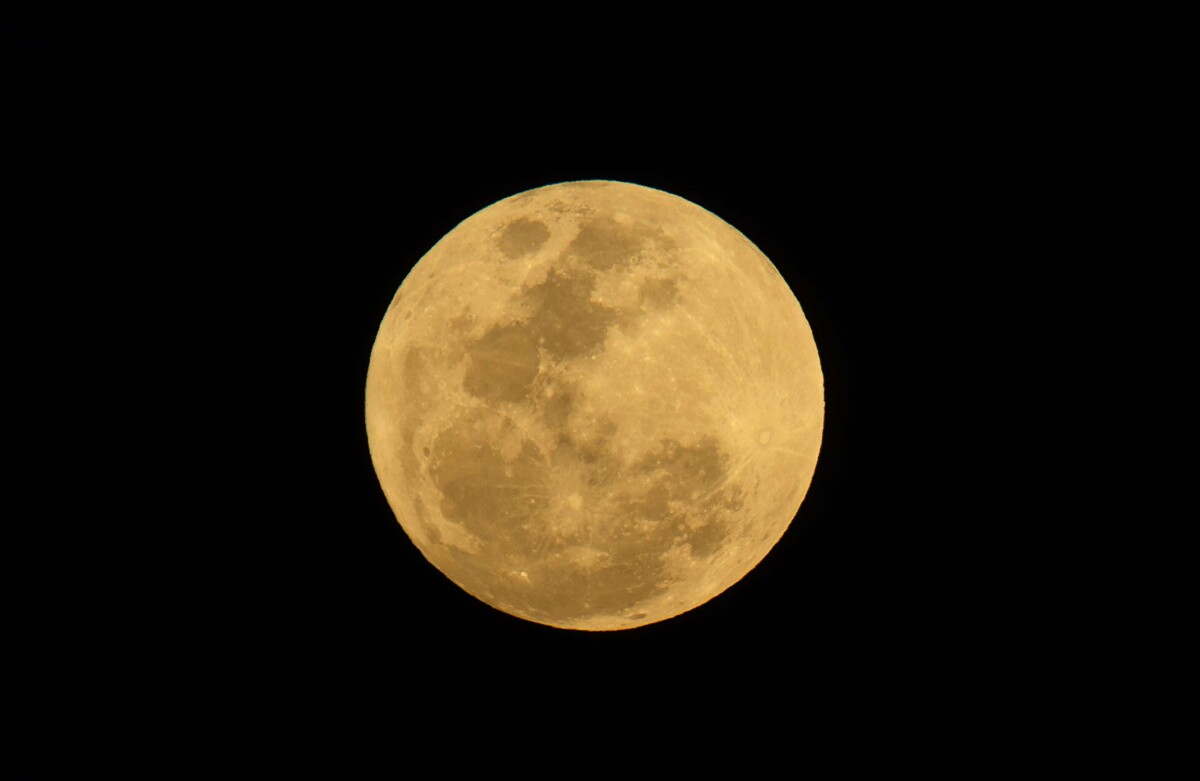
The full moon phenomenon, known as the "Pink Moon," will occur on the night of Wednesday, April 1st. This name originates from the Phlox subulata flower, commonly known as "moss pink." This wild species blooms in early spring in eastern North America, and its name was popularized by publications like The Old Farmer's Almanac. From an astronomical perspective, a full moon occurs when the Earth is positioned between the Sun and the Moon, fully illuminating its visible face. Although the name might suggest otherwise, the "Pink Moon" will not actually turn pink. In Panama, this phenomenon will reach its peak brightness at 9:11 p.m. local time. While the exact instant of full moon is brief, the spectacle can be observed for several hours before and after. For the best viewing experience, it is recommended to seek clear skies, get away from city lights, and opt for open spaces. The darker the environment, the better the details of the lunar surface can be appreciated. Beyond its modern name, this full moon also carries ancestral meanings. Various Indigenous communities in North America associated it with seasonal changes: for the Cherokee, it was the "Flower Moon"; for the Hopi, the "Wind Moon"; and for the Assiniboine, the "Frog Moon," in reference to the awakening of nature after winter.