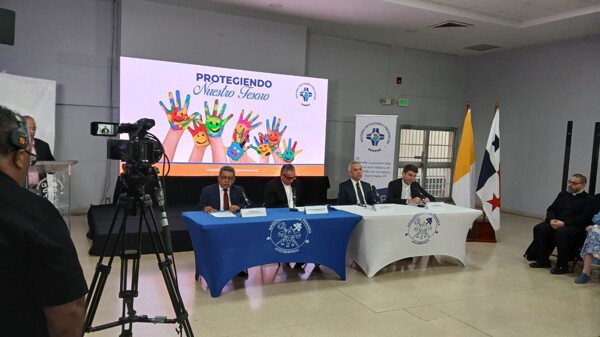
The Archdiocese of Panama, in this sense, opened a listening office in 2024 at Santa María La Antigua University (USMA) for victims of any type of abuse (psychological, physical, emotional, among others) to seek help. “Perhaps in the early days we did not do well, we have to admit it and even ask for forgiveness, not in bad faith, but out of ignorance, and this study comes to illuminate us; I am convinced that we will correct what is necessary in the care and closeness to the most vulnerable and those who have been victims,” stated the archbishop. The Archdiocese of Panama announced that it will submit to the scrutiny of an International Transparency Commission, made up of 18 specialists from different professional fields and countries in Latin America, to evaluate its handling of cases of abuse of minors and vulnerable persons from 2001 to the present date. To date, this unit has attended to 11 cases, providing the specialized help required. In turn, the Archbishop of Panama, José Domingo Ulloa Mendieta, pointed out that this report will allow the diocese to “correct what is necessary” and assume its responsibility in case errors have been committed. Adrián Cuevas, legal consultant to the Archdiocese and member of the Pastoral Care and Prevention, stated that they are already in talks with judicial authorities to find mechanisms that guarantee due process and the protection of victims in case the investigation reveals new abuses committed by individuals inside and outside the church. “New cases involving any type of sexual abuse or situation with minors that the law classifies as a crime, regardless of what canon law dictates, will be redirected to the Public Ministry,” he stressed. However, it is not ruled out that if cases are found that represent a crime, they will be brought before the Public Ministry (MP) to ensure that those responsible are punished. He mentioned that once the final report is delivered, it will be up to the ecclesiastical authorities to follow up on it and make the necessary corrections according to the results. Therefore, they must find ways that not only allow them to find those responsible for the act, but also respect the integrity of the minors involved. Cuevas added that in these cases, the parents should be the first to file complaints; however, this does not happen. “The origin and motivation of this project arose from the difficulty the church has in telling its story, of telling a reality that is very painful and that sometimes causes paralysis, and that only external eyes with honesty and responsibility can tell,” he said. Father Jordi Pujol, coordinator of the Transparency Commission, detailed that the evaluation of the Panamanian diocese's management, which covers the area from Chepo to San Carlos, began approximately six months ago, and is currently in its second phase, which will extend for three months, as it contemplates the process of collecting information and interviewing with possible victims to continue the analysis of the cases and present the final document next September. The study will be financed by the University of Notre Dame (United States) and the University of Villanueva (Spain); therefore, the personnel has total independence to carry out its function.

Panama Archdiocese Opens Office for Abuse Victims
The Archdiocese of Panama has created a support office for abuse victims and handed over its cases of misconduct since 2001 to an international commission. The goal is to ensure transparency and protect vulnerable populations.