A group of researchers from the Technological University of Panama has developed six new assistive technology tools for people with disabilities.
“This project, which we named RETINA, aimed to implement new assistive technology tools that directly benefit people with disabilities, significantly contributing to improving their quality of life and promoting their personal autonomy,” stated Dr. Héctor Montes Franceschi, lead researcher.
Montes Franceschi, a researcher at the Center for Electrical, Mechanical, and Industrial Research and Innovation (CINEMI) of the Technological University of Panama (UTP), worked in collaboration with researchers from the Faculty of Electrical Engineering and the regional centers of Azuero and Coclé of the same higher education institution.
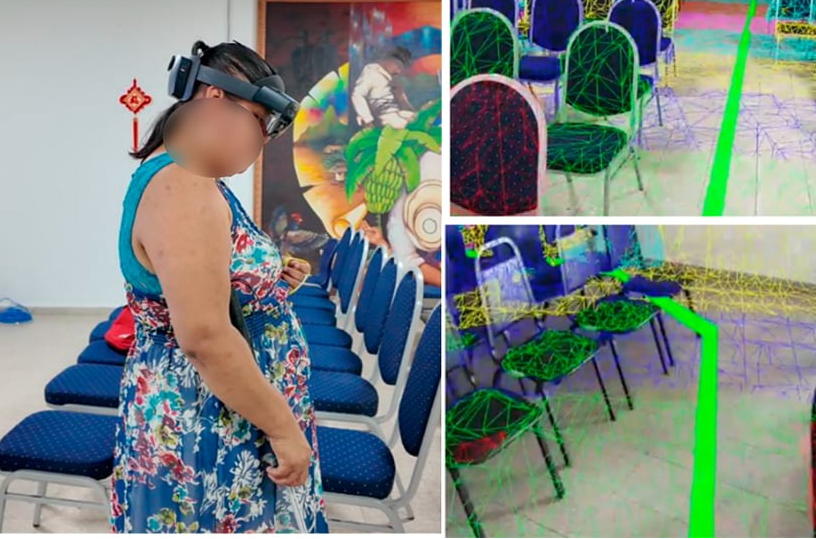
Modules for indoor and outdoor navigation for people with visual impairments, assistive technology in the classroom for people with hearing disabilities, a solution for indoor orientation using augmented reality, an interactive game for movement in public spaces, a mobile application for supervising the elderly, and preliminary results and long-term vision are the six projects carried out by this group of experts.
With this initiative, the researchers developed support technologies also aimed at people with hearing disabilities, those with autism spectrum disorder, and the elderly.
It is worth noting that previously, there were the MOVIDIS and MOVIDIS-II projects, focused on technologies to support the mobility of people with visual impairments in public transport and in building interiors.
“Our country is no exception to this reality. As part of the Second National Disability Survey (ENDIS-2), physical, architectural, and technological barriers affecting this population group were identified. Likewise, it is necessary to ensure the availability of resources and assistive technologies in the academic environment,” said Montes.
The results evidenced the lack of accessible public transport as a key structural barrier, limiting the social participation and independence of people with disabilities.