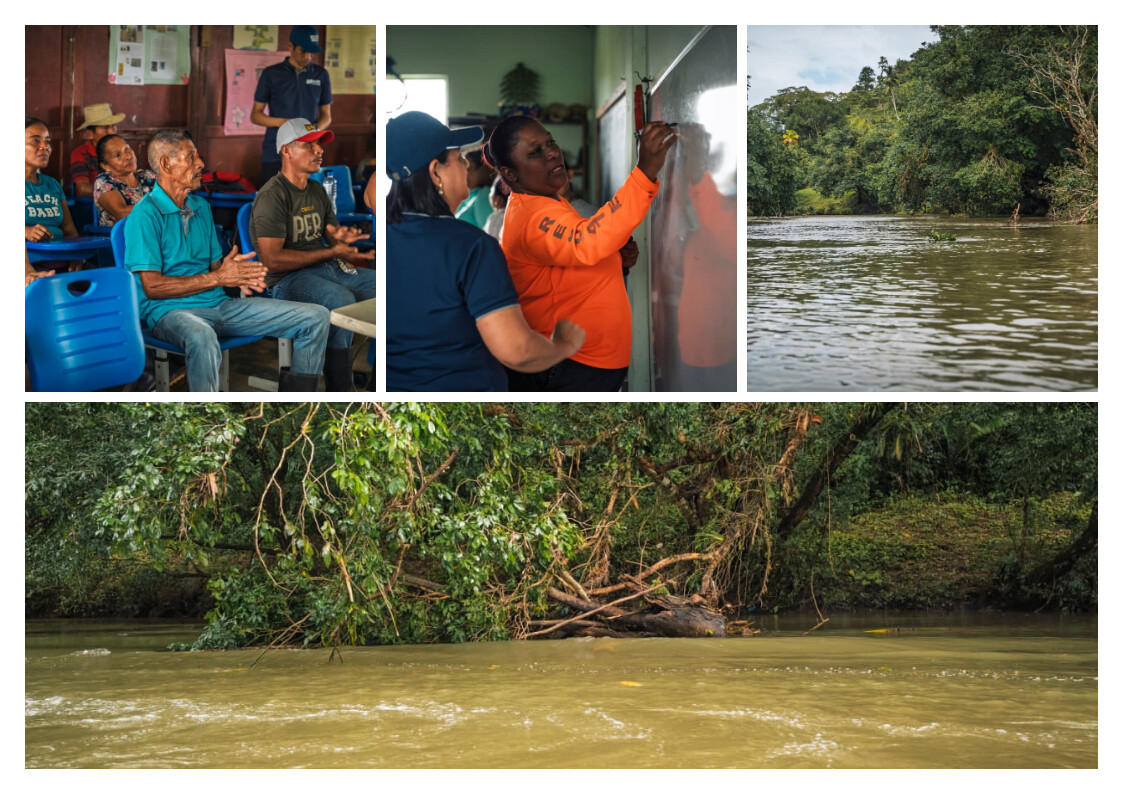
Panama - Facing the climate variability affecting communities in the Indio River basin, evidenced by more frequent floods and more intense drought periods, the Panama Canal, in coordination with the National Civil Protection System (Sinaproc) and the Institute of Meteorology and Hydrology of Panama (IMHPA), has launched an Early Warning System (SAT). This system aims to strengthen local resilience, safeguard human life, and minimize risks and material losses derived from extreme hydrometeorological events. The project benefits over 2,000 residents of communities located in the lower part of the basin, including Quebrada Bonita, El Chilar, Santa Rosa [Colón], Guayabalito, El Jobo, La Encantada, Boca de Río Indio, and Pueblo Viejo, areas historically impacted by extreme weather events like floods and prolonged droughts. As part of the system, the Panama Canal has reinforced two hydrometeorological stations and continues to strengthen others, which generate key information for decision-making and the issuance of preventive alerts. "This helps us raise awareness and stay vigilant not only about the river but also about other risks like landslides," he stated. With this initiative, the Panama Canal, along with Sinaproc and IMHPA, reinforces its commitment to water security, climate adaptation, and the well-being of communities in the Indio River basin, promoting a risk management model based on science, inter-institutional coordination, and active community participation. "The community is the first ring of security and the true early warning," he added. In turn, Pedro Camargo, from the National Civil Protection System, reiterated that the project strengthens community education and organization in the face of adverse events. "These systems allow communities to make timely decisions in the face of extreme rainfall or drought. This system represents an important step to expand protection coverage and reduce risks in the area," he indicated. The positive impact of the initiative is already perceived by residents. Germán Sánchez, a resident of Quebrada Bonita, highlighted that these types of actions help strengthen community organization. "It is important to embrace this project for the benefit of all communities," he expressed. Along the same lines, Rosita Mariota, also from Quebrada Bonita, emphasized the importance of participating in a project that allows protecting lives. "We believe this system will improve the alert and our way of reacting. With simple and practical training, they can react quickly to floods, landslides, high tides, and strong winds." "Communities are the first response agents. This gives people the opportunity to seek shelter, move to higher areas, and protect the most valuable: life." This system can be the difference between life and death. "In communities without electricity or stable connectivity, we are also advancing in the installation of internet connection systems in schools, which will improve communication and alert capacity," he highlighted. From a technical standpoint, the national director of Meteorology at IMHPA, Elicet Yáñez, stressed that early warning systems can make the difference between life and death. The information arrives in real-time at the Meteorological Center, which issues alerts to Sinaproc. "We are in an area totally vulnerable to floods," she emphasized. The institute maintains a 24/7 surveillance team, and forecasts are issued 36 to 72 hours in advance, which reinforces community preparedness.