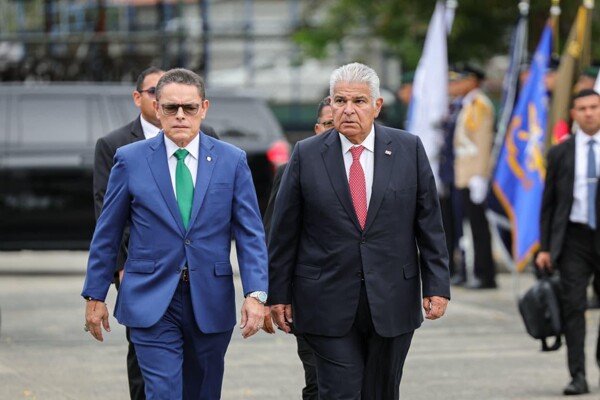
The President of the Republic, José Raúl Mulino, attacked the Panamanian justice system this Monday, considering that there is excessive flexibility in the treatment of criminals, which weakens the fight against organized crime.
Mulino highlighted that his administration is investing resources to strengthen security forces, which face threats such as drug trafficking, human trafficking, gangs, and smuggling. He emphasized that the State and security forces are making a great effort to deliver criminals to justice so that they pay for what they did to society.
He recognized that it is a great challenge to control and dismantle international gangs that finance local gangs, which are the ones who bring drugs to neighborhoods and destroy Panama's social fabric. As an example, he mentioned the recent case of a drug gang leader who was granted house arrest in the province of Colón, emphasizing that a dangerous gangster is enjoying impunity granted to him by legal guarantees.
«It is an extreme flexibility disguised as legal guarantees that has been the failure of the fight against crime throughout Latin America,» he added.
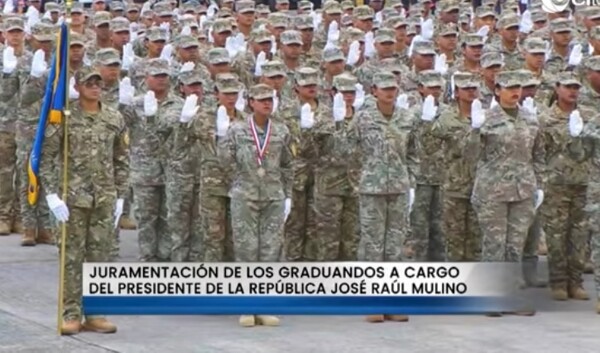
The president called for justice to be less flexible and understanding with gang members, murderers, rapists, and extortionists who do so much harm to the country. During the swearing-in ceremony of 1,402 agents of the Public Force, the president stated that, despite the efforts of security forces to capture criminals, seize weapons and drugs, many detainees regain their freedom in a few days.
He also noted that the country will share its experience in the fight against organized crime with the new partners of the Southern Common Market (Mercosur). Mulino stated that this model is not justice.
He announced that Panama will continue to work in coordination with the Army and National Police of Colombia, in addition to strengthening intelligence exchanges with Ecuador, Peru, and the US Drug Enforcement Agency (DEA) to be more successful in seizures. He added that once criminals are released, they are granted house arrest or an "anklet for decoration" and go back to trafficking and putting witnesses at risk, because they enjoy that rare privilege.
He indicated that the legal ideology of victimizing criminals is a tool for criminal organizations to validate their illegal activities. He detailed that according to a 2025 report from the United Nations, cocaine production reached 3,708 tons, recalling that when he was Minister of Security, the figure was around 1,500 tons per year, which implies a 34% growth compared to 2022.