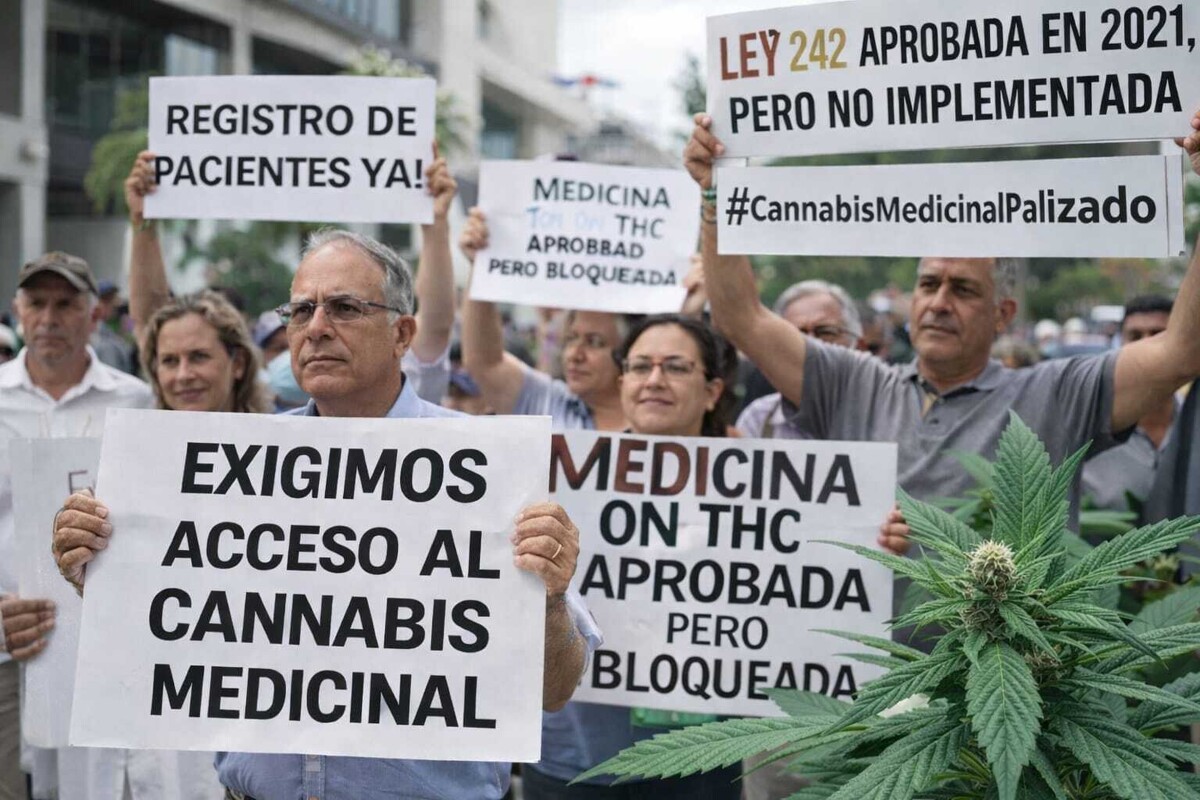
Patients with chronic and degenerative diseases have denounced that, five years after the approval of Law 242, which regulates the medicinal and therapeutic use of cannabis in Panama, they still cannot legally access these treatments due to administrative failures in its implementation.
The alert was issued by the National Federation of Associations of Critical, Chronic, and Degenerative Diseases (FENAECCD), which expressed its deep concern about the non-compliance in the effective application of the norm, approved in 2021 to allow the use of medicinal cannabis in the country.
According to the guild, the main obstacle is the non-existence of the National Patient Registry, an essential requirement for physicians to be able to prescribe medications with THC and for pharmacies to be able to dispense them legally.
According to the communiqué, the lack of this registry is largely due to coordination problems between the Ministry of Health (Minsa) and the National Authority for Government Innovation (AIG), the institution in charge of developing the State's technological platforms.
This administrative situation has, in practice, blocked access to a treatment that was already authorized by law.
The organization also denounced the existence of disproportionate administrative requirements to register patients, conditions that, they stated, are not required for other equally controlled medications, such as opiate derivatives.
In the federation's opinion, this difference has become an unnecessary barrier that directly affects patients with serious diseases such as chronic pain, refractory epilepsy, multiple sclerosis, cancer, and other conditions that could benefit from medicinal cannabis.
“Patients continue to face pain and limitations in their quality of life while the State keeps paralyzed a law approved precisely to offer safe and regulated therapeutic alternatives,” the organization warned.
Faced with this scenario, FENAECCD requested the Ministry of Health to adopt immediate measures to unblock the application of the regulation, including enabling the National Patient Registry, simplifying the requirements for access to treatment, and guaranteeing the necessary inter-institutional coordination to fully implement the law.
The federation recalled that Panama already has a legal framework for medicinal cannabis, so they affirm that the only thing missing is the administrative and political decision for the system to start functioning.
“Patients cannot continue waiting,” the communiqué concludes.