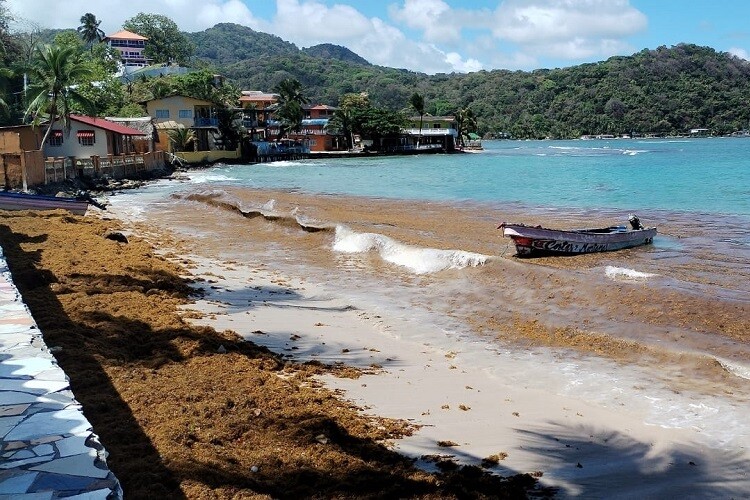
A large amount of sargassum is heading to Panama. This situation affects activities such as tourism, fishing, and navigation, causing damage to communities that depend on these resources. The Ministry of the Environment announced that it will work with other authorities in field assessment actions to determine the most appropriate measures for the management and disposal of this algae, including cleaning the affected area. Sargassum is due to a floating macroalgae that, although vital in the open sea as a marine refuge, its massive arrival on beaches is a natural phenomenon exacerbated by the increase in water temperature and nutrients. As it accumulates, its decomposition consumes oxygen, releases toxic gases (hydrogen sulfide), arsenic, and kills local fauna, damaging the ecosystem and tourism. In response to reports of the massive presence of marine algae in the district of Portobelo, in the Costa Arriba de Colón region, specifically at Playa La Langosta, the Ministry of the Environment began monitoring this phenomenon on various beaches in the region. This was achieved through a tour by park rangers, who were able to notice that the algae is also present in other coastal areas such as La Escucha, Buenaventura, María Soto, Guanche, Cacique, La Guaira, among others. This type of event, although recurrent in the Caribbean region, is presented on this occasion with a significant magnitude in the area. From an environmental point of view, the high concentration of algae reduces oxygen levels in the water and limits the entry of sunlight, which can affect sensitive ecosystems such as seagrasses and coral reefs. Regarding health, during the decomposition process, these algae can generate bad odors and release gases such as hydrogen sulfide, which could cause skin irritations and allergic reactions in exposed people. For this reason, MiAmbiente recommended that the population avoid contact with water in affected areas while the accumulation persists.