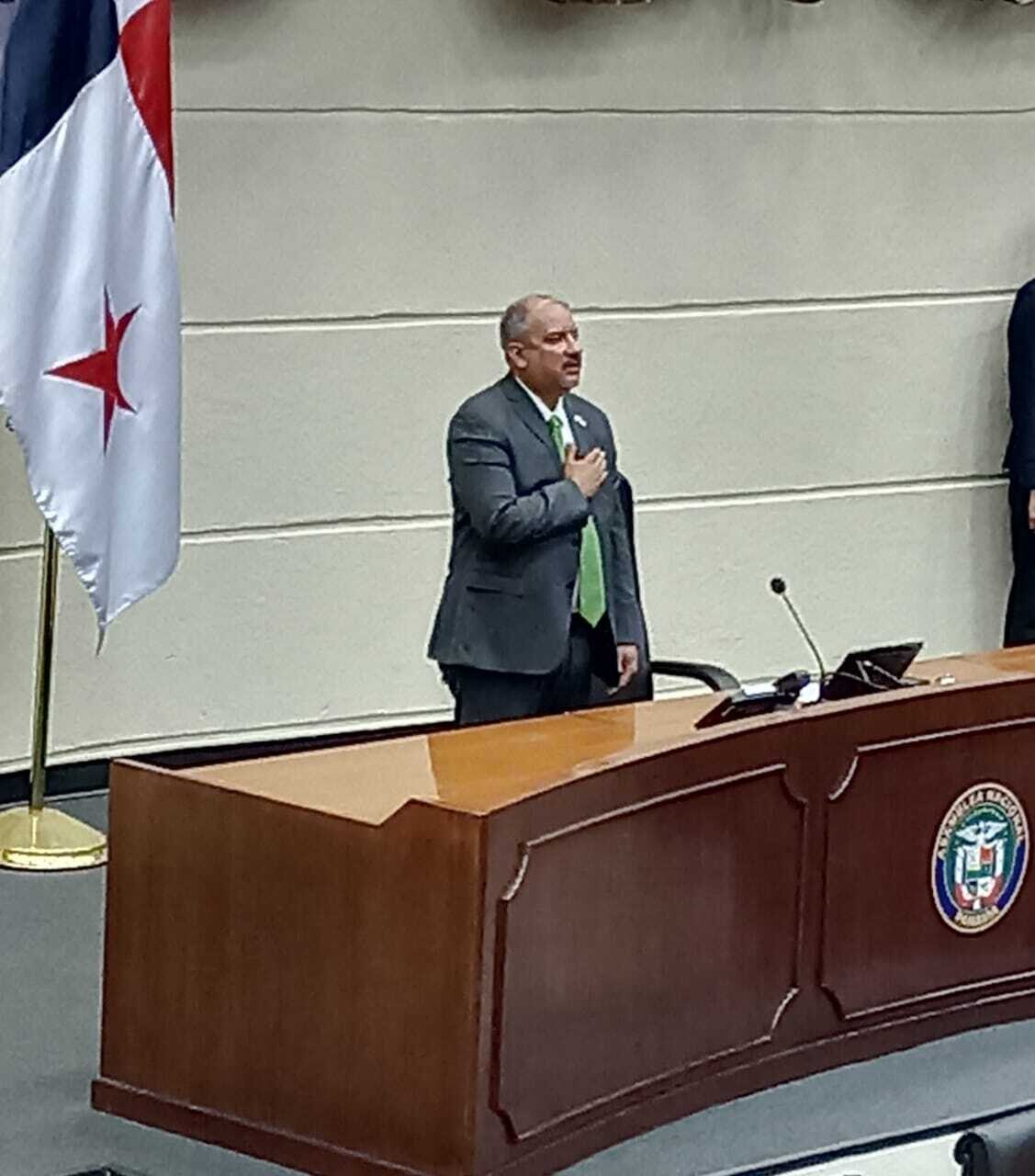
Before concluding his first legislative term, Herrera addressed the collective of deputies, calling attention to the constant interruptions in proceedings and complaints about projects that were not passed and will continue in the next legislature. He stated that they had approved 40 laws that respond to the country's needs and strengthen its institutional development.
"We discussed in record time a key law for Panamanian families: the preferential interest rate for housing law, which boosts construction, revitalizes the economy, and opens doors for more Panamanians to fulfill the dream of owning their own home."
He also mentioned that during this legislature, progress was made in modernizing the legal framework, especially in justice and security, highlighting reforms to the Criminal Procedure Code and amendments to Law 11 of 2015, which strengthen international judicial cooperation and update provisions related to the fight against cybercrime, among others.
**Projects Passed in the Final Session**
Among the projects sealed on October 30th was project 77, which involves the transfer to urban development of neighborhoods reaching 50 years of age and new ones lacking public infrastructure.
This refers to the project (Vetoed) that supersedes Law 198 of 2021 to proceed with the transfer of public easements of urbanizations, subdivisions, and plots to the nation. These will be transferred to the Panamanian State in a consequent and free manner.
Project 432 was also passed, creating the dependency called the Office for the Promotion of Investment Attraction and Export Promotion, which seeks budgetary efficiency and institutional modernization, a vision that would bring lower costs compared to the previous practice and rationalizes resources, explained the Minister of Commerce, Julio Moltó.
PROPANAMÁ, now under the dependency of MICI, will be part of the national economic promotion policy with a transparent, efficient, modern public management scheme and a focus on concrete results. Moltó also mentioned that the norm eliminates the duplication of functions and puts the attraction of foreign direct investment for the country in a single axis of action.
Another project that was Vetoed but received the deputies' approval was project 164.
Crispín Chavarría N.
The full session of deputies closed its first period of ordinary sessions in the second legislature, approving eight third debates, with the President of the National Assembly, Jorge Luis Herrera, announcing that the Brazilian President, Ignacio Lula Da Silva, will be in the hemicycle in January 2026, and that the projects that were left on hold will be discussed and transmitted, such as the Internal Regulations, upon returning from the two-month recess.
Upon closing the ordinary sessions, the Permanent Commissions also enter a period of inaction in which they cannot approve or disapprove, although they could meet for reports and adjustments. This is due to a ruling by the Court.
This is the one that dictates the norms for the implementation of the Circular Economy as an environmental strategy. While also passing the project that Supersedes Law 7 of 1997, which creates the Office of the Ombudsman, and amends Law 6 of 2017, which creates the national mechanism for the prevention of Torture and other cruel, inhuman or degrading treatment or punishment.
Other third debates approved were: project 137 of the Toro Guapo in Antón; law project 30 of 2000, which promotes the cleaning of public spaces; No. 396 for measures to prevent food losses and promote food security; and 295 which adds a transitional article to the Fiscal Code for the minting of commemorative coins for the PRO Obras de Beneficencia Association.
**Plenum closes by signing 40 laws and Herrera announces Lula Da Silva for January 2026 at the National Assembly**
This entry was first published on La Verdad Panamá.