The Minister of Public Security, Frank Ábrego, acknowledged on Wednesday that Panama is experiencing an increase in gang activity, a phenomenon he attributes mainly to the fragmentation of existing criminal groups.
His statements came during the destruction of 1,923 firearms and over 90,000 cartridges, an act carried out by the National Police as part of the results of seizures and the food-for-weapons exchange program.
Ábrego explained that criminality is undergoing a process of mutation: "We have to say that it is true," he affirmed about the increase in gangs, to then clarify that this growth does not necessarily respond to the creation of new organizations, but to the internal division of the original bands.
"Ten years ago, to give a hypothetical figure, there were about 15 gangs in Colón; today there may be 45. They degrade, they seek leadership, and that struggle for control ends up producing the separation or the creation of gang B, C or D," the minister pointed out, warning that this trend generates new foci of violence and additional rivalries among the criminals themselves.
Ábrego detailed that this scenario forces the authorities to redouble operations in different sectors of the country and to adjust security strategies.
"Today we just finished, as we do weekly, a security meeting," he recalled, emphasizing that permanent and coordinated analysis is key to containing the expansion of criminal structures.
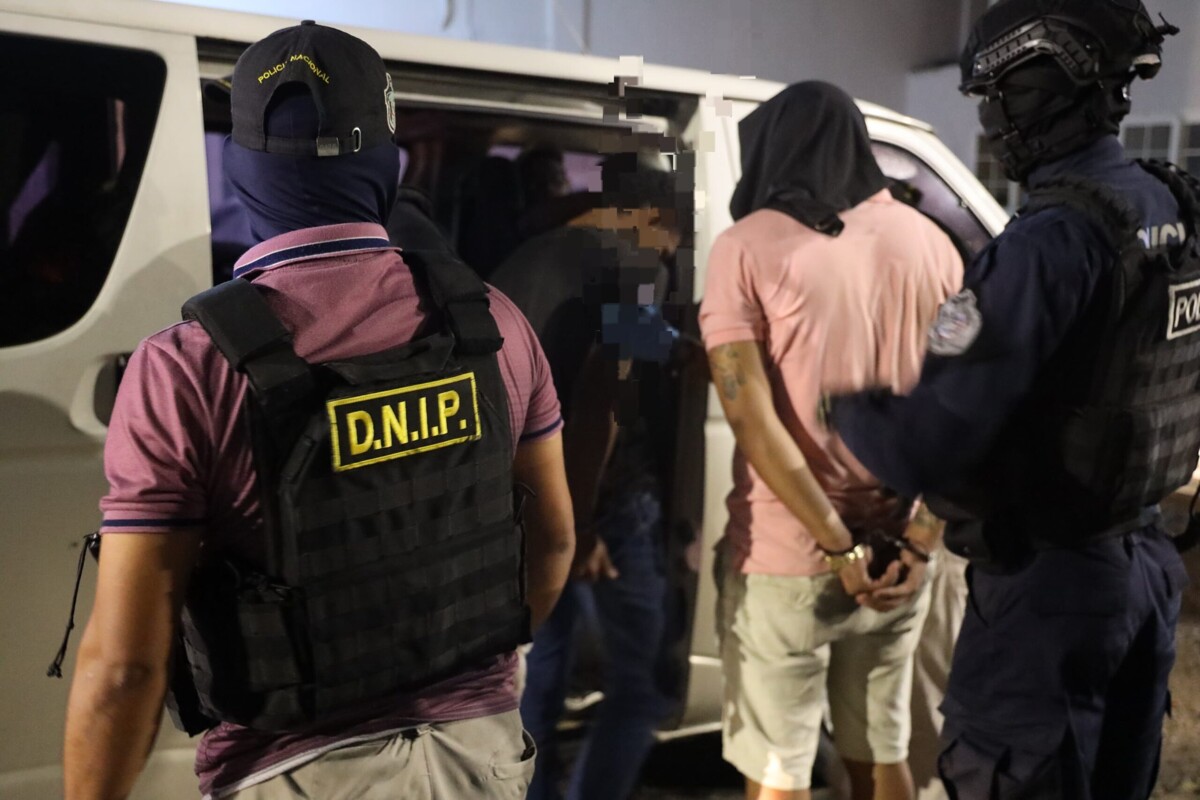
The National Police, for its part, reaffirmed that it will continue with seizure operations, patrols, and community prevention programs, while security authorities evaluate new actions to curb the evolution of gangs and their impact on communities.
The destruction of the military material was carried out in the presence of authorities, observers, and the media, a procedure that seeks to prevent these weapons from returning to the streets and to send a firm message in the fight against organized crime.