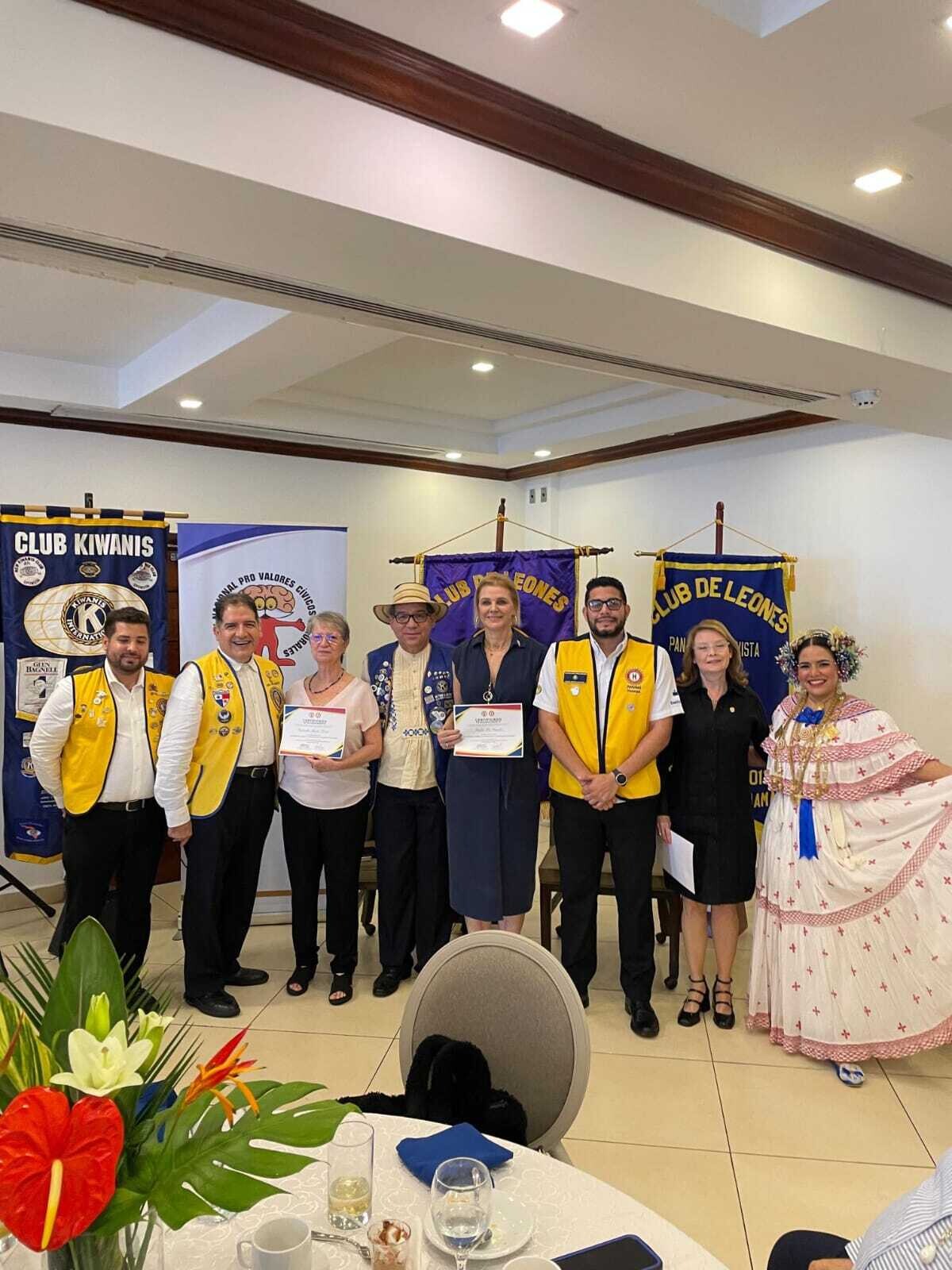
As part of the November commemorations, the Month of the Homeland, organized by the National Commission for Civic and Moral Values of Panama and the Activo 20-30 Club, a recent conversation was held titled: "The Woman's Contribution to the Formation of the Panamanian Nationality".
During the event, speakers highlighted the participation of Panamanian women in various roles and historical processes, from the independence struggles of the 19th century to the social and political movements of the 20th century. The Panamanian woman has played a leading role in the country's historical fabric with iconic figures such as Justa Arosemena, Clara González, and Sara Sotillo, pioneers in the defense of civil rights, education, and social justice.
Professor Yolanda Marco Serra, one of the invited speakers, emphasized that "official history has often invisibilized the role of women, but their contribution has been decisive in the consolidation of the Panamanian nation." Recognizing them is to strengthen our collective memory and our sense of identity, the teacher highlighted.
For the president of the Association of Executives of Panama (Apede), Giulia De Sanctis, the Panamanian woman has been the protagonist in the construction of nationality, although her role has been unjustly made invisible. She expressed the need to truly recognize the plural, resilient, and human essence that women represent in different areas and facets.
The conversation also addressed the contemporary challenges facing Panamanian women in areas such as politics, economy, and culture, underlining the need to continue promoting equality of opportunities and full participation in national life.
Deputy Olga Paulette Thomas referred to the rights of gender equity in the political participation of women, such as respect for a life free of violence. She also advocated for the rights of girls, boys, and young people in the country to have access to a safer, more just, and equitable society.
For his part, the president of the Activo 20-30 Club, Danilo José Pinto Muñoz, highlighted female leadership as the axis and fundamental pillar in the development of the nation. He added that women today play a preponderant role in the country's development. Pinto indicated that from a young age, women, in the figure of our mother, instill values in us that are the tools that help us for the rest of our lives to be better citizens.
At the end of the event, the participants agreed on the importance of including a gender perspective in the teaching of national history, so that new generations understand that the construction of Panama has been a collective effort where women have had, and continue to have, an essential role.