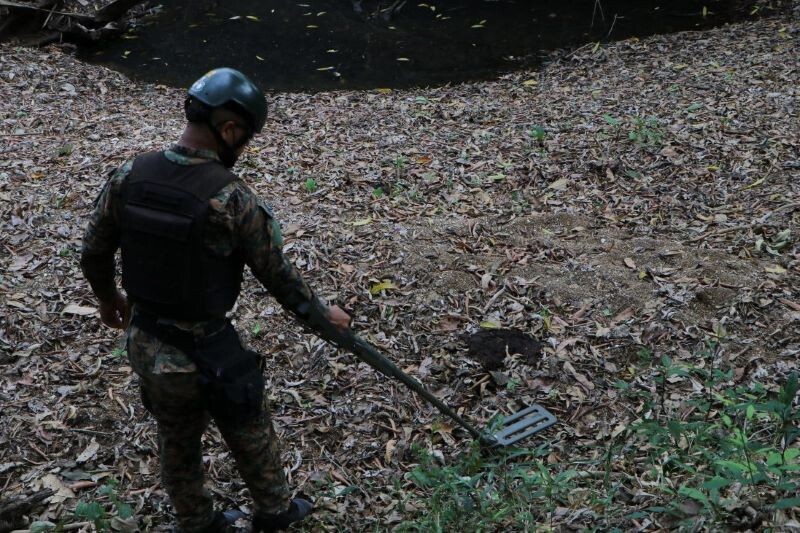
The Special Forces of Senafront conducted a major operation called 'Centinela' on the border with Colombia, during which five landmines, known as 'quiebra patas', were located and destroyed. These improvised explosive devices, attributed to criminal structures such as the Gulf Clan, were found near the Binacional La Olla base and in the Alto Limón sector to hinder the advance of authorities and intimidate local communities. As part of the operation, which involved 350 personnel, five individuals attempting to transport 33 foreigners in three canoes were detained. Among the detainees were two Colombians identified as 'coyotes', eight individuals with biometric alerts, and two members of the transnational criminal organization 'Tren de Aragua'. During maritime operations in La Palma, Jaqué, and in the Caribbean, five Panamanian citizens were captured and 110 packages of suspected drugs, along with satellite communication equipment and cell phones used for coordinating drug trafficking activities, were seized. In the Membrillo river area, a Senafront patrol exchanged fire with armed men. Following the confrontation, three Panamenians in pixelated uniforms were captured, along with a shotgun, AK-47 rifle ammunition, and other war gear. Among the seized belongings was a bracelet from the Colombian Gaitanista group, specifically from the Efraín Guardia Front, an organization dedicated to drug trafficking. With these results, the National Border Service reaffirms its commitment to maintaining the Centinela operation permanently, ensuring territorial control and community security against the threats posed by transnational organized crime operating in the Darién region.