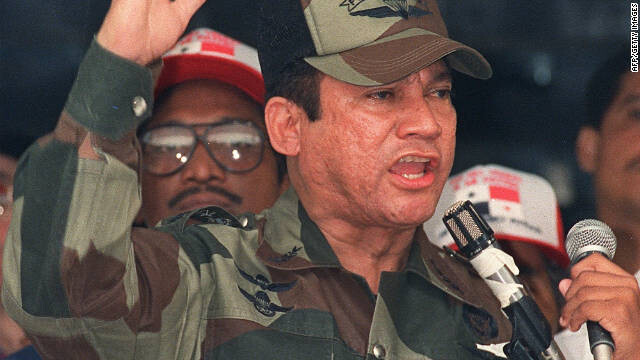
This is an uncomfortable reminder of what happens when a country confuses sovereignty with rhetoric, and defense with improvisation. And as Saldaña would say, with bitterness but without bolero: the invasion ended… but the Americans are still here. December 20, 1989: we were a paper army, affirms Pipe Camargo. But as a regular force, we had no way to match the U.S. army. The plan also depended on Noriega moving to Chiriquí. External pressures continue, geopolitical alignments repeat, and sovereignty remains a concept invoked in speeches… but negotiated in silence. “We continue to do business with strategic enemies of the United States and then we are surprised when the pressure arrives,” warns Camargo. December 20 is not just a date for flower wreaths. His life went on, but the institution he belonged to disappeared forever. Who failed? Camargo is direct: — The military command lost communications and control. — Political power was concentrated in Noriega, and therefore, the ultimate responsibility falls on him. There is no romanticism or artificial epic. In any serious manual, that is called treason to the fatherland. After the 20th: broken careers and blacklists The cost did not end with the bombs. What was not ready was the country… nor its military apparatus. “We were waiting for it… but we were a paper army,” Saldaña says without mincing words. That never happened. And without a commander, there is no war… only disorder. The facts that “justified” the invasion Saldaña recalls episodes that Washington used as narrative fuel: — The December shooting where an American officer was killed. — The case of the American couple supposedly mistreated at a checkpoint. — Simultaneous harassment operations near the central barracks. For him, none of that justified a large-scale invasion. No subsequent government allowed it. “The hand that gives the orders is not here.” And he goes further: “Here there were Panamanians who asked for the invasion. They just changed desks.” Camargo, for his part, was already out of the military before December 20, after a mission in Africa. Even so, he was detained, interrogated, and then released. Javier Collins Agnew La Verdad Panamá Thirty-six years later, December 20 remains an open wound that Panama has not been able to heal. Two former officers of the now-defense Forces, Carlos “Superman” Saldaña and Felipe “Pipe” Camargo, agree on a key point: the invasion was predictable. We had figures, paper plans, but the only real combat force was seven or eight companies. It was no secret in the central barracks hallways or among state security agencies. The so-called strategic reserve was to concentrate in Chiriquí. The idea was not to win the war, that was never in the equation, but to resist for 48 to 72 hours. The objective was political, not military: to hold out long enough for the UN to declare the invasion illegal. “The plan included a subsequent withdrawal to guerrilla-style harassment tactics. That is not an army to face the United States, that is a statistic in uniform.” The projection was to reach 18,000 or 20,000 personnel by 1999, but history broke the schedule: in 1989 everything fell apart before it could grow. Chiriquí, the last resort Felipe “Pipe” Camargo confirms that a military plan did exist. He says that the middle and high commands knew the blow was coming. Saldaña recounts how his career was literally erased after the invasion. Lists existed, made under U.S. supervision, of officers who would be discharged. The problem, according to him, was the same as always: intelligence that didn't provide solid information and a structure inflated in numbers but weak in real capability. “We weren't ready. He was on one of those lists. He tried to reintegrate. Only one uncomfortable conclusion. The lesson Panama still hasn't learned Thirty-six years later, both former officers agree on something unsettling: Panama still hasn't learned the lesson. He never left.