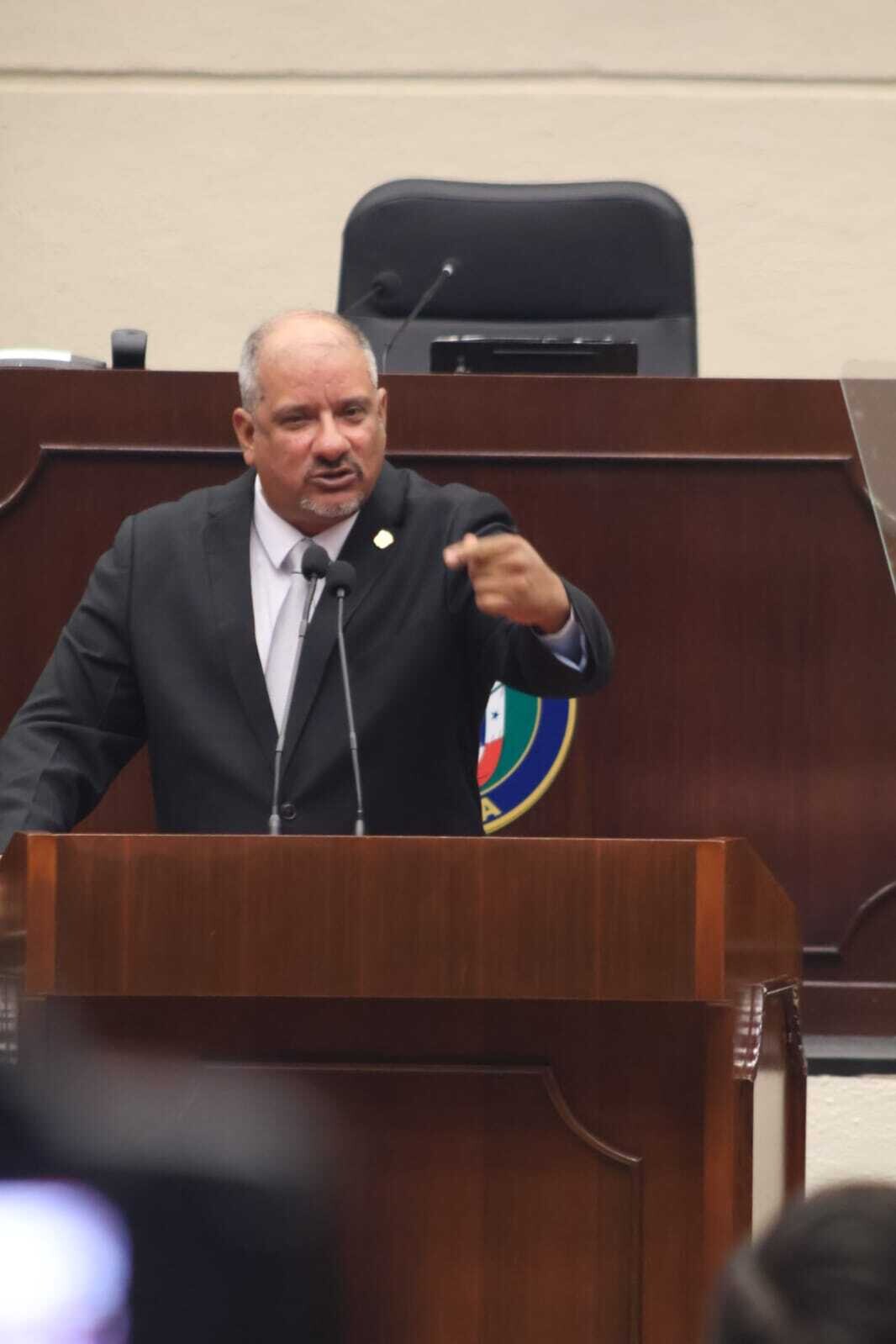
In this process, an agreement was signed with the Latin American Center of Administration for Development, CLAD, which will provide advice and support in the transformation of the Legislative Career Law and the Administrative Career Law, as well as in the establishment of an Assembly modernization agenda that includes the digitization of administrative and Human Resources processes, which are currently carried out manually, and the installation of biometric clocks and security cameras that allow greater control and efficiency in record-keeping. "Starting today, this Assembly will show on its website direct links to deputies' attendance and electronic voting. For this, the participation and commitment of the 9 members of the Commission and the remaining 62 deputies will be essential," said Herrera, adding that as president he will promote, among other things, the following transformations: Deduct the salary of Deputies who are unjustifiably absent. We trust that, starting tomorrow, the president of the Credentials, Regulations, Parliamentary Ethics and Judicial Affairs Commission, Coclé deputy Dana Castañeda, will give priority to this issue, to achieve a transformation that allows for a better performance of the Assembly and strengthens citizen confidence. What for a long time remained as an aspiration is beginning to take shape," he stated, while advancing that the discussion of a profound reform to the Internal Organic Regulation has begun. "This Assembly will focus all its efforts on achieving it. Establish by regulation that to enter the Legislative Career, officials must have a minimum of 5 years of service in permanent positions and through a competition without exception. Herrera advanced that the Legislative Career must be an instrument that defends the labor stability of the professional officials who WORK, but never a shield that protects those who do not. "As we committed, the citizen participation offices in the interior of the country have been closed and their operation has ceased. Crispín Chavarría N. The Internal Regulation will be one of the first priorities of the National Assembly, at the beginning of this second legislature of the second period of ordinary sessions, as specified by President Jorge Herrera, in his speech before the plenary of deputies and the presence of government authorities, led by the President of the Republic, José Raúl Mulino. Herrera was forceful in his speech recognizing that the Assembly must regain the trust of the Panamanian people and it will achieve this with transparency and by working, citing as an example that starting this month the country will see reflected on the transparency page a reduction in the personnel working in this State Body, by indicating that together with the Board, an institutional transformation agenda has been promoted, in which it highlights: Maintaining the NOT use of the Special Services item known as 172. Herrera also explained that vehicle rentals have been eliminated and fuel consumption has been reduced, in addition to reducing trips abroad and within the country and decisions were made to reduce and contain other expenses, prioritizing austerity and results. And every time a Law project is approved, the voting result will appear on open national television. The personnel has been reassigned with specific functions and fulfilling a schedule and in the coming days we will establish agreements with technical training institutions so that these offices are used for training during the validity of the rental contracts that we have inherited," he expressed on this controversial internal issue and that plays a fundamental role in the way the population in general sees it. This entry The transformation is coming and the people will know how they vote on open TV was first published in La Verdad Panamá. Similarly, these links will be available in the Legispan mobile application at the end of January.