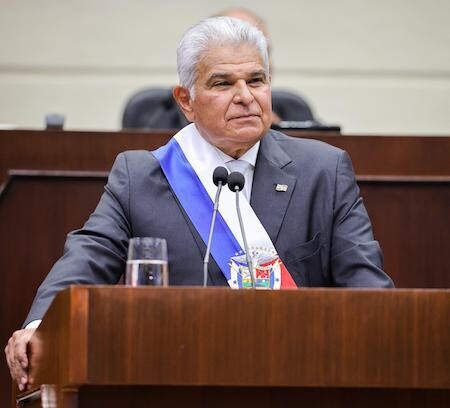
Panama's President José Raúl Mulino presented a report on his first 18 months in office, focusing on controlling migration through the Darien Gap, the country's fiscal situation, the management of the copper mine closure, public security, and a structural reform agenda including education, state reorganization, and a potential constitutional change.
In just a year and a half, we have provided twenty times more job placements for young people than in the previous five years. The 'Paid Internships' program, successful in other countries, is now in the National Assembly for a second debate. Through the 'Entrepreneur's Space' program with headquarters in Panama, Colón, and David, we have formalized 4,900 entrepreneurs, who have generated over 6,500 jobs in these provinces, bringing income to thousands of households and strengthening local economies.
In the area of security, the 'Plan Firme' strategy was implemented, resulting in over 71,400 arrests, large-scale drug seizures, and a call to review the judicial system's role in fighting organized crime. Illegal migration flow through the Darien Gap was reduced by more than 99%, overcoming the humanitarian, environmental, and security crisis on the border.
In the economy, the deficit was reduced from 7.35% to 4% of GDP, the investment grade was maintained, and the country's risk was significantly improved. The 2026 budget of $34.9 billion will have a primary surplus for the first time in over 12 years. Economic growth is projected to be around 4% with inflation below 1%.
In the social sphere, historical debts were settled, such as the construction of hospitals in Bugaba, David, Río Hato, and Colón. Surgical backlogs were reduced by 52%, and hospital infrastructure was expanded. A total of 1,510 housing units were delivered, and a new mortgage program for construction workers was launched.
President Mulino also emphasized the importance of education reform, announcing a participatory process for a new education law and a new constitution through a constituent process. He called for unity to build a stronger, more prosperous Panama based on clear rules, strong institutions, and shared responsibility.