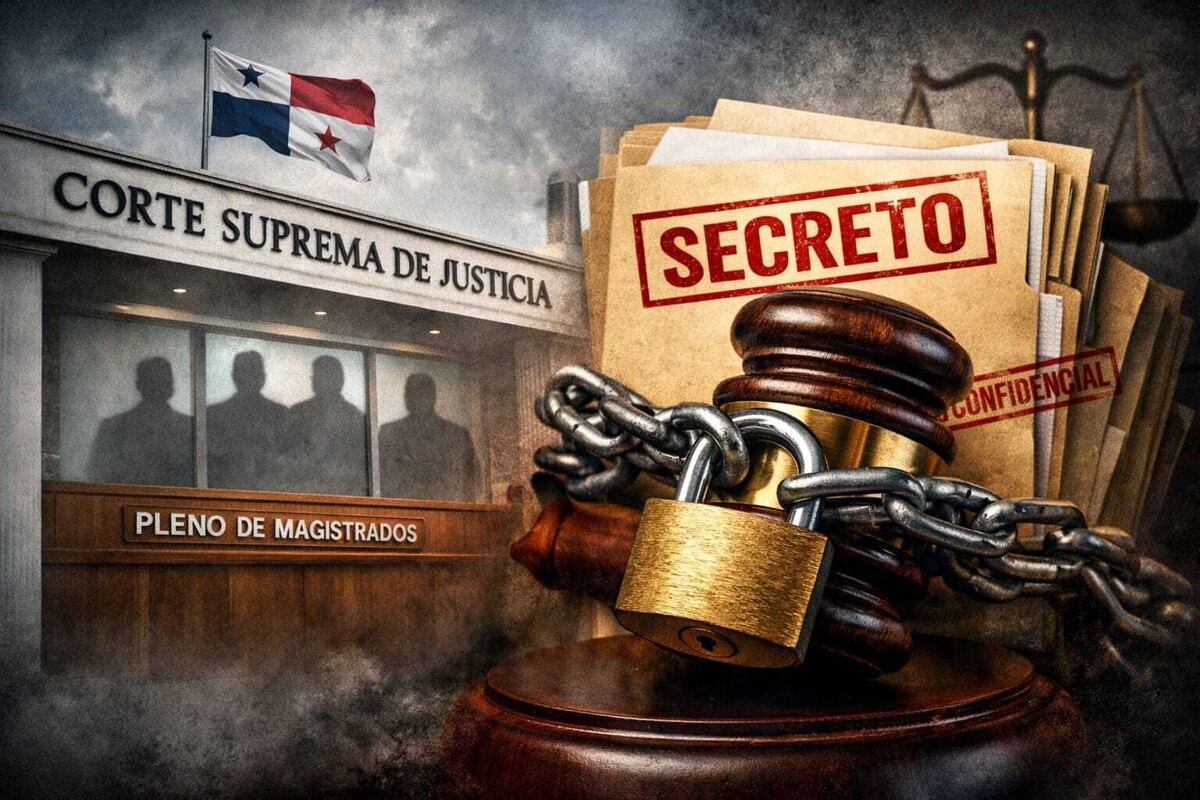
The full panel of magistrates of the Supreme Court of Justice decided to curtain and limit public scrutiny of its internal functioning by declaring the minutes of its plenary sessions as restricted access information, as provided for in an agreement published in the Official Gazette this Tuesday, January 27, 2026. The measure was adopted through Agreement No. 8 of January 2026, which establishes that all content in the minutes where deliberations, discussions, and agreements among magistrates are recorded is excluded from free access. In practice, this means that documents that could previously be requested under the principle that state acts are public now fall under a reserve regime, where their consultation will depend on special authorizations or the Judiciary's own internal criteria. The minutes of the Plenary are not mere formalities: they record how administrative, disciplinary, and strategic issues of the country's highest court are discussed, as well as decisions that impact the organization and institutional direction of Panamanian justice. Although the Court does not detail the specific reasons for the restriction in the publication, the 'restricted access' category is often invoked based on arguments of confidentiality, institutional security, or protection of internal processes. However, the decision opens a debate on to what extent such reserve may clash with the Law on Transparency and Access to Public Information. For sectors linked to judicial oversight and journalism, these types of measures tend to reduce the public's ability to oversee how decisions are made at the top of the judicial system, especially in a context where public trust in institutions remains fragile. The agreement now locks away the conversations and consensuses that occur 'behind closed doors' in the Court, limiting the possibility of knowing not only what is decided, but also how and why those decisions are made. With this move, the Supreme Court marks a shift towards greater institutional reserve, leaving a key question unanswered: whether the protection of internal deliberations outweighs the citizen's right to know how the country's highest justice body operates in practice.