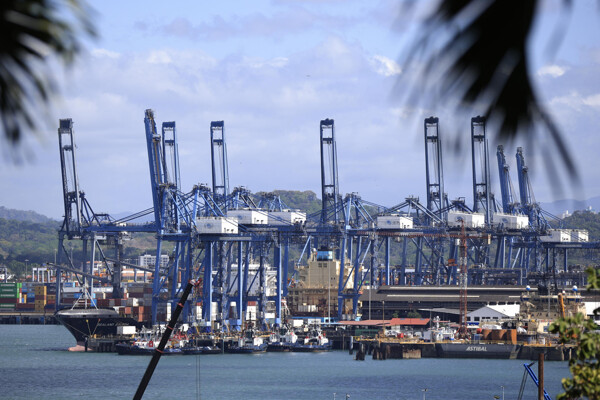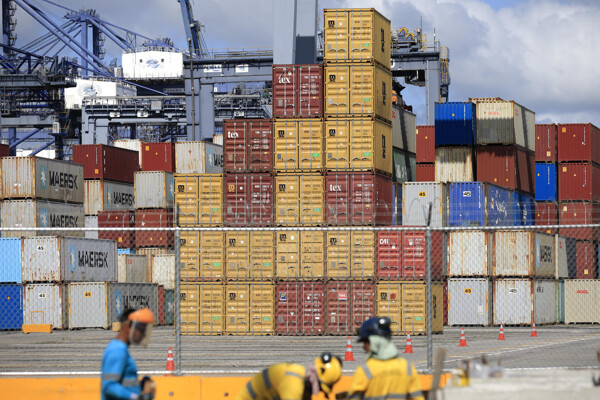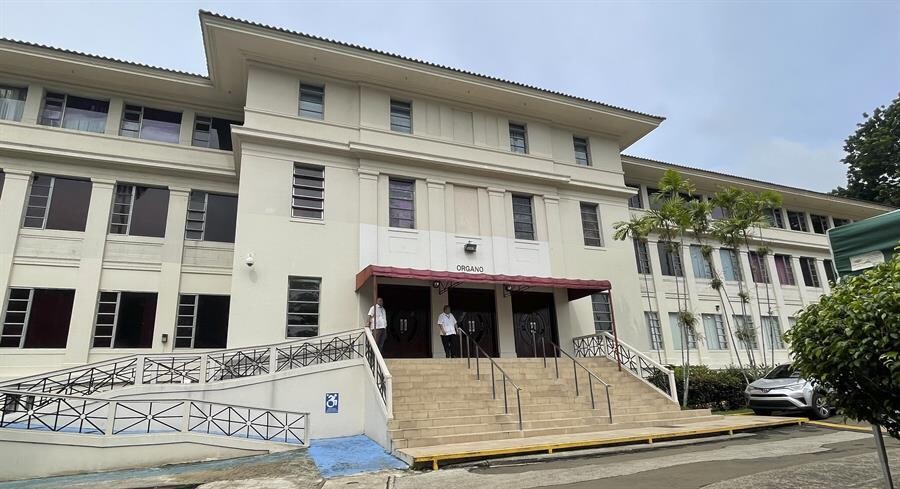
Court ruling reveals the contract not only operated ports: it gave the company power of veto over strategic areas like Diablo and Isla Telfers and tied the country's sovereign decisions. It was not just a contract, it was a lock on the State. The ruling that declared the contract with Panama Ports Company (PPC) unconstitutional not only toppled a concession: it uncovered a scheme where the Panamanian State had to consult and obtain authorization from a private company to dispose of lands that are public property. This is one of the most sensitive findings of the ruling dated January 29, 2026, with the opinion of magistrate Carlos E. Villalobos Jaén, which thoroughly examined Law 5 of 1997, its amendments, and the automatic extension that protected the operation of the Balboa and Cristóbal ports. The Court determined that the contract contained clauses that subordinated the country's sovereign decisions to the will of the concessionaire, a situation that, in practice, turned PPC into an actor with power of veto over the use of state assets. The "Future Extension": territory with private permission. The lock was in the clause known as the "Future Extension," which covered strategic areas such as Diablo and Isla Telfers, where it was established that the State had to previously consult the company before granting any concession or use of those lands. For the magistrates, that provision broke the basic principle of sovereignty: no State can ask a private entity for permission to manage its own territory, especially when it comes to infrastructure key to the economy and international trade. The ruling states that the contract was not limited to regulating the operation of existing ports, but it tied the future growth of the port system to the interests of the concessionaire company. In simple terms, the country was left with the ports… but without the complete key. The Court warned that this design affected the capacity of the Executive and maritime authorities to plan port development based on national interest, since any expansion or concession had to pass through the filter of the private operator. This, according to the ruling, transferred functions proper to public power to a company, violating Article 2 of the Constitution, which states that power only emanates from the people and is exercised through the organs of the State. The problem did not end in the territory: PPC had priority to expand in new areas without paying additional proportional remunerations to the State, generating an imbalance between private benefit and public heritage. Expanding without paying the full bill. The Court observed that the contract allowed the company to develop, build, operate, and administer new strategic areas under the same conditions of the original contract, as if time, the market, and the value of the land had not changed. This implied that the State could not renegotiate based on the real value of the lands or the economic impact of port growth. In parallel, the ruling connects this point with the violation of the principle of free competition, since by shielding the "Future Extension," it closed the door for other operators to compete for those areas. The State not only lost territorial control but also the possibility of obtaining better economic conditions through real competition. Another element that reinforces the angle is that the contract placed PPC in a dominant position within the Panamanian logistics system, with exclusive rights that were not granted on equal terms to other market actors. For the Court, that structure was not compatible with a modern concessions model, where the public interest must be above the contractual comfort of the operator. Ports that weigh like sovereignty. In its analysis, the magistrates remember that the ports of Balboa and Cristóbal are not simple businesses, but strategic infrastructure linked to the country's economic sovereignty. That is why any contract that limits the State's ability to decide on its use, expansion, or management ends up becoming a constitutional problem, not just a commercial one. The ruling also leaves a political message: the administration of public goods cannot be transformed into a relationship of dependence where the country ends up asking for permission to make public policy within its own territory. Jurists interpret that this reading of the Court forces a rethinking of how Panama structures its concessions, especially in sensitive sectors such as ports, energy, transportation, or mining. Beyond PPC, the precedent points to reviewing contracts where the State has ceded too much control to private operators in exchange for contractual stability. On a practical level, the ruling opens the door to a redesign of the port model where the State recovers real planning capacity, without improvisations, but without shackles. The key to the territory. The challenge now will be to ensure operational continuity without repeating schemes where the concessionaire ends up having more power than the owner of the infrastructure itself. Because the problem uncovered by the Court was not only who moves the containers, but who had the final say over the Panamanian port territory. And in a country that lives on transit, logistics, and commerce, that word weighs more than any crane.