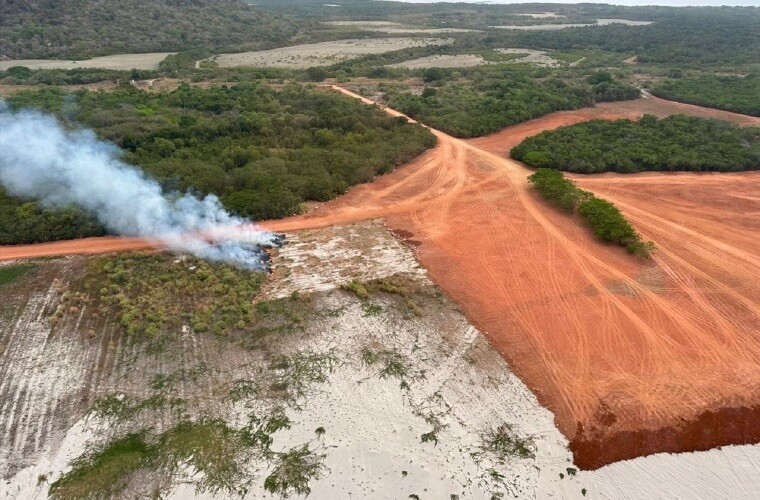
Today, February 2nd, World Wetlands Day, there is little to celebrate in Panama: more than 30 hectares of mangroves have been devastated in Punta Chame through burning and clearing, with total impunity so far, to create a sand fill and build a beach tourism project by the company Megamar Corp.
The date for World Wetlands Day originates from the signing of the Ramsar Convention on the protection of wetlands of international importance, registered on February 2, 1971, in the Iranian city of Ramsar.
However, there has been no statement from the authorities of MiAmbiente or ARAP regarding the destruction of these 30 hectares of mangroves.
Article 306 of the Penal Code establishes sanctions of seven years in prison for the destruction of tree or shrub formations, such as mangroves. A resolution from February 26, 2008, by the Board of Directors of the Panama Aquatic Resources Authority (ARAP) set the fine at 300,000 dollars for each hectare of mangrove destroyed, meaning the sanction that could be applied to Megamar Corp. would be approximately 9 million dollars.
After reports were published on social media about the illegal extraction of seabed sand by Megamar Corp. in the same place where the 30 hectares of mangroves were devastated, officials from the Ministry of Environment (MiAmbiente) inspected the site last Monday, January 19.
This highlights the severity of the devastation of the 30 hectares in Punta Chame.
A comparison of Google Earth satellite photos of the coast of Punta Chame, from 2013 to 2024, shows how the mangrove area is shrinking until it almost disappears.
For this reason, in 2021, the United Nations General Assembly proclaimed February 2 as World Wetlands Day.
Mangroves are classified as one of the ecosystems called wetlands, due to their water saturation and their condition as a habitat for multiple species, such as crabs, shrimp, oysters, lizards, monkeys, herons, seagulls, hawks, worms, etc.
This outlet had access to photos showing the burning of this coastal mangrove.