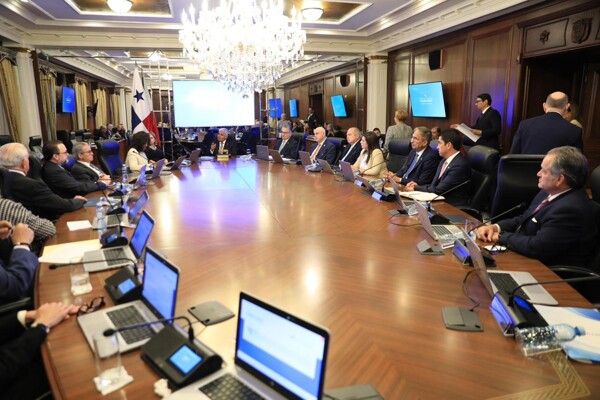
During the 20th hearing in the Odebrecht case, Prosecutor Ruth Morcillo delivered a high-impact argument in which she maintained that the scheme investigated in Panama is a financial structure designed specifically to channel bribes through offshore companies, encrypted accounts, and specialized managers. “We are not facing isolated incidents, but rather a structure created to receive and move bribe payments,” emphasized the representative of the Public Ministry before the tribunal. During her intervention, the prosecutor stated that the case theory is backed by international cooperation, reports from the Principality of Andorra police, and multiple statements from effective collaborators, which allow for the reconstruction of the illicit money trail and the participation of different actors within the plot. “Ghost” companies and deception One of the most sensitive points of the argument was the use of Panamanian citizens as instrumental figures for the creation of companies. The prosecutor cited the testimony of the condemned Olmedo Méndez, who, according to her, was deceived into signing documentation for the constitution of a company. “He received the documents under the belief that they were for an investment in a tourist project... but he signed blank documentation.” Morcillo explained that the supposed project never existed and that the company Real Sin Límites was used as a vehicle to channel illicit funds within Odebrecht's financial structure. According to the Public Ministry, this pattern was repeated in multiple cases, where citizens were contacted under false pretenses to lend their name to the creation of companies that would later serve to hide the origin of the money. Encrypted accounts and instrumental companies The prosecutor also detailed the creation of structures like Jerson Overseas, which—according to statements incorporated into the process—was established by direct instructions from Odebrecht. “He was notified that that was where the payments for the supposed contract would be deposited.” These accounts, opened at the Banca Privada d’Andorra, functioned as receivers of transfers linked to the payment of bribes, using instrumental companies such as Kleinfeld, Clean Field, and Aron Group. The Public Ministry maintains that these companies were part of Odebrecht's so-called “Division of Structured Operations,” designed specifically to channel illicit payments through the international financial system without leaving a direct trace. “They were bribes” One of the most forceful moments of the argument was the incorporation of the collaborator Olivio Rodríguez's statement: “The purpose of the transfers from Kleinfeld... I would say they were bribes... they were large amounts and several operations were carried out.” The prosecutor emphasized that these funds had no real commercial justification and that their destination was linked to the payment of bribes to public officials. A business within a crime Morcillo also explained the role of financial managers within the scheme, describing them as key pieces for the execution of the operation. “They received 1% of every incoming money flow... and in some operations up to 1.5% or 2%.” According to the prosecutor's office, these actors not only opened companies and bank accounts, but also coordinated the movement of money, attracted clients, and facilitated the necessary structure to hide the illicit origin of the funds. Lorel Foundation: a structure created for bribes Another axis of the argument was the Lorel Foundation company, constituted in Panama. “It was created specifically to receive funds from Odebrecht for the payment of bribes.” The prosecutor indicated that this structure was linked to Cristina Lozano and that its illicit purpose was confirmed by Brazilian collaborators, in addition to being backed by multi-million dollar transfers made in 2010. The role of banking and cover-up The Public Ministry also relied on reports from the Principality of Andorra police, which detected suspicious financial activity linked to Odebrecht. Morcillo underlined that it was “unsustainable” that these operations were not detected for years, despite the existence of internal anti-money laundering committees within the banking entity. In this context, she harshly questioned witnesses presented by the defense: “The witnesses lied to this tribunal.” The prosecutor revealed that they omitted to report that they had been investigated and convicted for money laundering in Andorra, despite being interrogated directly. Papadimitriu: payments, companies, and decision-making power In one of the most delicate sections of the argument, the prosecutor directly exposed the link of the former Minister of the Presidency, Demetrio Papadimitriu, whom she placed as part of the structure based on transfers, companies, and his position within the government. Morcillo was emphatic in stating that the payments were made even before the awarding of key projects: “The minister received payment from Odebrecht before the contract for Line 1 of the Metro was awarded.” She detailed that the funds were channeled through companies such as Kleinfeld and Aeon Group, with transfers registered from June 1, 2010, and on subsequent dates that same year. In addition, she dismissed any argument of ignorance: “The justification that the minister gives does not distance him from illicit knowledge or the receipt of the funds.” The prosecutor maintained that his role within the Executive was strategic for the operation: “I need the Minister of the Presidency to be able to have the link and the facility that corresponds to the awarding of these projects.” In this sense, the Public Ministry affirmed that it has accredited his criminal participation: “It has been corroborated that the funds came from activities related to bribery, embezzlement, and corruption of a public servant.” Even, the prosecutor located his conduct within the criminal type of money laundering in the capacity of author, indicating that the funds were received “with the intention of hiding their illicit origin.” Frank De Lima in the money trail The prosecutor also made repeated references to Frank De Lima, pointing out that his name appears associated with the flow of funds within the investigated structure. According to the Public Ministry, the payments managed through offshore companies and accounts abroad reached different actors, including the former minister, as part of the beneficiaries of the network. Structured deception As part of the argumentative closing, the prosecutor reiterated that financial managers deceived Panamanian citizens to facilitate the creation of the structures used in the scheme. “They deceived nationals into believing they were other projects, when in reality it was to create companies and receive bribe funds.” Requests from the Public Ministry In the final phase of her intervention, the prosecutor requested convictions for money laundering against several of the accused, considering their role within the scheme accredited. The Public Ministry maintains that the cumulative documentary, banking, and testimonial evidence allows for the clear establishment of the existence of a structured network for the handling of illicit funds from Odebrecht, designed to hide their origin and guarantee their circulation within the financial system.