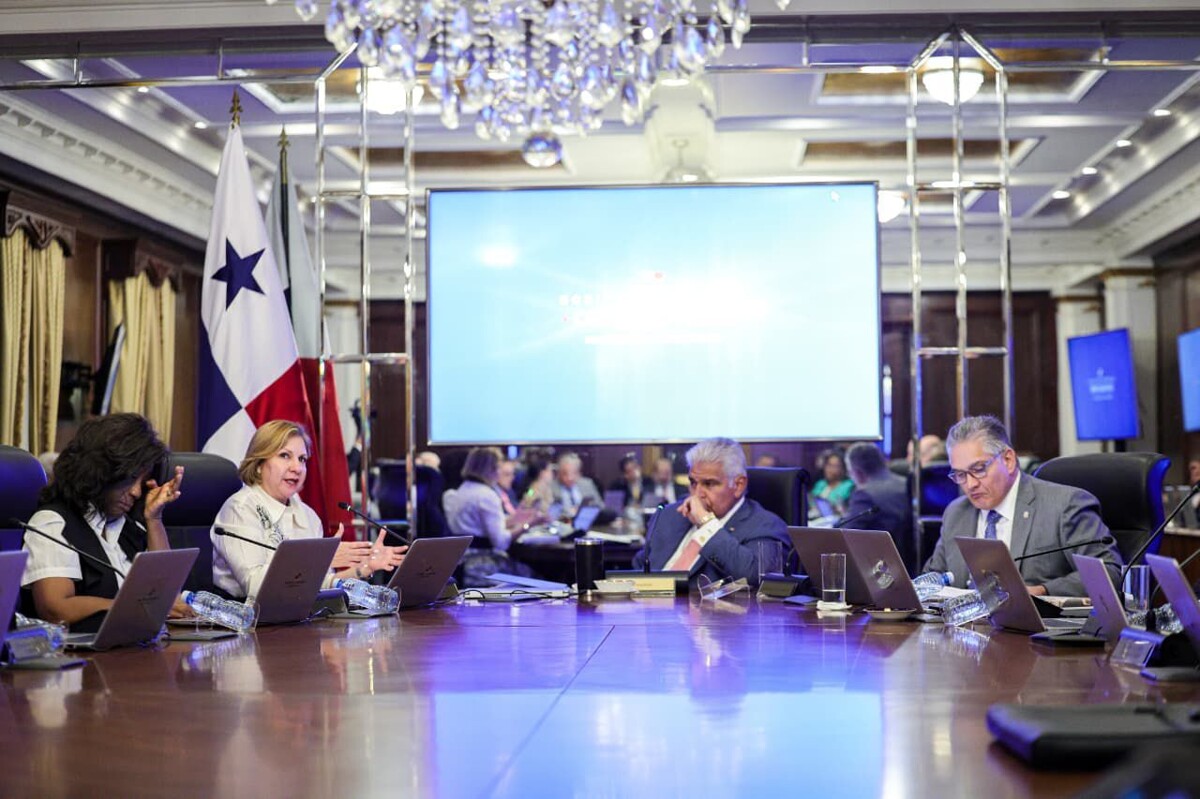
The Council of Ministers, in its session this Tuesday, February 24, approved Resolution No. 10-26, which gives a favorable opinion to Addendum No. With this, the expired agreement is set to remain in force under the same terms established. In the same session, the Cabinet also authorized the Minister of Government, Dinoska Montalvo, to present before the National Assembly Bill No. 1 to extend the contract between the State and the City of Knowledge Foundation. That contract was approved by Decree Law No. 6 on February 10, 1998. It had a 25-year validity and expired in February 2023. Now, with this addendum, it seeks to extend its validity so that the project's development can continue. The resolution states that the contract maintains a special regime and that, due to the public interest represented by the continuity of the City of Knowledge, signing this extension is necessary. Additionally, the Council of Ministers also approved Bill No. 1 to amend the Penal Code. Currently, Article 169 of the Penal Code establishes that whoever illegally prevents a peaceful meeting will be sanctioned with imprisonment of one to three years, or its equivalent in day-fines or weekend arrest. The proposed new Article 169-A proposes that whoever, during a demonstration or protest, uses hoods, balaclavas, or masks to hide their face with the purpose of provoking or inciting violence, intimidation, or hatred, will face a penalty of two to four years in prison. If the perpetrator is a public official, the penalty increases from two to four years in prison. Furthermore, if such conduct facilitates or conceals crimes against life, personal integrity, property, or public administration, the sanction would increase from four to six years in prison, without prejudice to the corresponding penalty for the crime committed.