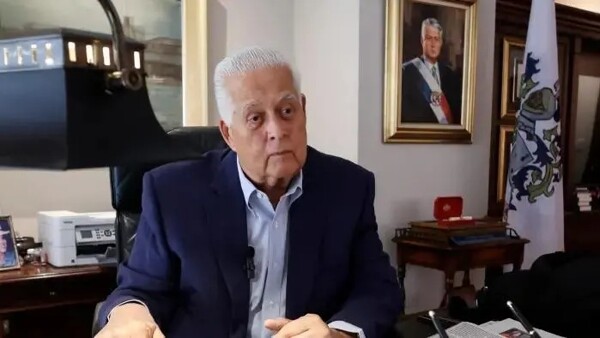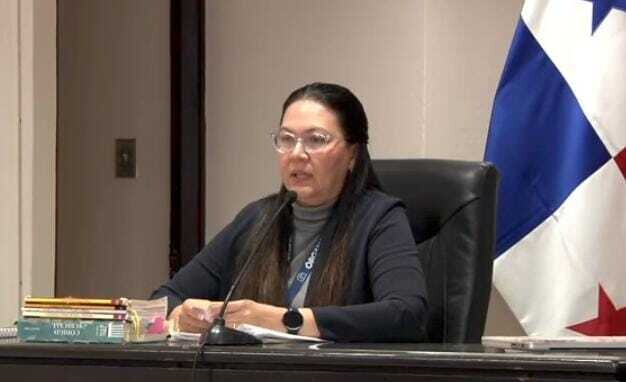
In its closing argument, the Anticorruption Prosecutor's Office raised the tone and placed former presidential candidate José Domingo Arias at the center of the debate by presenting a web of bank transactions that, according to the Public Ministry, evidence the movement of millions of dollars through local banks, allegedly linked to corporate and financial structures used to channel illicit funds.
During the hearing, the prosecutor in the case maintained that the bank records incorporated as evidence “reflect a systematic pattern of income and expenses of large sums of money without real economic justification,” highlighting that several of these operations are related to companies previously mentioned in the process.
“We are talking about multi-million dollar transfers that do not correspond to legitimate commercial activities, but rather a scheme designed to hide the origin of the funds,” she stated.
The Public Ministry also referred to the political context in which the events took place, recalling that Arias was a presidential candidate for the Democratic Change party at a time when that organization was led by former President Ricardo Martinelli.
According to the Prosecutor's Office, this element is relevant to understanding the scope of the case and the connections that would have facilitated the flow of money.
In her presentation, the prosecutor detailed, according to her, that financial analysis reports show the participation of intermediaries and final beneficiaries who, through companies, allowed resources to be moved between different bank accounts.
“Fragmented operations, triangulations, and successive transfers were identified that seek to hinder the traceability of the money,” she specified, adding that these movements coincide with key periods of the political calendar.
Likewise, the argument emphasized that part of the funds entered the national banking system through international deposits and transfers, to then be redistributed to accounts linked to related individuals and companies.
“The money did not stay static; it moved constantly, which is characteristic of money laundering schemes,” the prosecutor indicated before the tribunal.
The Prosecutor's Office concluded by requesting that documentary, expert, and testimonial evidence be valued together, insisting that the body of evidence demonstrates the existence of an irregular financial circuit in which Arias figures.
“This is not about isolated facts, but an organized structure with defined roles and a clear purpose: to legitimize capital of dubious origin,” she pointed out.
With this final argument, the Public Ministry seeks to reinforce its theory of the case and lay the groundwork for a potential guilty verdict, in a process that has once again brought to the table the debate on the use of funds in Panamanian politics and the control mechanisms of the financial system.