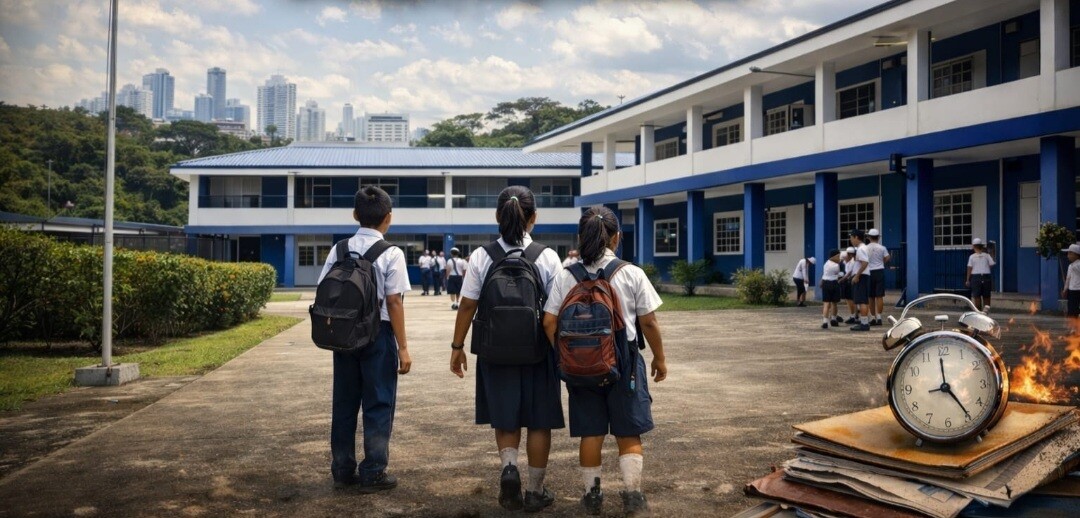
Just days before the official start of the 2026 school year, scheduled for Monday, March 2nd, teacher unions are warning that schools are not prepared to receive students under optimal conditions, which could generate discomfort and conflicts during the school period. According to teacher leader Luis Sánchez, at least 13 educational centers located in Colón, Darién, and the Emberá Wounaan and Ngäbe Buglé indigenous regions will begin in a non-face-to-face manner, as their facilities are not in condition to operate. "As happens every year, in the weeks following the start, we will continue to learn of other schools in poor conditions. The government has failed to comply with what was signed in 2023 and the Organic Education Law, and these deficiencies can cause stoppages and protests," he concluded. Among the main problems identified are: Lack of timely appointments, leaving groups without an assigned teacher. Persistence of the multi-grade model due to the inability to reorganize enrollment. Overcrowded schools, affecting pedagogical quality. Lack of administrative staff and support technicians (psychologists, social workers, counselors). Insufficiency of laboratory materials in technical schools and IPTs. Delays in the delivery of food packages. Sánchez criticizes the lack of institutional agility within the Ministry of Education (MEDUCA), affected by bureaucracy, weak organization, and poor systematization. "It is difficult to pinpoint an exact figure because the system does not transparently report information," he stated. Sánchez listed the minimum standards for a center to function properly: adequate infrastructure, drinking water, stable electricity, internet connectivity, sufficient furniture, a complete teaching and administrative staff, hygiene supplies, and effective coordination of the school feeding program. Under these standards, he estimates that at least 3,000 educational centers present some significant deficiency. Problems that will impact from the first week The leader emphasized that the official start does not guarantee effective classroom operation. Among the non-compliances that could cause tension are: Coverage deficit: more than 100,000 children and youth outside the system. Structural inequality: elite private schools coexist with 'ranch' schools without basic services. Budget non-compliance: nearly 400 million dollars have been cut from the education budget, affecting infrastructure, staff, and support programs. Deficient technological infrastructure: four out of ten schools lack adequate connectivity. Insufficient disability support: lack of material and human resources to guarantee real inclusion. Sánchez concludes that the problem is not the commitment of teachers, but the lack of planning, sustained investment, and political will. "AEVE will remain vigilant and denouncing to defend a dignified public education for all," he highlighted. Humberto Montero's perspective: overload, late payments, and undignified classroom conditions Teacher leader Humberto Montero emphasizes that many schools still do not have optimal conditions. He points to problems with infrastructure, water, electricity, and furniture, as well as rented schools operating in shopping malls, affecting the normal start of classes. Montero warned that factors such as the lack of teachers, student overload, and late payments will impact from the first week. "3,102 positions were opened through competition, but automatic appointments are needed to replace teachers on leave, due to illness, resignation, or retirement, and there are delays because everything must go through selection commissions," he explained. Regarding student overload, he noted that groups of 35 to 40 students violate regulations and affect the quality of learning. "If we want dignified education, teachers cannot attend to such large groups; international and other countries' regulations suggest between 20 and 25 students per teacher," he stated. Additionally, Montero criticized the centralization of the MEDUCA payment system, which delays payment to teachers in regions and indigenous regions, and requested the decentralization of the 16 regional directorates, giving them resources and functions to serve educators promptly. Risk of conflicts and stoppages The leaders warn that the lack of adequate conditions and the persistent structural debt could generate discomfort, annoyance, and eventually conflicts during the school period. Montero insisted on the need for a transparent and receptive dialogue from the highest authority of MEDUCA, accepting the constructive criticism of the unions and working to meet pending budget and legal commitments. "We are positive dialogue organizations, but as long as the agreements are not met, the situation will continue to generate tensions." "The system is opening, yes."