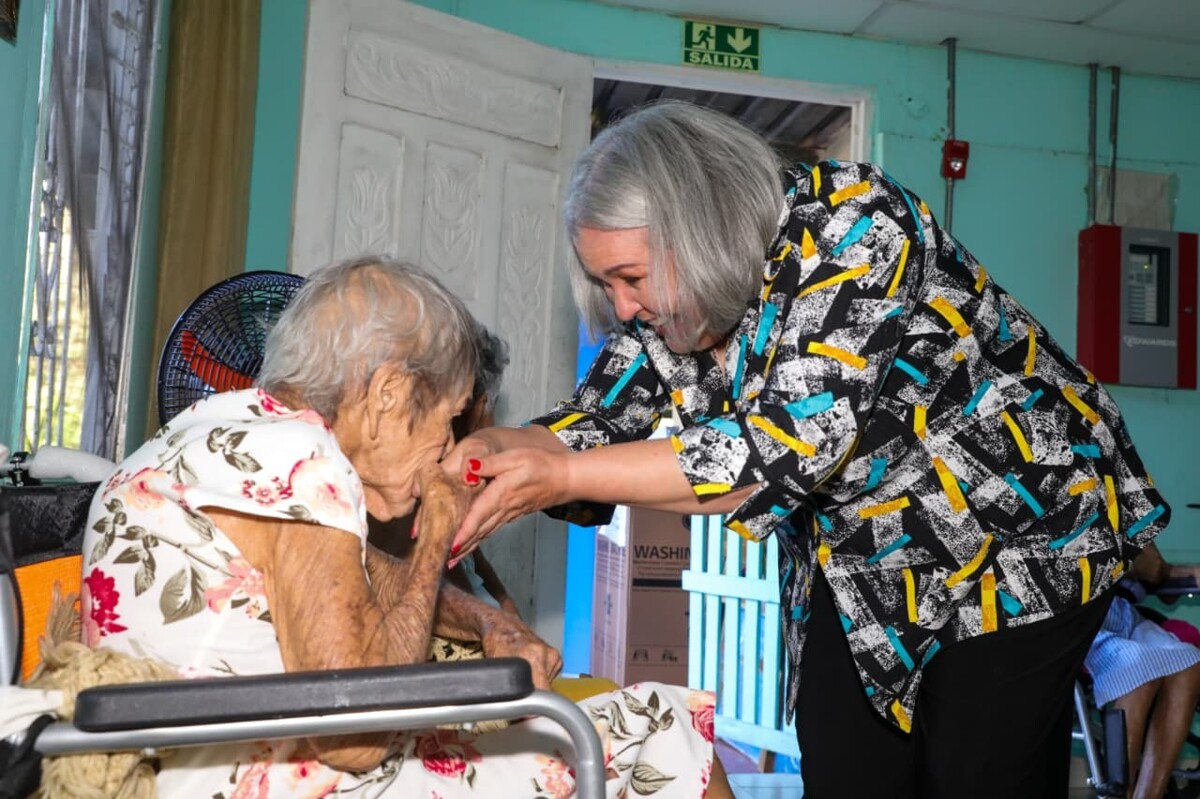
Yes, without a doubt, this is the foundation of everything we want to build. The author is the Minister of Social Development. The post 'The challenge of protecting the most vulnerable' was first published in La Verdad Panamá. And I believe, above all, in a Panama that does not turn its back on its people. Protecting the most vulnerable is not just a speech. Every child who grows up without protection is an opportunity the country loses. We are rectors of social policy, yes, but above all we continue to work for things to happen. And saying that also implies recognizing what has not worked. Several institutions attending the same people without coordinating, while others were left out of the system. That implies training, opportunities, access to quality services, and above all, dignity. And we cannot normalize that. In that child waiting for an opportunity, in that older adult who should not feel alone, in that family struggling to get ahead. By Beatriz Carles de Arango. In Panama, development cannot be measured only in figures or economic growth. That is where the State is truly tested. Recently, during one of our tours, I met a grandmother who cares for three grandchildren alone. For years, the social response in Panama was fragmented. Our goal has to be that people can get out of vulnerability, not stay in it. And in that simple conversation is summarized the greatest challenge we have, which is centered on social policy ceasing to be abstract and becoming concrete responses that arrive on time and well. At the Ministry of Social Development we have assumed that commitment. Strengthening care systems, improving the quality of care, and guaranteeing safe environments is not an administrative issue; it is a decision for the country. Now, it must also be said clearly. I see it every day in the field. We need the private sector, social organizations, communities, and families. It is a way of understanding the country. We are not here just to manage programs; we are here to order, articulate, and transform. True progress is reflected in the lives of people. To work as a single State. She did not speak to me about statistics or indicators; she spoke to me about food, school, the future. We cannot be satisfied with just assisting. Help is necessary, but not enough. The protection of the most vulnerable is not a task exclusive to the government. We have organized and continue to cross-reference data to filter it, because protecting public funds is also protecting those who truly need them. But there is something even more important. That is not only inefficient, it is unjust. That is why we have insisted on something that seems obvious, but that is not always done. Integrating information, aligning actions, and ensuring that each intervention makes sense within a common effort. Another point on which we have worked since we took office is to ensure that State resources reach those who truly need them. We need this to stop being 'a social issue' and become a national cause. I believe in a social policy that has direction, that measures results, and that is a guide in making difficult decisions. It is to move from dependence to autonomy. In the case of childhood, there is no room for indifference. It is a way of governing.