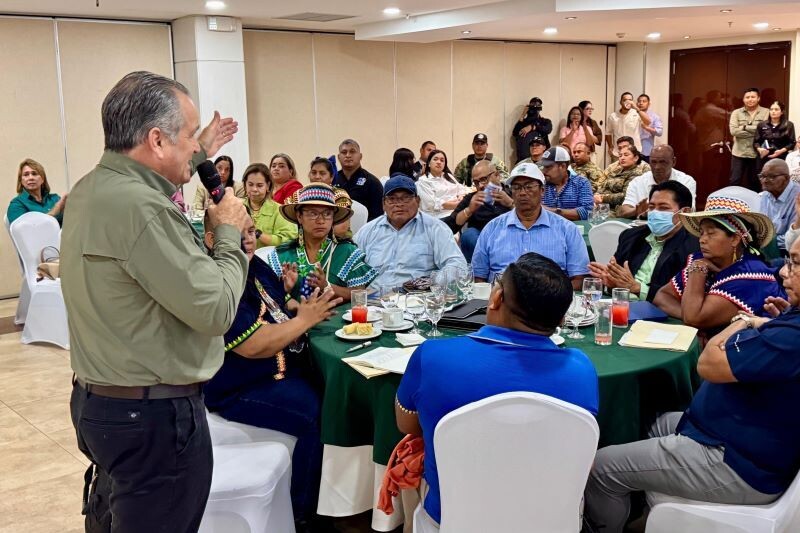
The Ministry of the Environment (MiAMBIENTE) and communities have agreed on a protection plan for Isla Escudo de Veraguas. Following a productive dialogue in David, an immediate presence of park rangers and environmental police was agreed upon to protect the biodiversity of Isla Escudo de Veraguas. Navarro concluded by reaffirming the State's commitment to protecting Isla Escudo de Veraguas as a unique resource, promoting environmental education that strengthens the identity and ecological importance of this island territory. The agreement, reached after a working session in the city of David, establishes the basis for a sustainable development model that protects the exceptional biodiversity of this Protected Landscape. As part of the immediate agreements, it was decided to establish a permanent presence of MiAMBIENTE park rangers on Isla Escudo de Veraguas, who will have the operational support of the Environmental Police. The new management scheme aims to safeguard these species, along with coral reefs and marine biodiversity that have turned the island into a center of interest for global scientific research. Minister Navarro explained that recent regulations have made it possible to stop environmental degradation processes, and the goal is to turn the area into a conservation hub where activities such as regulated ecotourism and subsistence artisanal fishing generate economic benefits without compromising natural heritage. Community participation and institutional dialogue The meeting was attended by deputies from Bocas del Toro and the Ngäbe Buglé comarca, representatives of the Aquatic Resources Authority (ARAP), and the governors of the provinces of Bocas del Toro, Chiriquí, and the comarca. Navarro stressed that Resolution No. 95 of 2009, which granted the area protected status, will be respected while a definitive Management Plan is developed that includes the participation of a scientific council and an advisory committee with all stakeholders. Protection of endemic species and biodiversity Isla Escudo de Veraguas is internationally recognized for hosting species that are not found anywhere else on the planet, such as the pygmy three-toed sloth and the Amazilia hummingbird. Ausencio Palacios, spokesperson for indigenous organizations, highlighted that the dialogue made it possible to incorporate proposals to regulate tourism based on technical criteria. Manuel Sanjur, of the Bocas del Toro Archipelago Chamber of Commerce, and Mayor Wilbur Martínez Dixon agreed on the importance of balancing the protection of Panama's 'Eden' with social well-being. This measure includes the construction of a permanent shelter on-site and the initiation of continuous patrols to curb the deterioration of natural resources. The plan also contemplates conducting a rapid ecological assessment to determine the current state of marine and terrestrial ecosystems.