Panama demonstrates that it can build its future with talent, discipline, and a vision for the country,” Cedeño concluded.
Line 3 of the Panama Metro has surpassed the tunnel under the Canal and entered a decisive phase. With a route of 24.5 kilometers and 11 stations, it will connect more than half a million residents of the West with Panama City in less than 40 minutes, drastically reducing travel times, daily stress, and transportation costs.
Beyond the concrete and steel, Line 3 represents a fulfilled promise for those who have been waiting for years for a dignified and modern connection between their home and work. "This project not only unites two shores: it unites generations."
The Council of Cabinet, led by President José Raúl Mulino, last night reviewed a technical report from the Panama Metro on the progress of Line 3, a mega-project that is changing the history of national mobility and has already crossed the tunnel under the Panama Canal, considered the most complex engineering challenge ever undertaken in the country.
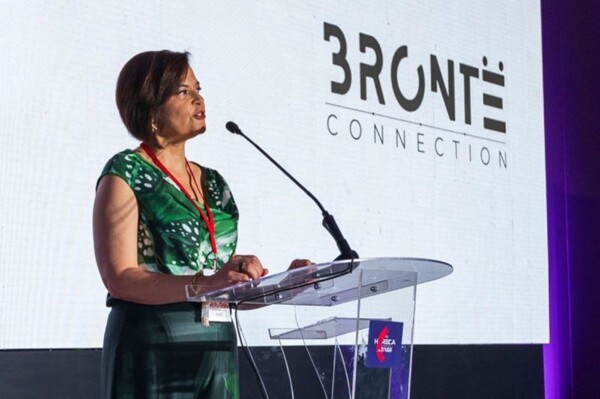
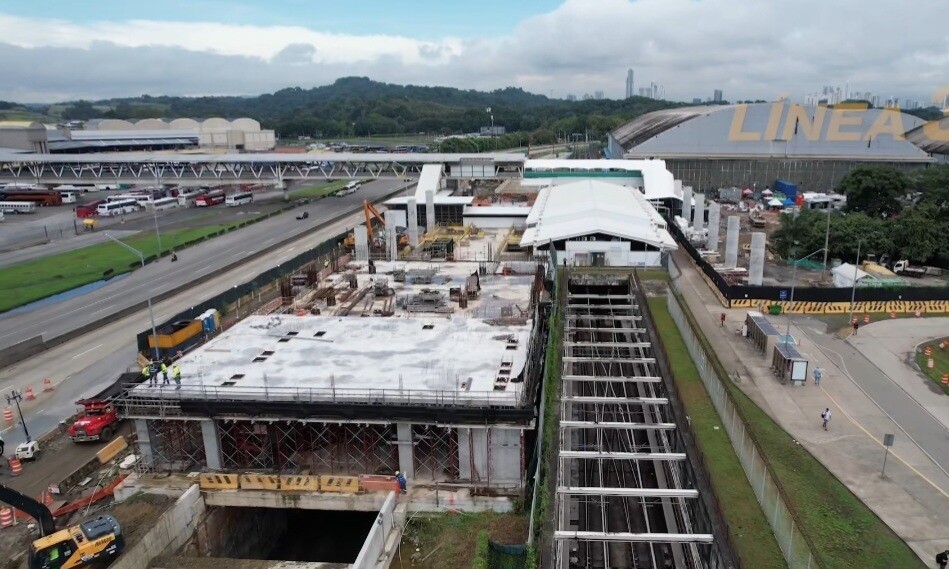
The Director of Engineering and Projects for the Metro, Carlos Cedeño, presented a detailed project update to the Cabinet, highlighting that Phase 1 of the elevated section, between Panama Pacífico and Ciudad del Futuro, has reached 81% physical completion, while Phase 2, corresponding to the tunnel under the Canal, stands at 53%.
"This is a sensitive, priority, and nationally proud project. We have already passed the lowest point of the Canal, at 65 meters deep, equivalent to a 20-story building. Line 3 will be a symbol of national pride and Panamanian capability," affirmed the official.
A dream that is becoming a reality Line 3 of the Panama Metro is emerging as one of the most important infrastructure projects in Latin America. "The citizen will be able to move from Arraiján to San Miguelito in less than 40 minutes, something unthinkable just a decade ago," Cedeño emphasized.
The horizon: 2028 According to the current schedule, the project's substantial completion date is set for October 2028, and the Metro remains committed to meeting it. The critical path, explained Cedeño, is the completion and installation of the tunnel's internal elements, evacuation galleries, electromechanical systems, and track beams, after which the integrated testing phase of the entire system will begin. "We have overcome the most difficult part: the passage under the Canal. We did it with millimeter precision, demonstrating the capability of the Panamanian engineer," Cedeño expressed.
A tunnel that connects two worlds The underground passage under the Canal, three kilometers long plus an additional 1.5 km segment towards Albrook, was built with the 'Panama' tunnel boring machine, a technological colossus of over 1,200 tons that has managed to bore more than 2,000 meters, installing 1,000 concrete rings in extreme conditions. According to Cedeño, this progress marks "the most symbolic and challenging moment of the project," physically connecting the west with the east of the capital through a world-class engineering structure.
"It is not just a tunnel. It is an underground bridge to the hope of hundreds of thousands of Panamanians who face three hours of traffic jams every day to get to their work," the engineer stressed.
A project that works day and night Currently, more than 3,800 workers are directly participating in the project, which has also generated over 5,000 indirect jobs. Workers, technicians, surveyors, welders, electricians, and engineers work 24 hours a day, seven days a week, under the sun, in the rain, or in the depths of the subsoil. The concrete structures of the stations on the elevated section are already completed, and the yards and workshops in Ciudad del Futuro show 98% progress, fully energized to begin system testing. Additionally, the elevated viaduct has 97% of its track beams installed, where the monorail trains will soon run.
Cutting-edge technology and trains ready to roll The Panama Metro confirmed that the 26 Hitachi trains, each with six cars and a capacity for 1,000 passengers, are already in the country. Static tests were completed successfully, and in the coming weeks, dynamic tests of acceleration and braking will begin on the main line. To ensure the safety and efficiency of the system, the project applies state-of-the-art technological tools, such as the BIM (Building Information Modeling) model, 3D scanners, and a real-time digital management system (PMIS) that allows for detailed monitoring of every construction phase.
Full integration with Line 1 One of the most anticipated features is the direct connection between Line 3 and Line 1 of the Metro, through a unified station in Albrook, which recently inaugurated a new pedestrian walkway. This will allow users traveling from West Panama to the capital to transfer in a matter of minutes without having to leave the railway complex. "We are creating a modern, safe, and seamless transportation experience. Now we continue with the same commitment to bring this project to its final goal."