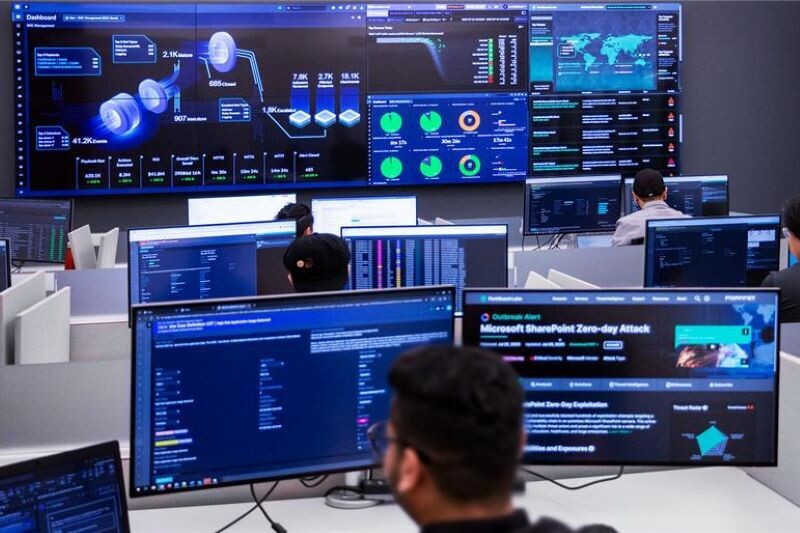
Cybercrime is evolving into an increasingly organized and sophisticated industry, a trend that, according to FortiGuard Labs of Fortinet, will reach a tipping point in 2026. This emerging black market could even include customer service, reputation management, and automated escrow services, thus accelerating the industrialization of cybercrime. To counter the offensive, defenders will need to respond with the same efficiency. In 2026, security operations will shift to what FortiGuard calls 'machine-speed defense'—a continuous cycle of intelligence, validation, and containment that shortens detection and response time from hours to minutes. It will become imperative to leverage frameworks like Continuous Threat Exposure Management (CTEM) and MITRE ATT&CK to map threats, identify exposures, and prioritize corrective actions in real time. As a result, autonomous agents on the dark web will initiate the execution of entire attack phases with minimal human supervision. This evolution will expand the capabilities of cybercriminal groups, allowing a single ransomware-affiliated group to manage dozens of campaigns simultaneously. Data enrichment and automation will enable vendors to offer access packages based on variables such as industry, geography, and system profile, replacing the generic packages that currently dominate illicit markets. AI systems will begin to manage functions like reconnaissance, accelerating intrusions, analyzing stolen data, and managing ransom negotiations. Initiatives like INTERPOL's Operation Serengeti 2.0, with Fortinet's support, demonstrate the effectiveness of joint intelligence to dismantle criminal infrastructures. This will make data a currency of exchange at an unprecedented speed. The underground economy will also become more structured. By 2026, services like botnet rentals and credential leasing will be more personalized. The next stage of cybersecurity will depend on the effectiveness with which humans and machines can operate together as adaptive systems. A critical factor will be the reduction in the time between intrusion and impact, which will shorten from days to minutes. Tools based on this technology will instantly analyze and prioritize stolen databases to determine which victims guarantee the highest return, generating personalized extortion messages.