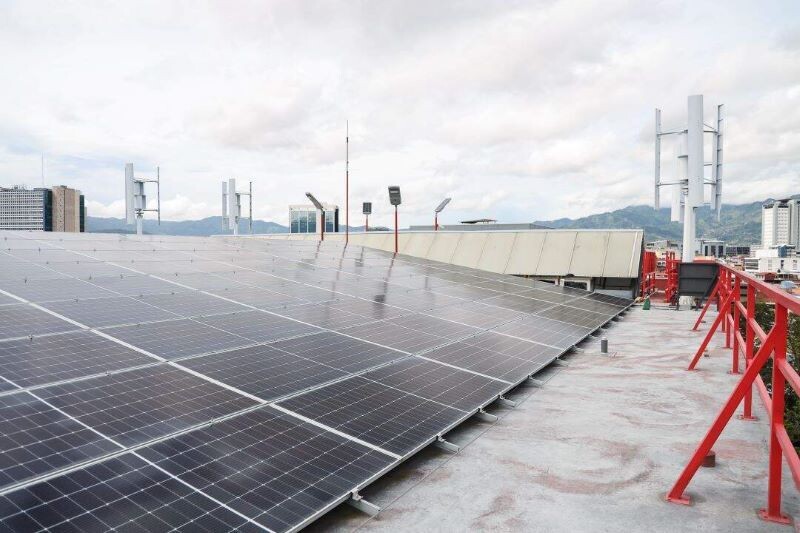
The increase in the frequency and intensity of phenomena such as heatwaves, floods, and extreme thunderstorms is impacting the operation of supply networks, interrupting basic services and causing significant losses to the economies of communities and companies. In this context, the main challenge is no longer just generating energy, but ensuring it is delivered continuously when demand is highest or when an extreme event affects the main grid. Central America has an electricity matrix with a high share of renewable sources. The Regional System Operator projects that more than 80% of electricity demand will be covered by these sources in the coming years, with hydropower as the base and a growing contribution from solar, wind, geothermal, and biomass. However, in the face of increasing natural disasters causing billions of dollars in economic losses, microgrids emerge as the solution to ensure the continuity of critical services and production processes in the region. A microgrid is defined as a localized 'mini-electric grid'. Under normal conditions, it operates connected to the national grid. However, in the event of a failure or extreme weather event, it has the ability to 'island' and continue supplying energy to critical loads autonomously, acting as a second line of defense for operational continuity. A microgrid combines four fundamental elements: Local Generation: Distributed generation sources, such as rooftop solar panels or small wind turbines. Storage: Batteries that store the generated energy for use during peak demand or outages. Intelligent Control: Systems that manage and prioritize energy supply in real-time, deciding the source and destination of the electricity. Critical Loads: Essential equipment that must remain operational, such as refrigerators, servers, medical equipment, pumping systems, or emergency lighting. This project, which raises the standard of energy management in the public sector, is part of the global Schneider Electric Impact Maker program. Therefore, protecting the energy that keeps essential services such as health, drinking water, telecommunications, and key productive processes active is a priority for the region. Regional Success Case in Costa Rica A concrete example of microgrid implementation in Central America can be found in the Benjamin Nuñez building of the Ministry of Labor and Social Security (MTSS) in Costa Rica. The project, developed by the company CFS with technological support from Schneider Electric, sought to modernize the energy management of the ministry. At the MTSS, the smart microgrid combines rooftop solar panels, a wind turbine, electric vehicle chargers, energy storage batteries, and a controller that manages the system in real time. The shift to microgrids allows for a move from reaction to planning, ensuring the operation of essential services and giving organizations greater control over their function during grid stress. The specialist highlighted that the objective is to ensure that a health center or a mini-supermarket continues to operate, avoiding product losses and maintaining business continuity. This approach is vital for sectors that cannot afford interruptions, such as agro-industries, food plants (due to the cold chain), hotels, hospitals, industrial parks, logistics and data centers, aqueducts, and emergency committees. In addition to resilience, microgrids contribute to decarbonization goals. By replacing diesel or fossil fuel-based backup energy with local renewable generation combined with battery storage, the operational carbon footprint is reduced. The system is estimated to generate savings of over 25% on the electricity bill (around USD 2,500 monthly), recovering the investment in an estimated period of 2 to 3 years and reducing carbon emissions (CO2) by approximately 2.5 tons per month. 'When we talk about microgrids, we are talking about protecting people and businesses at the same time,' affirmed Lady Campos, New Business Manager for Schneider Electric in Central America. According to World Bank data, between 2005 and 2014, natural disasters in Central America generated losses of around US$ 5.8 billion. More recently, in 2022, damages in Latin America and the Caribbean amounted to US$ 9 billion, a figure that highlights the vulnerability of infrastructure and the cost of unpreparedness. The International Energy Agency (IEA) and the International Renewable Energy Agency (IRENA) support the expansion of distributed renewable energy as an effective way to reduce power sector emissions. 'Central America has already taken an important step with a very renewable electricity matrix, but that is not enough if a blackout continues to leave people without water or without health,' reiterated Campos.