Venezuelan migrants established in Latin America and the Caribbean are «a motor of development,» rather than a burden for host nations, contributing over $10.6 billion annually through their consumption, according to a report by the International Organization for Migration (IOM) ahead of International Migrants Day.
The «Analysis of the Fiscal and Economic Contribution of Venezuelan Migration» reveals how 5.7 million migrants in eight regional countries—Colombia, Peru, Chile, Panama, Ecuador, the Dominican Republic, Costa Rica, and Aruba—have become an active agent of consumption, investment, and tax collection, revitalizing key sectors such as housing, food, and services.
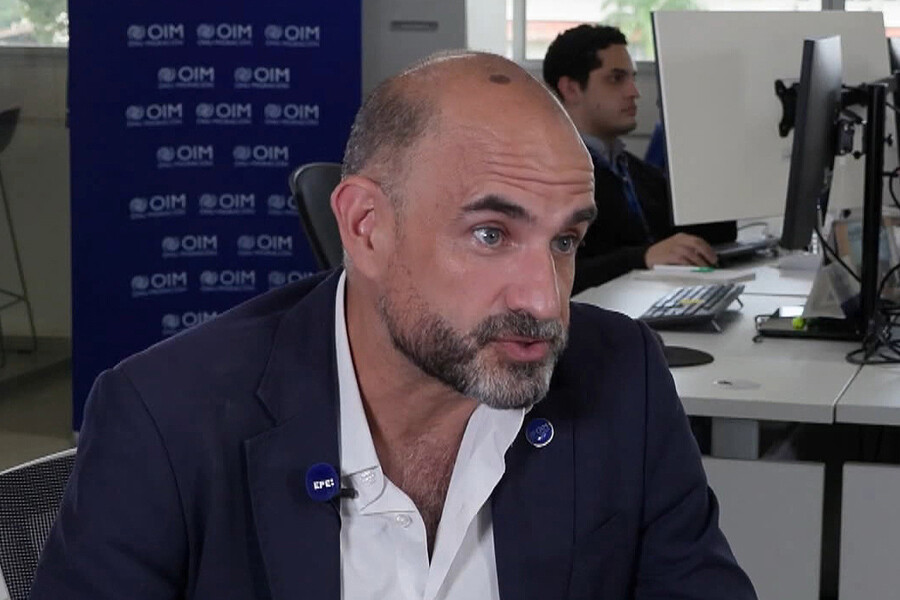
«We are convinced at the IOM that migration is a motor of development, but we wanted to provide empirical data for the positive narrative of migration,» explained to EFE Julio Croci, the IOM's regional liaison officer and report coordinator.
Among the findings, «the most relevant» was that the consumption of these more than 5 million Venezuelan migrants and refugees in these eight countries has contributed over $10.6 billion. In taxes and fees, more than $1.8 billion, with significant peaks in Colombia and Peru, with over $500 million in contributions each, and in Chile with over $400 million, also showing «the importance of regularization and integration processes,» which allow the migrant to open a business or a bank account, thus increasing consumption and contribution in the host country.
Many Latin American and Caribbean governments have made «great efforts in regularization programs,» allowing more than 60% of migrants to access «a migration regularization system or recognition or are in the process of a refugee application, but there is still 40% that have not,» so there is still the possibility of increasing that contribution.
As part of this regularization, a key factor is the validation of degrees, with the Venezuelan migration also having a high level of training, with positive experiences in which this process was accelerated in Uruguay, Peru, Chile, Ecuador, or Argentina.
«This is a summation of experiences, of possibilities,» emphasizes the IOM official.
For example, in 2016-2017, 30% of medical residencies in Argentina were vacant because many local doctors did not want to go to remote places. «And this started to be covered by foreign doctors who validated their titles. In the latter case,» says Croci, «there is the association of Venezuelan doctors that has collaborated with more than 3,500 doctors who today work in the Argentine health system.»
«What we have seen, and the study also analyzes, is that migration in general is not a labor competition. And you don't know, I lived that experience, the joy of having a doctor in a rural town for the first time in 30 years,» Croci shares.
«What we have seen, and the study also analyzes, is that migration in general is not a labor competition. And you don't know, I lived that experience, the joy of having a doctor in a rural town for the first time in 30 years,» Croci shares.
There are also «some numbers that amaze,» like those in Panama, where in the last 10 years there are more than $1.8 billion in Venezuelan private investment alone that generate 50,000 jobs, 40,000 of which are for Panamanians, something that is easily seen in restaurants or shops.
«This is what's interesting, how migration generates businesses, generates entrepreneurship, generates jobs, not only for the migrants themselves, but also for the host community,» Croci remarks.
The IOM is supporting these small and medium-sized entrepreneurs, accompanying them to international trade fairs to give them «the possibility of growth, of creating networks,» with iconic examples like that of Venezuelan migrant María Dorta in Peru, who launched her eco-friendly diaper business. Dorta, who has her house-workshop in northern Lima, explained to EFE that she chose to name her diaper brand 'Kuyaiky Wawa' ('I love you, baby,' in Quechua), thinking it could help with its acceptance in Peru after experiencing xenophobia.
For Croci, stories like this help combat discrimination and xenophobia, helping to «tear down those walls of ignorance and understand the other, and understand that in that same place I could be».