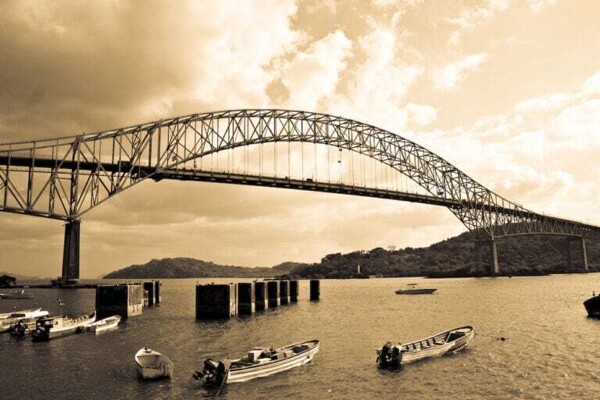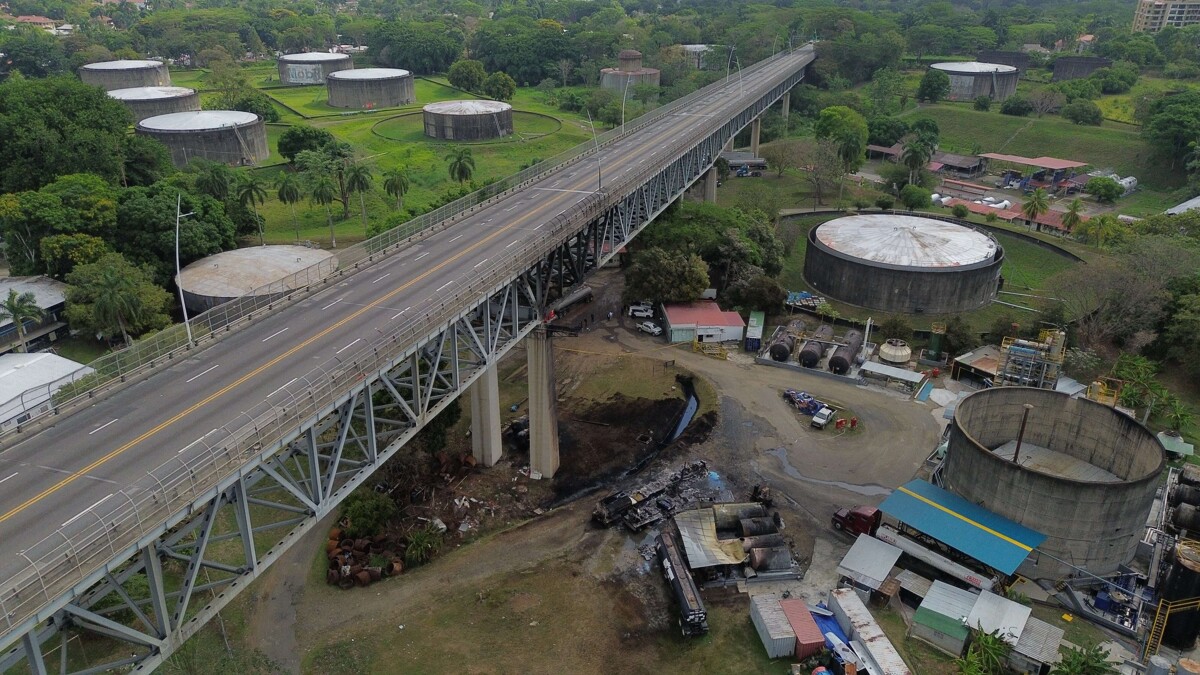
The last contract, awarded to the Rehabilitation Consortium of the Bridge of the Americas, included an assessment of the structure's current condition, the repair of components, and the execution of conservation works. In total, these amounts raise public investment to nearly $112 million over two decades. Assessments after the fire Yesterday's fire forced inspections to be intensified to determine if the structure suffered additional damage. It also brought back to the center of debate a figure that summarizes two decades of public interventions: almost $112 million invested in its maintenance and rehabilitation. These are resources earmarked to sustain one of the main connections between the city of Panama and the western part of the country. Subsequently, during the Ricardo Martinelli administration (2009-2014), another $85 million was allocated, whose works extended and concluded in the period of Juan Carlos Varela (2014-2019). To these figures are added $6.2 million awarded during the Laurentino Cortizo administration for maintenance work. Later, the MOP announced in April 2025 an additional contract of $5.7 million. However, the state of the bridge—particularly its roadway surface—continues to generate questions from users, specialists, and technical guilds. In the last 20 years, the State has executed multiple contracts totaling at least $111.9 million. Despite that sustained investment, the problems have not disappeared. The most recent precedent prior to the fire dates back to July 2024. Over 65,000 vehicles travel its roadway daily, a load that increases the demands on its infrastructure and accelerates its wear. Sequence of interventions The investment history reveals a continuity of work throughout different administrations. Drivers then reported a huge hole in the roadway, in the lane towards West Panama. The response from the Ministry of Public Works (MOP) was immediate, but provisional: the placement of a steel plate. The fire registered this April 6th under the Bridge of the Americas not only reactivated technical inspections of the structure. And with it, also the balance between public investment and results in one of the country's most emblematic—and demanding—works. The next day, the asphalt layer failed again and the damage reappeared. For specialists, this type of intervention evidences a pattern of corrective maintenance that does not address the structural causes of deterioration. The funds have been directed to both the substructure—including the arch and the roadway—as well as the superstructure, which comprises beams, abutments, and piles. During the Martín Torrijos government (2004-2009), $15 million was allocated to begin the rehabilitation. Instead of integral solutions, temporary measures are applied that prolong the useful life of specific components without solving the underlying problem. Built between 1958 and 1962, the Bridge of the Americas exceeds 60 years of continuous operation. An inter-institutional team, made up of engineers from the MOP, the Fire Department, the National Civil Protection System (Sinaproc), and the Ministry of Health (Minsa), remains in the affected area. The assessments include forensic pathology tests, thermal measurements, thermography studies, and non-destructive tests on the concrete. The objective is to identify possible damage caused by high temperatures, especially in the metal structure, the slabs, and the bridge's joints. Authorities do not rule out that the heat may have compromised key elements, which could lead to failures if not detected in time. According to the Minister of Public Works, José Luis Andrade, the results—expected within a 24-hour period—will allow for defining whether the bridge can be reopened to vehicular traffic or if it requires additional interventions. Beyond the specific event, the fire has once again put into perspective the state of an infrastructure that, despite the magnitude of resources invested, continues to show signs of wear. The accumulated figure over two decades and the recurrence of visible failures reactivates a discussion that is still pending: the need for an integral intervention that guarantees not only its operability, but also the safety and sustainability of the Bridge of the Americas. For now, the structure remains under evaluation.