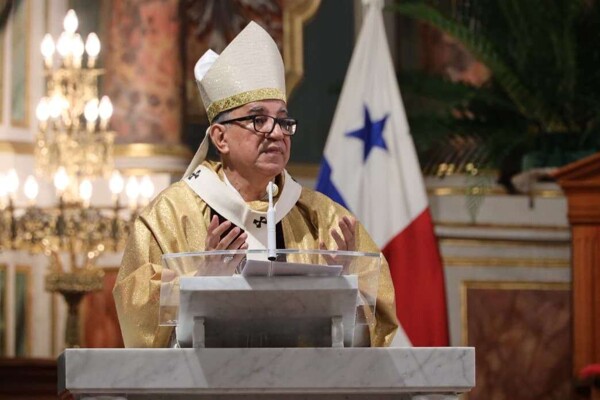
Currently, active religious denominations do not pursue profit but followers, and above all, aim to ensure that believers become adherents to their doctrines and spread them throughout their lives. This year, as in previous years, the 'International' Holy Week in the Casco Antiguo of Panama City has been broadcast live on national television, on both commercial and state channels, in a secular country. Throughout the capital city, this church dared to break the rules, and the neighbors decided to make it their own, which had previously happened in other temples, such as the Parish of Christ the King and Divine Mercy, among others. Imported from Spain, some terms like 'costaleros' (men who carry the floats), have been introduced into this religious marketing. To them, a group of distinguished society ladies has joined, who dress the revered image of the Virgin. The above is an example of the religious monopoly that segments the celebration in a specific area of the capital city, leaving other churches behind as if they were not part of Holy Week. Charging money to enter the Metropolitan Cathedral and arbitrarily closing the main doors at the discretion of the organizing committee makes one reflect on the democratization of the Catholic Church and questions the right of other Christians to celebrate Holy Week wherever they have access and availability to attend. Centralizing the celebration in one single place discriminates and does not generate openness in these difficult times when the peoples who follow the Nazarene and advocate for peace and justice seek to put on the humble sandals of the fisherman and embrace their neighbor. View of the procession in the Casco Antiguo of the Panamanian capital. By Gabriel Velásquez H., Professor of Marketing and Advertising. As a student of marketing and advertising, religious celebrations need to be promoted, just like a soft drink brand, a hospital, or a restaurant. The 2026 religious commemoration was promoted abroad with the support of private organizations and official entities. In the printed guide distributed with the Holy Week activities calendar, the only Good Friday procession outside the Casco Antiguo was a very austere one at the Santa Eduviges church, in the Bethania district. The difference is that faith is linked to a state where beliefs are given more value than any scientific argument. A soft drink, a hospital, or a restaurant need to attract their current or future customers with the aim of obtaining profit. During this period, real estate entrepreneurs dressed in tunics often appear in public, who insist on directing the processions as if they were anointed priests.

Religious Monopoly in Panama's Holy Week
The article analyzes the commercialization and centralization of Holy Week in Panama, criticizing the creation of a religious monopoly in the capital and the discrimination of other parishes.