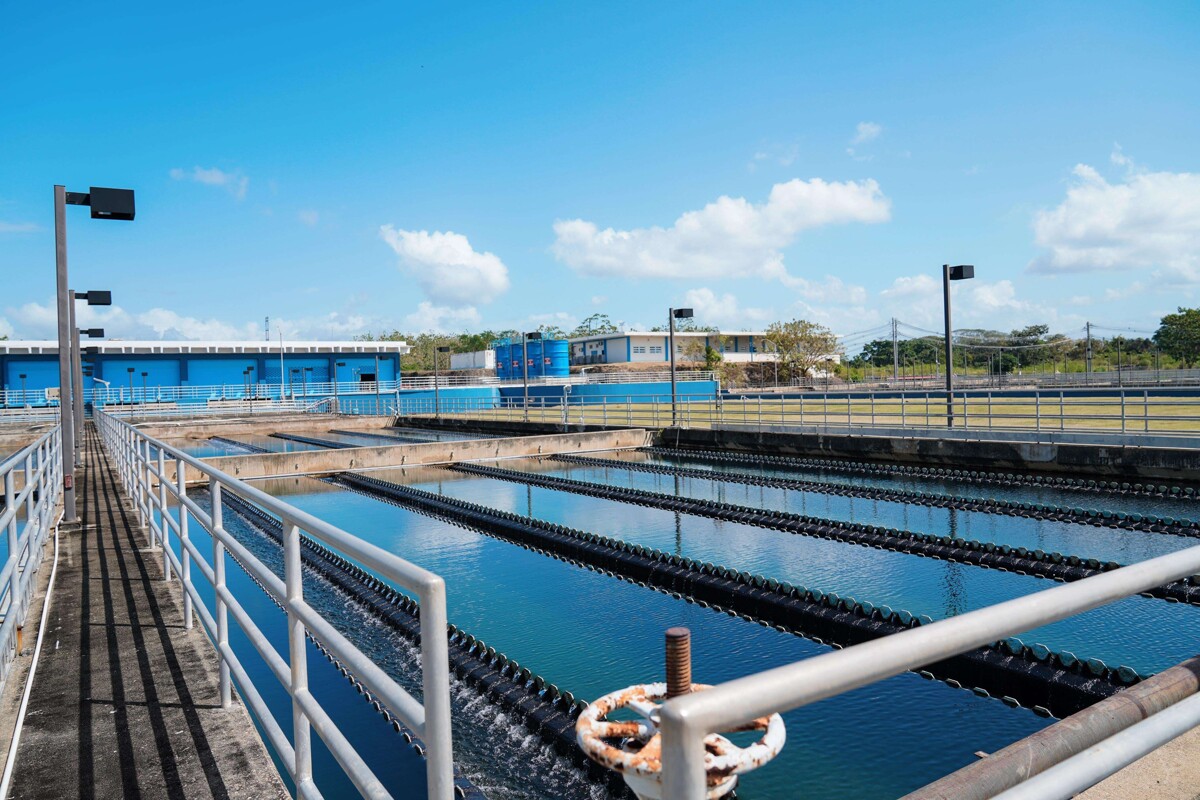
Continuing to accumulate norms while the system collapses should lead us to conclude that the water problem in Panama is not legal, but one of execution, will, and national culture. The author is an internationalist. The current institutional culture of Idaan (Institute of Aqueducts and Sewers) discourages investment, and the problem goes beyond the State: citizen behavior, such as the irresponsible use of water and illegal connections, generates additional costs that further overload the institution. Nevertheless, even if Idaan's technical capacity is strengthened, investment in critical infrastructure is increased, and water loss is reduced, none of this will be enough if society's culture regarding conservation is not transformed—not only of water, but of natural resources and the environment. Basic actions, such as avoiding throwing waste into rivers and streams or reforesting strategically, are a starting point. A governance that should focus on three pillars: infrastructure, conservation, and distribution. A water law, universal access to it, and the State's commitments to guarantee it to all citizens sound impeccable on paper; however, the solution goes beyond any legislative or regulatory proposal. Many laws end in poor execution, greater bureaucratic hurdles, or the structural limits of law. Additionally, the execution of projects and infrastructure works related to drinking water processing is not the task of deputies. Essentially, the typical reaction to public pressure is to propose new draft laws. Panama already has a legal framework—though many may argue it is inefficient—regarding the conservation of water resources, channeled through institutions such as the Ministry of the Environment, the National Institute of Aqueducts and Sewers (Idaan), and the Aquatic Resources Authority of Panama (ARAP). Therefore, we must be aware that the problem of water scarcity in Panama is not normative and should not be used as a political slogan, as it only simplifies an extremely complex problem. Added to this, the lack of long-term planning in the face of urban growth and the politicization of technical decisions become the perfect formula for creating a bottleneck in the drinking water distribution system. On the other hand—although it is difficult for society to accept—water tariffs do not reflect the real costs of its processing in Panama. This is because, in practice, laws tend to resolve theoretical-legal gaps, but there are multisectoral problems that require more than definitions, regulations, and the allocation of responsibilities. The case of Panama represents a true paradox: we are one of the wettest and rainiest countries in the world; however, the scarcity of drinking water, the distribution of this vital liquid by tanker trucks, and the lack of infrastructure to treat and process water lead us to conclude that the problem is not scarcity, but governance. This means that there is no legal vacuum, but an operational inability to retain and distribute water throughout the country. The city of Panama and the urban areas of the province present a pipe system that has not been replaced in years, generating significant losses of drinking water due to damage and leaks. While greater accountability is needed, the culture of reaction must be replaced by one of prevention and greater care for water and the country's water sources. First, it is necessary to solve the problem of drinking water governance. A water distribution strategy that ignores the protection of watersheds is built on unstable foundations. Likewise, reforestation should not be about planting trees indiscriminately, but about identifying priority areas where the survival of rivers is guaranteed. Passing laws gives the appearance of action without solving the underlying problem. A unified national mandate is required, with technical and professional leadership capable of detaching from political interests. Additionally, it is essential to strengthen the water board administrations, equipping them with a more technical than political approach, especially in rural areas. In the interior of the country, poor maintenance and modernization of pipes, water purifiers, and wells represent a risk to citizens' health. Solutions must adapt to the realities of each zone. Idaan maintains a fragmented jurisdiction, affected by political interference and insufficient funding. The Chagres River basin supplies both the Panama Canal and much of the capital's drinking water, so deforestation and agro-industrial pollution must be controlled with greater urgency. For example, in urban areas like Arraiján and La Chorrera, more decentralized pipe systems with greater oversight capacity are required due to the region's rapid growth. The lack of sustained investment—and not only in water—has led to obsolete physical infrastructure. I make the caveat that, although some legislative proposals are effective for solving specific problems, other laws, in their entirety, are ineffective for addressing more complex and delicate issues, such as water. In rural areas like Darién, Veraguas, or Bocas del Toro, small-scale solar-powered pumping systems, gravity tanks, and larger-scale rainwater harvesting systems could be implemented. It is also indispensable to protect our hydrographic basins. Without governance reforms, any investment in infrastructure is doomed to fail. Likewise, it is necessary to categorize solutions according to the context. This limits the ability to allocate funds to larger and more priority projects.