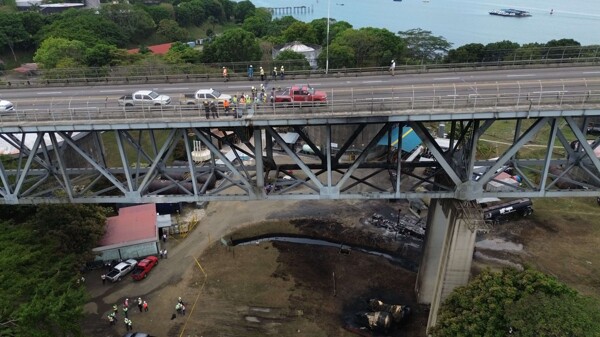
The inspection and evaluation of the Bridge of the Americas has concluded, carried out by a specialized technical team from the Ministry of Public Works (MOP) following a fire involving three tank trucks on April 6 in the La Boca sector, directly beneath the bridge, which forced the complete closure of the route.
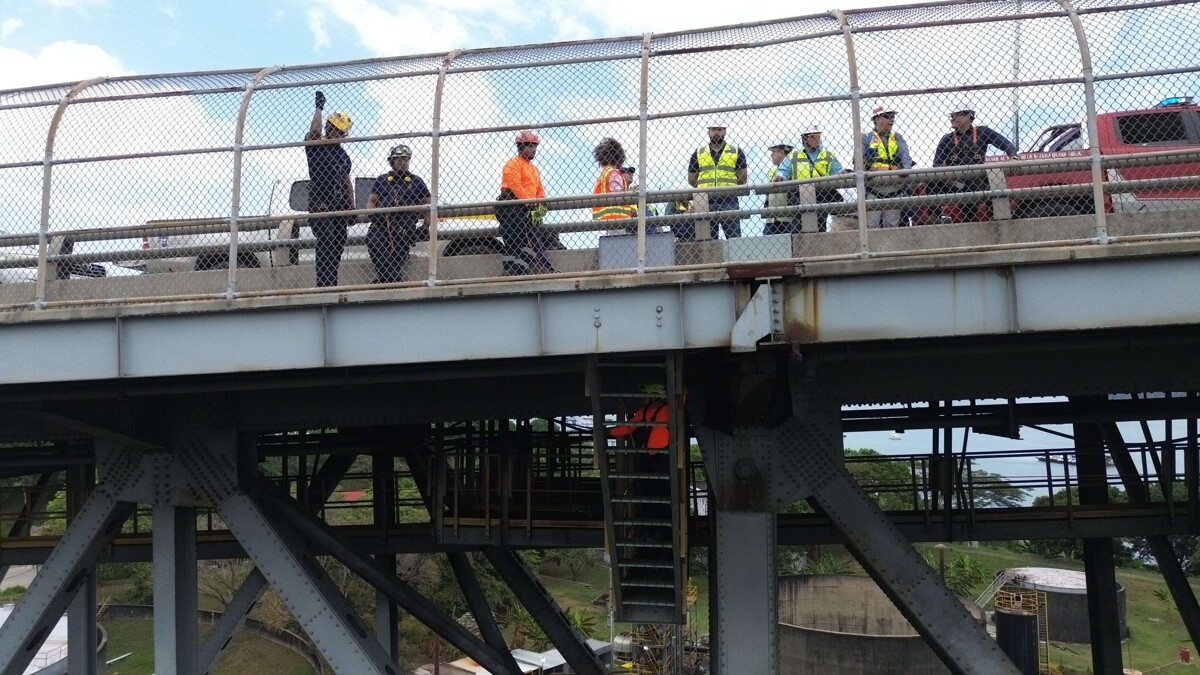
The inspection was led by an inter-institutional group, composed of engineers and technicians from the Ministry of Public Works (MOP), along with personnel from the Panama Fire Department, the National System for Civil Protection (Sinaproc), and the Ministry of Health (Minsa). On the morning of Tuesday, April 7, they conducted evaluations in the affected area to determine the condition of the structure.
During the operation, technical assessments of the Bridge of the Americas were performed to determine the actual state of the structure after the fire at its base. Omar Smith, director of the National System for Civil Protection (Sinaproc), who participated in the inspection, explained that authorities conducted a technical evaluation of the bridge using drones to detect any possible deformations in the structure.
This initial inspection was complemented by a physical verification of the underside of the bridge, where the asphalt and internal joints were reviewed to validate the collected information. Smith highlighted that "the results of these evaluations will be analyzed by specialized engineers from the Ministry of Public Works, who will issue a technical report on the actual condition of the structure".
The official compared the process to a "biopsy" or "tomography," as advanced technologies are used to thoroughly examine the bridge's behavior, which is crucial for the mobility of approximately 25% of the city's population. Similarly, Smith supported the decision to keep the bridge closed as a preventive measure, emphasizing that while it may cause inconvenience to the public, it is a responsible action to avoid greater risks.
He added that authorities will continue to monitor the situation and coordinate with various entities while awaiting the final results of the technical evaluation to define the next steps. Meanwhile, the National Police announced the implementation of lane diversions from Alta Plaza (three lanes) to Vista Alegre on Tuesday, April 7, from 2:00 p.m. to 8:00 p.m.
"We prefer that there be inconvenience rather than to regret human losses," he stressed, while insisting that any future decision will be based on scientific criteria. These inspections, called forensic pathology tests, aim to identify possible damage caused by high temperatures, especially in the metal structure, concrete slab, previously installed reinforcements, and the bridge's joints.
The MOP explained that they are conducting residue inspections, thermal measurements, thermographic studies, and non-destructive tests on the concrete, as well as field evaluations with specialized equipment to verify the stability of the impacted section. Authorities warned that the heat could have compromised key elements, which could lead to partial or total failures if not detected in time.
According to Minister of Public Works José Luis Andrade, based on these results—expected in less than 24 hours—the MOP will determine whether the bridge can be reopened to vehicular traffic or if repairs are required. The evaluations also involve a specialized technical team from the MOP, experts from the Panama Canal Authority, and a hired consulting company for structural studies of the bridge.
The director of Sinaproc confirmed that contingency plans remain in place to ensure citizen mobility, especially towards the western sector, in case the bridge is not reopened immediately.