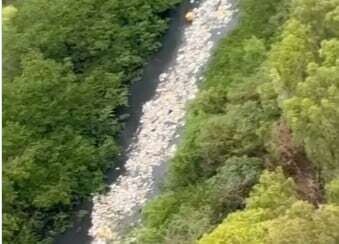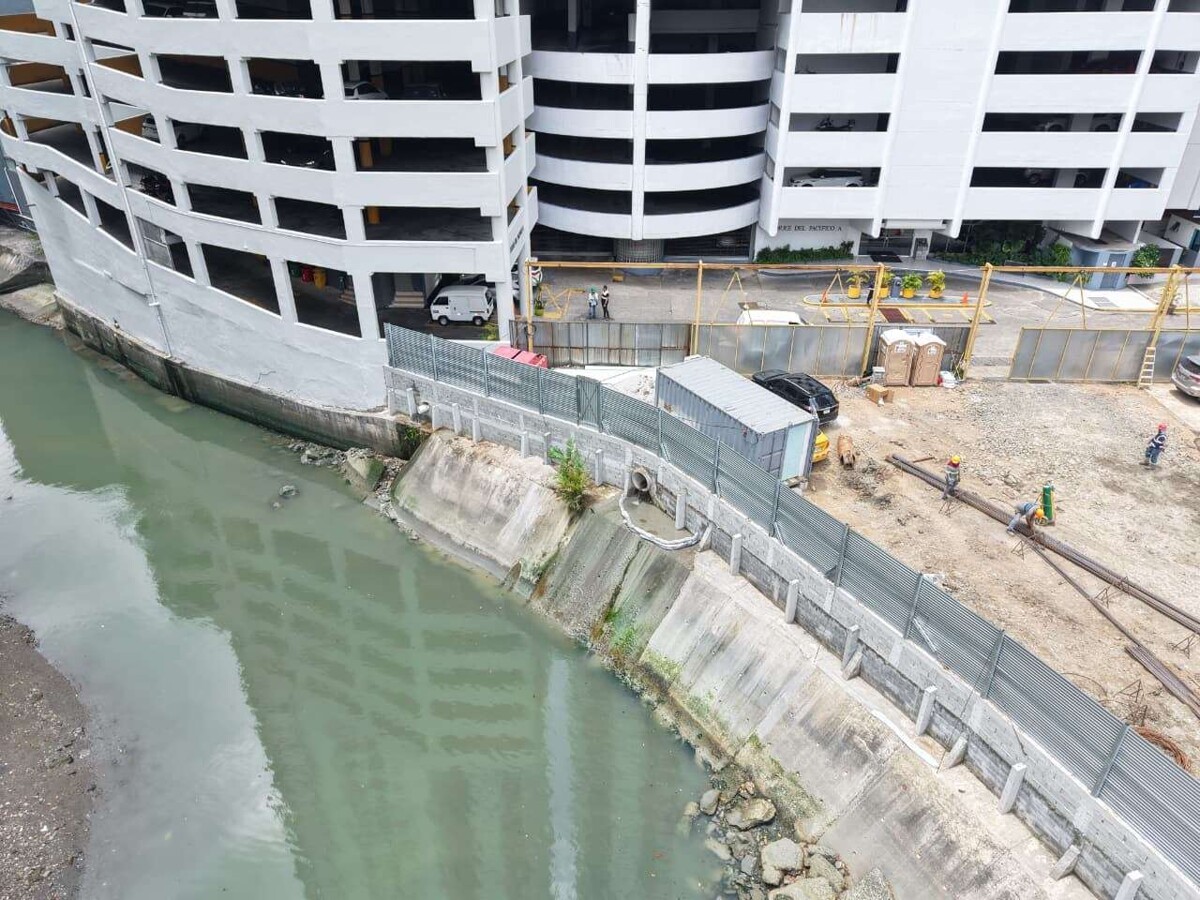
The Ministry of Environment ordered this week the immediate halt of a construction project in the Marbella sector, in the Bella Vista district, after detecting an illegal discharge of contaminated water that directly impacted the Matasnillo River. However, the intervention raises new questions: what is the name of the project?, who is the promoter?, and since when did it have approval? Additionally, it calls for evaluating the proposed integration and mitigation measures, amidst concerns about compliance with regulations governing this type of development in an area already under high urban pressure. In fact, after learning about the contamination this week, Kiamco warned that it is essential to accurately determine the scope of the potential environmental impact. All these measures, aimed at reducing impacts, are now relevant in light of the findings that prompted the intervention of the environmental authorities.
Inspection and Citation In addition to the discharges, during the inspection, officials from Panama's Ministry of Environment identified poor waste management practices and the use of inadequate containment structures, which exacerbated the environmental impact in the area. The answers do not lie in the sanction, but in the environmental impact study (EIA) approved by the entity, a document that now gains relevance by revealing the details of a project that, despite having official approval, ended up under scrutiny for its effects on one of the city's most pressured waterways. The project promoter is The Panoramic Residences Corp., legally represented by Nassly Argentina de la Concepción Ruiz Sequeira, a Nicaraguan citizen, who is listed as responsible for submitting the environmental impact study (EIA), Category I, titled Moderna - 360 Urban Living; that is, the name of the project. The document was submitted in July 2025 and approved in November of the same year by environmental authorities, as part of the required process for the project's development. The project involves the construction of a 23-story building, with 18 floors for apartments, two floors of parking, one floor for a lobby, one floor for a rooftop, and a rooftop cover. Meanwhile, only remediation and cleanup work will be permitted on the site.
This case again highlights the vulnerability of the Matasnillo River, one of the main bodies of water in the capital, historically affected by residual discharges, industrial waste, and disorderly urbanization processes. An attempt was made to get the promoter's version of the project, but as of this edition's closing, there was no response. This measure, conceived as a key protection tool, contrasts with the anomaly detected later by the Ministry of Environment, which identified contaminant discharges into the waterway, apparently in violation of the obligations imposed on the project promoter. The environmental document stated that all activities related to the development must be carried out using methodologies and techniques capable of avoiding any impact on the physiographic characteristics of the river section adjacent to the project's plot.
In light of these findings, the entity ordered mandatory corrective measures, including the total halt of construction activities, cleaning of the affected waterway, sealing of the illegal connection, and the removal and proper disposal of contaminated materials. The agency informed that those responsible were summoned for April 15, 2026, at the Metropolitan Regional headquarters, where they will be notified of the start of an administrative sanctioning process. In this regard, it was required not to alter the flow or water quality, as well as to preserve the biological components present in this urban ecosystem, considered one of the most pressured in the city. Furthermore, the study explicitly prohibited storing construction materials in the riverbed area, depositing waste—common or hazardous—in nearby zones, or carrying out discharges of any type of contaminant liquid. To these restrictions were added other measures, such as the obligation to mitigate noise and dust generation during the construction phase.
For example, on October 31, 2025, the representative of the Bella Vista district, César Kiamco, sent a formal note to the Ministry of Environment, conveying the concerns of residents near the Moderna - 360 Urban Living project. The communication, addressed to the Metropolitan Regional Directorate, includes a statement from the Torre del Pacífico A homeowners' association, whose residents expressed their opposition to the development due to potential urban and environmental impacts in the immediate area. In the document, the community board requests the environmental entity to issue an urban assessment in accordance with the Territorial Ordering Plan and current regulations, with an emphasis on aspects such as land use, zoning, project density, parking availability, and pedestrian and vehicular mobility. He indicated that although sediment presence is common in construction projects, these must be properly managed and treated before being disposed of in the stormwater system, which constitutes the main point of compliance.
Violation One of the conditions established in the environmental impact study approved in 2025 was clear: no water could be discharged into the Matasnillo River. This is a vertical residential development located in an urban environment, whose planning was structured according to the technical guidelines required for this type of initiative, according to the promoters. According to the study, the project description and influence area analysis were developed systematically by a consulting team and technical specialists, with the objective of identifying and evaluating the possible positive and negative impacts during the construction and operational phases.
Complaints Since it was made public, some residents in the area have expressed their opposition.