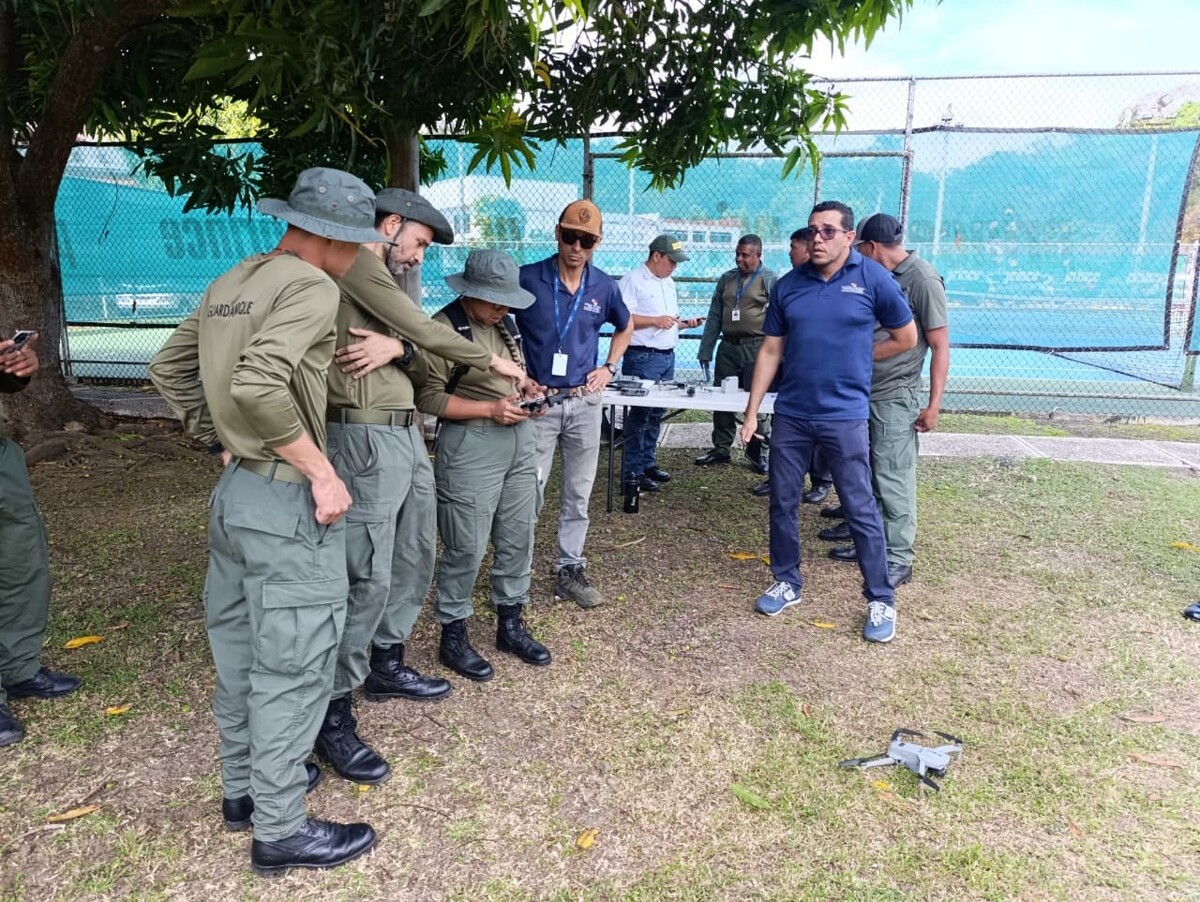
To strengthen monitoring, surveillance, and protection of the country's ecosystems, park rangers and park chiefs participated in practical training on the use of remotely piloted aircraft systems (RPAS), known as drones. Chagres National Park, which spans the provinces of Panama and Colón, faces several risks that threaten the ecosystem, such as illegal hunting, mining, and other actions that harm nature. Chiefs of national parks, including Chagres, received a theoretical introduction to the operation of RPAS, including navigation systems, batteries, sensors, and cameras, as well as recommendations for preventive and corrective maintenance. Safe handling procedures, pre-flight inspections, and equipment preparation for field operation were also emphasized. In the practical phase, park rangers performed exercises in manual and assisted takeoff and landing, stability control maneuvers, response to temporary equipment loss, and controlled flights including pitch, roll, yaw, and progressive climbs, always prioritizing the safety of personnel and equipment. The course also included an update on the current regulations of the Civil Aviation Authority (AAC), concerning equipment registration, operation permits, altitude limits, restricted areas, and safety measures to ensure responsible use of airspace. The use of RPAS technology is consolidating as a strategic tool for the management of the country's protected areas, enabling improved surveillance, optimized decision-making, and strengthened conservation of natural resources.